You’re tired of feeling confused about what your doctor means by A1C, wondering if those numbers really matter, and wishing someone would just explain this in plain English so you can actually understand what’s happening in your body.
Understanding A1C test basics
The A1C test, also known as the glycated hemoglobin test, measures your average blood glucose levels over the past two to three months. Think of it as a window into your blood sugar patterns without needing daily finger pricks. When you eat, your body breaks down carbohydrates into glucose, which enters your bloodstream. Hemoglobin, the protein in your red blood cells responsible for carrying oxygen throughout your body, naturally binds to this glucose. The higher your blood sugar levels have been, the more glucose attaches to your hemoglobin molecules. Because red blood cells live about three months, the A1C test captures a comprehensive picture of your glucose control during that entire period. For example, if you’ve had consistently elevated blood sugar over several weeks, your A1C will reflect that pattern. This is why doctors prefer A1C over single blood sugar readings, which only show a snapshot at one moment in time.
Biology behind A1C measurement
Understanding how A1C works requires knowing a bit about hemoglobin and glucose chemistry. Hemoglobin is a remarkable protein that lives inside red blood cells and carries oxygen from your lungs to every tissue in your body. When glucose molecules float through your bloodstream, they can chemically bond to hemoglobin in a process called glycation. This bonding happens slowly and continuously, and it’s not reversible during the red blood cell’s three-month lifespan. The more glucose present in your blood over time, the higher the percentage of your hemoglobin becomes glycated. Imagine your hemoglobin molecules as parking spaces, and glucose molecules as cars. When parking is scarce, few cars get parked. When parking is abundant, more spaces fill up. The A1C test essentially counts how many of those parking spaces are occupied by glucose. Laboratory technicians use specialized equipment to measure this percentage. A normal, healthy person without diabetes has about five percent of their hemoglobin glycated. Someone with poorly controlled diabetes might have ten percent or higher.
Interpreting A1C results effectively
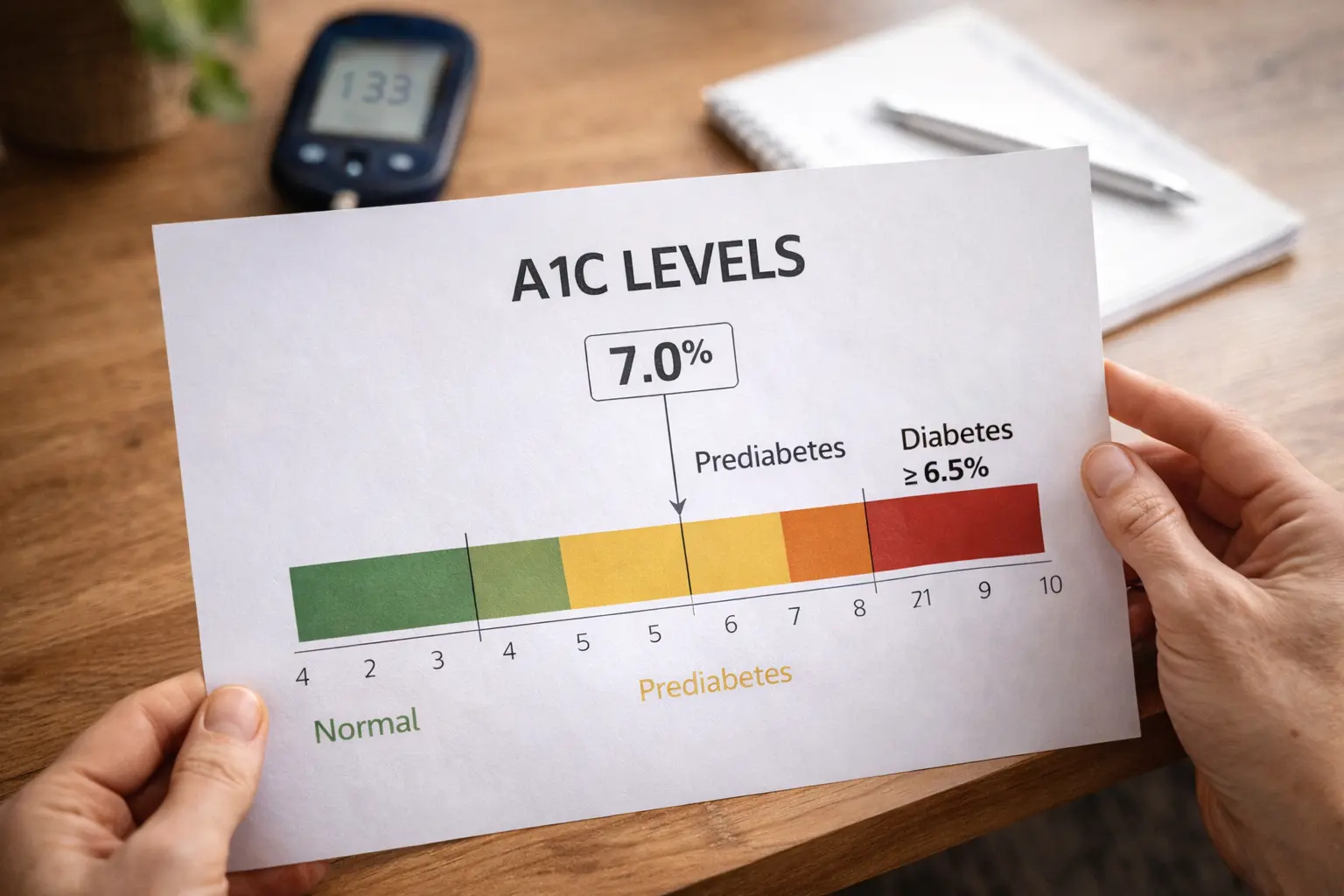
Your A1C result comes back as a percentage, and understanding what that number means is crucial for managing your health. A normal A1C reading is below 5.7 percent, which indicates your blood sugar has been well-controlled and you do not have diabetes. If your result falls between 5.7 and 6.4 percent, this indicates prediabetes, a condition where your blood sugar is higher than normal but not yet in the diabetic range. An A1C level of 6.5 percent or higher typically suggests diabetes. However, these numbers tell only part of the story. Your individual target A1C may differ based on your age, overall health, other medical conditions, and how long you have had diabetes. A seventy-five-year-old with multiple health conditions might have a different target than a sixty-year-old in excellent health. Your doctor considers your complete medical picture when setting your personal A1C goal. Some seniors benefit from slightly higher targets to reduce the risk of low blood sugar episodes, which can be dangerous. Understanding your specific target and how your current results compare helps you and your healthcare team make informed decisions about your care.
- Regularly monitor your A1C levels as advised by your healthcare provider, typically every three to six months depending on your situation and whether you are making changes to your diabetes management.
- Follow a balanced diet rich in vegetables, lean proteins, and whole grains while limiting refined carbohydrates and sugary foods to help manage your blood sugar levels effectively.
- Engage in regular physical activity such as walking, swimming, or gentle strength training as tolerated, which helps your body use glucose more efficiently.
- Discuss any concerns or questions about your A1C results with your doctor openly, including what your personal target should be and what changes might help you reach it.
🔬 Science-backed benefits in 2 minuteschoose where to begin:
Benefits of A1C testing
Regular A1C testing serves as an early warning system and a progress tracker rolled into one. For people without diabetes, an A1C test can catch prediabetes before it progresses, giving you time to make lifestyle changes that might prevent diabetes entirely. For those already diagnosed with diabetes, A1C testing shows whether your current treatment plan is working. If your A1C is rising, it signals that adjustments may be needed, whether that means changing medications, adjusting your diet, or increasing physical activity. A1C testing also helps your doctor identify patterns you might miss on your own. You might feel fine one day and terrible the next, but your A1C reveals the true average. This comprehensive picture guides treatment decisions and helps prevent serious complications like heart disease, kidney damage, and vision problems that can develop silently over years. Additionally, A1C testing removes guesswork from diabetes management. Instead of wondering if you are doing well, you have objective data that shows exactly how your body is responding to your current lifestyle and treatment approach.
Importance for senior health
Seniors face a higher risk for developing diabetes, making A1C testing particularly important during these years. After age sixty-five, the prevalence of diabetes increases significantly, and many seniors develop type 2 diabetes without realizing it because early symptoms are often subtle or attributed to normal aging. Fatigue, increased thirst, or blurred vision might seem like just part of getting older, but they can signal rising blood sugar. Regular A1C testing catches these cases early when lifestyle changes and early intervention are most effective. For seniors already living with diabetes, A1C monitoring becomes essential for preventing serious complications. Uncontrolled blood sugar accelerates damage to blood vessels and nerves, increasing the risk of heart attacks, strokes, kidney disease, and nerve damage that affects balance and increases fall risk. Seniors are particularly vulnerable to these complications because they often have other health conditions that diabetes can worsen. Additionally, A1C testing helps your doctor adjust medications safely. Some diabetes medications can cause dangerously low blood sugar in seniors, so knowing your A1C helps your doctor find the right balance between control and safety.
Proactive approach to health
Understanding A1C testing empowers you to take control of your health rather than passively accepting whatever comes your way. Knowledge transforms A1C from just another medical test into a meaningful tool for self-advocacy. When you understand how your blood sugar affects your body, you can make intentional choices about what you eat, how you move, and when to seek medical advice. Many seniors find that learning about A1C motivates them to prioritize their health in ways they had not before. Seeing improvement in your A1C results after making changes provides concrete evidence that your efforts matter. Perhaps you started taking evening walks and your A1C dropped by half a point, or you reduced sugary snacks and noticed better energy levels. These connections between your actions and your results create momentum for continued healthy choices. Regular A1C monitoring also strengthens communication with your healthcare team. You come to appointments with specific questions about your results, discuss what is working and what is not, and collaborate on adjustments. This partnership approach leads to better outcomes and helps you maintain optimal well-being as you age.
A1C testing measures the percentage of hemoglobin bound to glucose, providing a three-month average of your blood sugar levels and serving as a cornerstone of diabetes detection and management for seniors. Understanding how A1C works, interpreting your results accurately, and monitoring regularly empowers you to make informed decisions about your health and work effectively with your healthcare team to prevent complications and maintain quality of life.
How often should seniors get an A1C test?
Seniors with diabetes should typically get an A1C test every three months if their blood sugar is not at goal or if they have recently changed their treatment plan. Once your A1C is stable and at your target, testing every six months may be appropriate. Seniors without diabetes but with prediabetes should have A1C testing at least annually. Your healthcare provider will recommend the testing schedule that best fits your individual situation based on your results and overall health status.
Can factors like age affect A1C test results?
Yes, several factors can influence A1C test results beyond just blood sugar control. Age itself does not directly change A1C, but certain conditions more common in older adults can affect results. Anemia, kidney disease, and some medications can alter how hemoglobin behaves and potentially affect A1C accuracy. Additionally, some seniors have hemoglobin variants that may interfere with standard A1C testing. It is important to discuss any concerns about your A1C levels with your healthcare provider, who can consider your complete medical history and determine if alternative blood sugar tests might be helpful alongside or instead of A1C testing.
Others also read:
Disclaimer: This article is for informational purposes only and is not a substitute for professional medical advice. Always consult a healthcare professional for personal guidance.
This article has been prepared and reviewed by the GlobalHealthBeacon editorial team and is based on current medical research and published scientific literature available in 2026. It provides structured, evidence-based information to support informed health decisions.
