You’re exhausted all the time, your brain feels foggy, and you can’t figure out why your body is working against you, so here’s what you need to know about a1c test explained and why it might be the missing piece to understanding what’s really happening inside your body.
The power of A1C testing
Imagine scrolling through social media and seeing friends talk about their energy levels, their workouts, their ability to focus for hours without crashing. Then there’s you, wondering why a simple afternoon feels like running a marathon. That’s where A1C testing comes in. This test isn’t just another number on a lab report. It’s essentially a three-month window into how your body has been managing glucose, giving you a comprehensive snapshot that single blood sugar readings can’t provide. Think of it like the difference between checking your bank account once versus looking at your spending patterns over an entire quarter. An A1C test reveals patterns, trends, and the real story of your metabolic health. For young adults juggling work, school, relationships, and everything else, understanding this test can be genuinely eye-opening. It helps you see whether lifestyle changes are actually working or if something deeper needs attention.
- A1C tests provide a comprehensive view of your blood sugar levels over the past 2 to 3 months, not just a single moment in time.
- Helps in assessing the effectiveness of your current treatment and making informed adjustments based on real data.
- Provides clarity on lifestyle behaviors impacting your blood sugar control and where you might need to make changes.
Interpreting the results
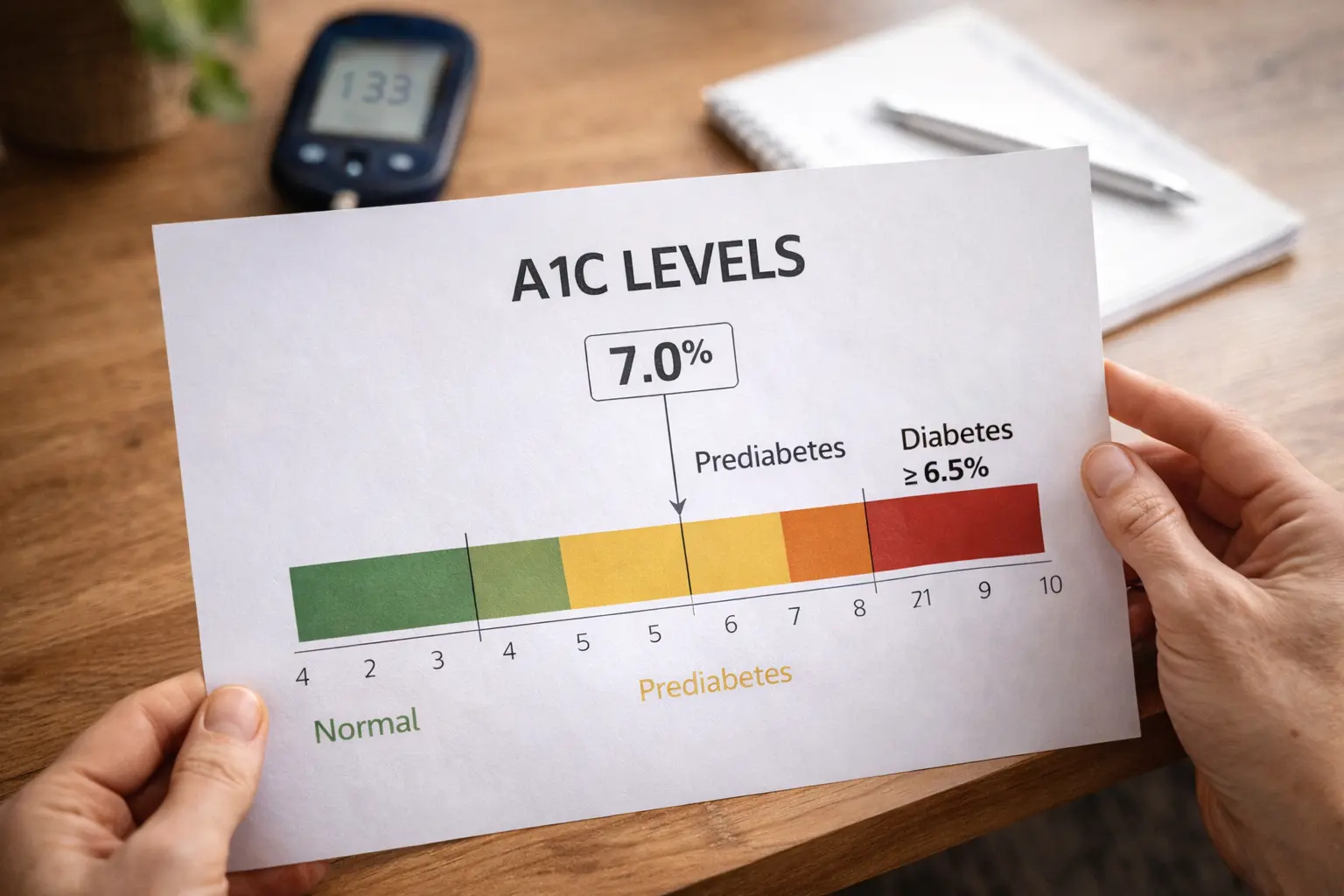
So your results come back and you’re staring at a number. Maybe it’s 5.2%, maybe it’s 6.8%, and honestly, it means nothing without context. Here’s the breakdown that actually makes sense: anything at 5.6% or below means your body is handling glucose like a champ, no red flags. Between 5.7% to 6.4%? That’s the prediabetes range, which sounds scary but is actually your body’s way of sending a warning signal. It’s not a diagnosis, it’s a wake-up call. You still have time to shift things. Anything at 6.5% or higher suggests diabetes, and that’s when you need to work closely with your healthcare provider to develop a real plan. The key thing young adults often miss is that these numbers aren’t judgments. They’re data points. They’re information. And information is power. Understanding where you fall helps you know whether you’re in prevention mode, intervention mode, or management mode.
💬 Ready to feel better in 2 minutes?choose where to begin:
Planning ahead with A1C
Let’s say your A1C comes back at 6.1%, landing you in that prediabetes zone. You’re not panicking, but you’re ready to do something about it. This is where your results become a blueprint. Maybe you realize your late-night snacking habit is sabotaging your numbers, so you swap it for herbal tea and a walk. Maybe you discover that your stress levels are spiking your glucose, so you add a yoga class or meditation to your routine. Some people find that cutting back on sugary drinks makes a massive difference. Others realize they need to move their body more consistently. Your A1C results give you permission to experiment and find what actually works for your life, not some generic diet plan. The goal isn’t perfection, it’s progress. You’re crafting a personalized strategy based on your actual biology, not guessing in the dark.
The value of routine testing
Here’s what changes everything: consistency. Getting tested once doesn’t tell you much. But getting tested every three to six months, depending on your situation, shows you trends. You see whether those lifestyle changes you made are actually paying off. You notice patterns you wouldn’t catch otherwise. Maybe you realize your numbers spike in winter when you’re less active. Maybe you see them improve in summer when you’re moving around more. Routine testing transforms you from someone passively receiving health information into someone actively managing their future. It’s empowering because you’re not just hoping things are okay, you’re actually tracking them. For young adults, this proactive approach builds confidence. You’re taking control of your health story rather than letting it happen to you. Each test is a checkpoint, a chance to celebrate wins or adjust your strategy.
A1C testing offers a comprehensive view of your blood sugar control over time, guiding you in making informed decisions for managing conditions like diabetes effectively.
How often should young adults get an A1C test?
It is recommended that young adults with risk factors for diabetes, such as a family history or overweight, get an A1C test every 3 years. For those already diagnosed with diabetes, testing frequency may be higher as advised by their healthcare provider.
Can A1C tests be affected by temporary factors like illness?
Yes, temporary factors like illness or recent blood loss can impact A1C results. It’s advisable to consult your healthcare provider about rescheduling the test if you are experiencing any acute issues that may affect the accuracy of the results.
Others also read:
Disclaimer: This article is for informational purposes only and is not a substitute for professional medical advice. Always consult a healthcare professional for personal guidance.
This article presents an experience-based perspective and has been reviewed by the GlobalHealthBeacon editorial team in 2026. It provides structured, evidence-based information to support informed health decisions.
