You’re exhausted, thirsty all the time, and something just feels off, but you can’t put your finger on it, and here’s the thing: an A1C test explained could be the answer you’ve been searching for to finally understand what’s happening inside your body.
Understanding A1C test mechanism
The A1C test works by measuring how much glucose has attached itself to your hemoglobin, the protein in red blood cells that carries oxygen throughout your body. When blood sugar stays elevated over time, glucose molecules bond with hemoglobin in a process called glycation, creating what scientists call glycated hemoglobin. This bonding is permanent for the life of that red blood cell, which is typically around 2 to 3 months. That’s why the A1C test gives you such a reliable snapshot of your average blood sugar over that entire period, rather than just capturing a single moment in time like a fasting glucose test would. Think of it this way: if a daily glucose reading is like checking your weight on a single day, the A1C is like reviewing your weight trend over an entire season. For women specifically, this matters because hormonal fluctuations throughout the menstrual cycle can cause blood sugar to swing dramatically, making single-point measurements misleading. The A1C smooths out those daily variations and shows the true pattern.
Importance of A1C in women’s health
Women face unique metabolic challenges that make A1C monitoring particularly important. During pregnancy, gestational diabetes can develop when the body struggles to manage the increased insulin demands, and catching this early through A1C testing can prevent serious complications for both mother and baby. Beyond pregnancy, women are statistically more likely to develop type 2 diabetes after menopause due to declining estrogen levels, which affects how cells respond to insulin. Understanding your A1C baseline in your 30s and 40s gives you a crucial early warning system. Consider Sarah, a 45-year-old woman who noticed her energy levels dropping and assumed it was just perimenopause. Her A1C came back at 5.9 percent, placing her in the prediabetic range, which prompted her to make dietary adjustments before the condition progressed. For women with polycystic ovary syndrome (PCOS), a condition affecting hormonal balance, A1C testing becomes even more critical since insulin resistance is a core feature. Regular monitoring empowers women to intervene early and prevent the cascade of complications that can follow unmanaged blood sugar issues.
Interpreting A1C results
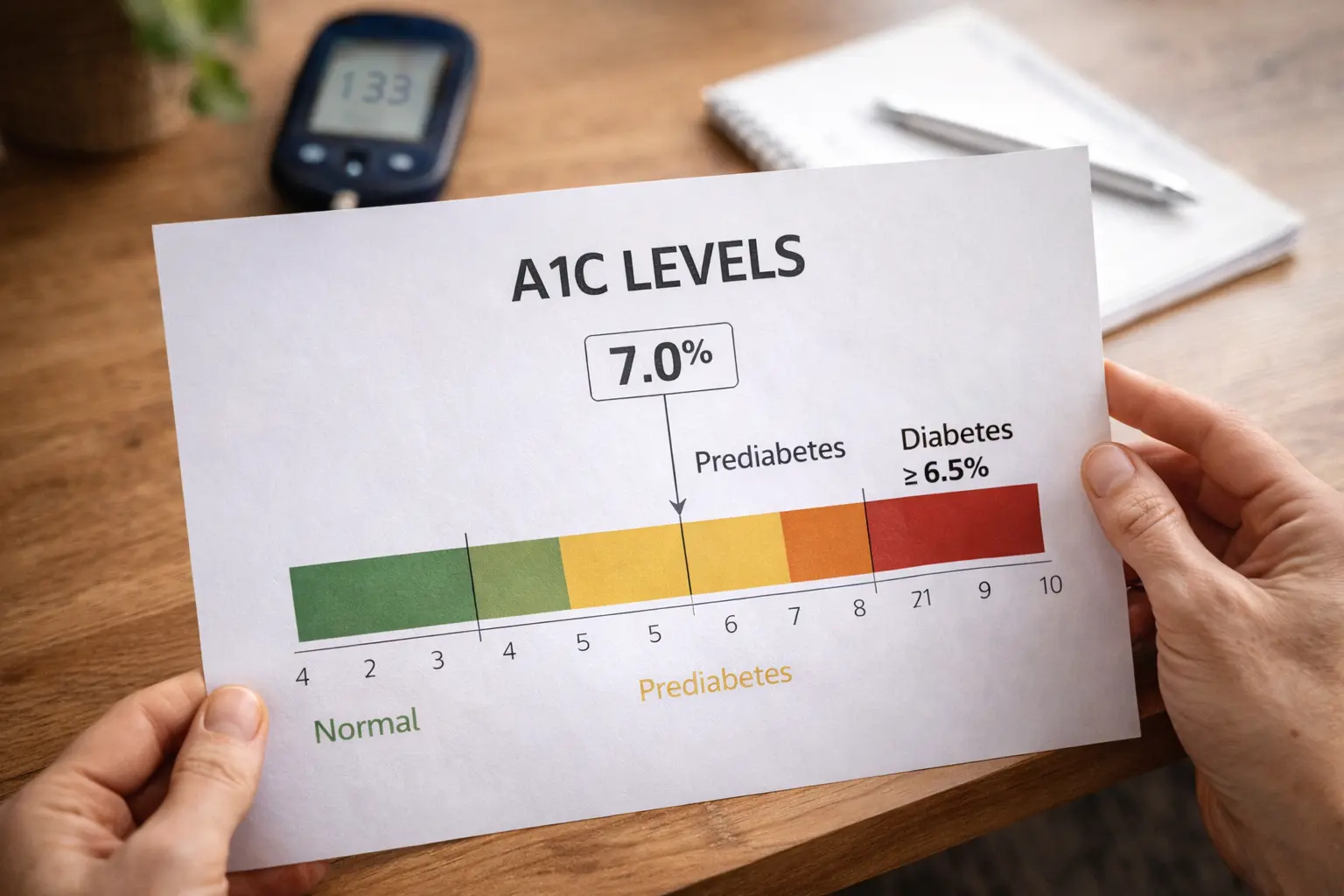
A1C results fall into distinct ranges that tell a clear story about your blood sugar control. A normal A1C is below 5.7 percent, indicating that your average blood sugar has stayed within a healthy zone. The prediabetic range spans from 5.7 to 6.4 percent, which is a critical window where lifestyle changes can still reverse the trajectory. An A1C of 6.5 percent or higher typically indicates type 2 diabetes. But here’s what many women don’t realize: these numbers aren’t just abstract percentages. An A1C of 7 percent means your average blood sugar has been around 154 milligrams per deciliter, while an A1C of 8 percent translates to roughly 183 milligrams per deciliter. Understanding this conversion helps you grasp what these numbers mean in real terms. For women managing diabetes, the goal is typically to keep A1C below 7 percent, though your personal target should be discussed with your healthcare provider based on your age, other health conditions, and individual circumstances. Some women benefit from slightly tighter control, while others do better with a bit more flexibility to avoid dangerous low blood sugar episodes.
- Schedule A1C testing every 3 to 6 months if you have diabetes or prediabetes, or annually if you have risk factors like family history or being overweight.
- Write down your A1C results and the dates tested so you can track trends over time and see whether your efforts are working.
- Bring your results to your healthcare provider appointment and ask specifically what your number means for your individual health situation.
- Discuss any barriers you face in managing blood sugar, whether that’s stress, medication side effects, or difficulty with dietary changes.
- Create a personalized action plan that might include adjustments to diet, exercise frequency, sleep habits, or medication if needed.
- Retest after making changes to see if your efforts are moving the needle in the right direction.
🔬 Science-backed benefits in 2 minuteschoose where to begin:
Factors affecting A1C levels
Your A1C doesn’t exist in a vacuum. It’s influenced by a complex web of lifestyle, physiological, and environmental factors that all interact with each other. Diet is the most obvious lever you can control: refined carbohydrates and sugary foods cause rapid blood sugar spikes, while fiber-rich vegetables, lean proteins, and healthy fats create a gentler, more stable glucose response. Physical activity improves insulin sensitivity, meaning your cells respond more efficiently to insulin and pull glucose from the bloodstream more effectively. But stress is a hidden player that many women underestimate. When you’re stressed, your body releases cortisol and adrenaline, which trigger the liver to release stored glucose as part of the fight-or-flight response. A woman dealing with chronic work stress, family caregiving responsibilities, or sleep deprivation might see her A1C creep up despite eating well and exercising. Medication adherence matters too: if you’re prescribed metformin or another diabetes medication but skip doses, your A1C will reflect that inconsistency. Hormonal fluctuations during your menstrual cycle, perimenopause, or menopause can also shift A1C readings. Some women notice their blood sugar control worsens in the luteal phase of their cycle when progesterone is higher.
Benefits of lowering A1C levels
The stakes of managing A1C are genuinely high, but so are the rewards. High blood sugar damages blood vessels and nerves over time, a process called glycation that accelerates aging throughout your body. By lowering your A1C, you’re essentially hitting the brakes on this damage. The risk of heart disease and stroke drops significantly when A1C improves, which matters because women often experience heart attacks differently than men and are sometimes diagnosed later. Kidney disease, a silent complication of uncontrolled diabetes, progresses more slowly when A1C is well-managed. Diabetic neuropathy, the nerve damage that causes numbness and pain in the feet and hands, becomes less likely. Vision problems and retinopathy, which can lead to blindness, are less probable. Beyond these major complications, women often report feeling better overall when their A1C improves: more energy, clearer thinking, better mood, and fewer cravings. One woman reported that after lowering her A1C from 8.2 to 6.8 percent through diet and exercise changes, she had the energy to play with her grandchildren again and felt like herself for the first time in years. That’s the real-world impact of better blood sugar control.
Future perspectives on A1C testing
The field of diabetes monitoring is evolving rapidly, and exciting developments are on the horizon for women’s health specifically. Researchers are exploring continuous glucose monitors that provide real-time feedback rather than waiting months for an A1C result, allowing women to see exactly how their body responds to different foods and activities. Genetic testing may eventually help identify which women are at highest risk for diabetes, enabling truly personalized prevention strategies. Some studies are investigating whether A1C targets should be different for women at different life stages, recognizing that a 25-year-old woman’s needs differ from a 65-year-old woman’s needs. Artificial intelligence is being developed to predict A1C trends before they happen, giving women a chance to intervene proactively. Wearable technology continues to improve, making it easier to track the lifestyle factors that influence blood sugar without constant finger pricks. By staying informed about these developments and maintaining regular conversations with your healthcare provider about your A1C, you position yourself to benefit from advances as they emerge. The future of diabetes care is moving toward personalization, and women are increasingly at the center of that conversation.
The A1C test is a powerful tool that reveals your blood sugar patterns over months, not just days. Understanding how it works, what your results mean, and which factors influence your levels puts you in control of your health trajectory. Whether you’re managing diabetes, navigating prediabetes, or simply monitoring your risk, regular A1C testing combined with lifestyle awareness creates a foundation for long-term wellness. Stay informed, stay proactive, and remember that small changes compound into significant health improvements over time.
Can A1C levels fluctuate?
Yes, A1C levels can vary based on factors like diet, exercise, stress, sleep quality, and medication adherence. Regular monitoring is essential to track changes and determine the effectiveness of treatment. However, A1C changes more slowly than daily blood sugar readings because it reflects an average over 2 to 3 months, so you won’t see dramatic swings week to week.
How often should women get an A1C test?
Women with diabetes should undergo A1C testing at least every 3 months if their diabetes is not well-controlled, or every 6 months if their A1C is stable and at goal. Women with prediabetes or significant risk factors should test annually. Those without diabetes but with family history may benefit from testing every 1 to 3 years. Your healthcare provider can recommend the frequency that makes sense for your individual situation.
Others also read:
Disclaimer: This article is for informational purposes only and is not a substitute for professional medical advice. Always consult a healthcare professional for personal guidance.
This article has been prepared and reviewed by the GlobalHealthBeacon editorial team and is based on current medical research and published scientific literature available in 2026. It provides structured, evidence-based information to support informed health decisions.
