You’re tired, thirsty all the time, and your doctor mentions something called an A1C test like it’s supposed to mean something to you, but here’s the thing: nobody actually explains what it measures or why it matters for your health until you understand the a1c test explained in plain terms that actually stick.
Understanding A1C test basics
The A1C test, also called hemoglobin A1C or HbA1c, measures the average blood sugar levels over the past 2-3 months by looking at how much glucose has attached to your hemoglobin, the protein in red blood cells that carries oxygen. Think of it like this: when you eat a meal with carbs, your blood sugar spikes temporarily, but the A1C captures the bigger picture. Instead of a single snapshot like a fasting glucose test, the A1C shows your blood sugar patterns over weeks and months. This is crucial because it reveals how well your body has been managing blood sugar on an average day, not just when you happen to visit the doctor. For young adults, understanding this test becomes important early because it helps identify whether your body is struggling to regulate glucose before serious complications develop. The test is simple: a small blood sample, no fasting required, and results come back as a percentage that tells you exactly where you stand.
Importance of A1C in diabetes management
A high A1C level suggests your blood sugar has been running elevated over months, which means your body is working overtime to manage glucose and your cells are being exposed to sustained high sugar levels. This chronic exposure triggers a cascade of problems: your blood vessels start to stiffen and narrow, your nerves begin to deteriorate, and your kidneys have to filter excess glucose constantly. Young adults with uncontrolled diabetes often don’t feel immediate symptoms, which is the dangerous part. You might feel fine while damage is quietly accumulating. A lower A1C level, on the other hand, indicates your blood sugar has stayed closer to normal ranges, which means less stress on your cardiovascular system, better nerve function, and reduced risk of kidney disease down the road. The difference between an A1C of 7% and 8% might seem small, but it represents months of either better or worse glucose control. For someone in their twenties or thirties, getting your A1C down now can literally add years of healthy life and prevent complications that would otherwise show up in your forties and fifties.
Factors influencing A1C levels
Your A1C doesn’t exist in a vacuum. Diet shapes it dramatically: eating refined carbs and sugary foods causes blood sugar spikes that push your A1C higher over time, while whole grains, vegetables, and lean proteins create steadier glucose patterns. Exercise acts like a glucose sink, helping your muscles pull sugar from your bloodstream without needing as much insulin, which directly lowers your A1C. Certain medications, especially insulin and some diabetes drugs, actively work to reduce blood sugar, so they lower A1C. Stress hormones like cortisol trigger your liver to release stored glucose, temporarily raising blood sugar and eventually affecting your A1C if stress is chronic. Illness and infection cause your body to release glucose as part of the stress response, which can bump up your A1C. Sleep deprivation messes with hormones that regulate hunger and glucose, making blood sugar harder to control. Even your menstrual cycle, if applicable, can cause slight fluctuations in insulin sensitivity. Understanding these factors means you can actually influence your A1C through real lifestyle choices, not just medication.
- Monitor your blood sugar regularly using a glucose meter or continuous monitor to track patterns and see how specific foods and activities affect your numbers.
- Adopt a balanced diet rich in non-starchy vegetables, lean proteins, healthy fats, and whole grains while limiting sugary drinks and processed foods.
- Stay physically active with at least 150 minutes of moderate exercise weekly, which helps your muscles use glucose more efficiently.
- Manage stress through techniques like meditation, deep breathing, or activities you enjoy, since stress hormones directly impact blood sugar.
- Prioritize consistent sleep of 7-9 hours nightly, as poor sleep disrupts the hormones that regulate glucose metabolism.
- Take medications exactly as prescribed if you have been given them, since they work together with lifestyle changes to control A1C.
🔬 Science-backed benefits in 2 minuteschoose where to begin:
Interpreting A1C results
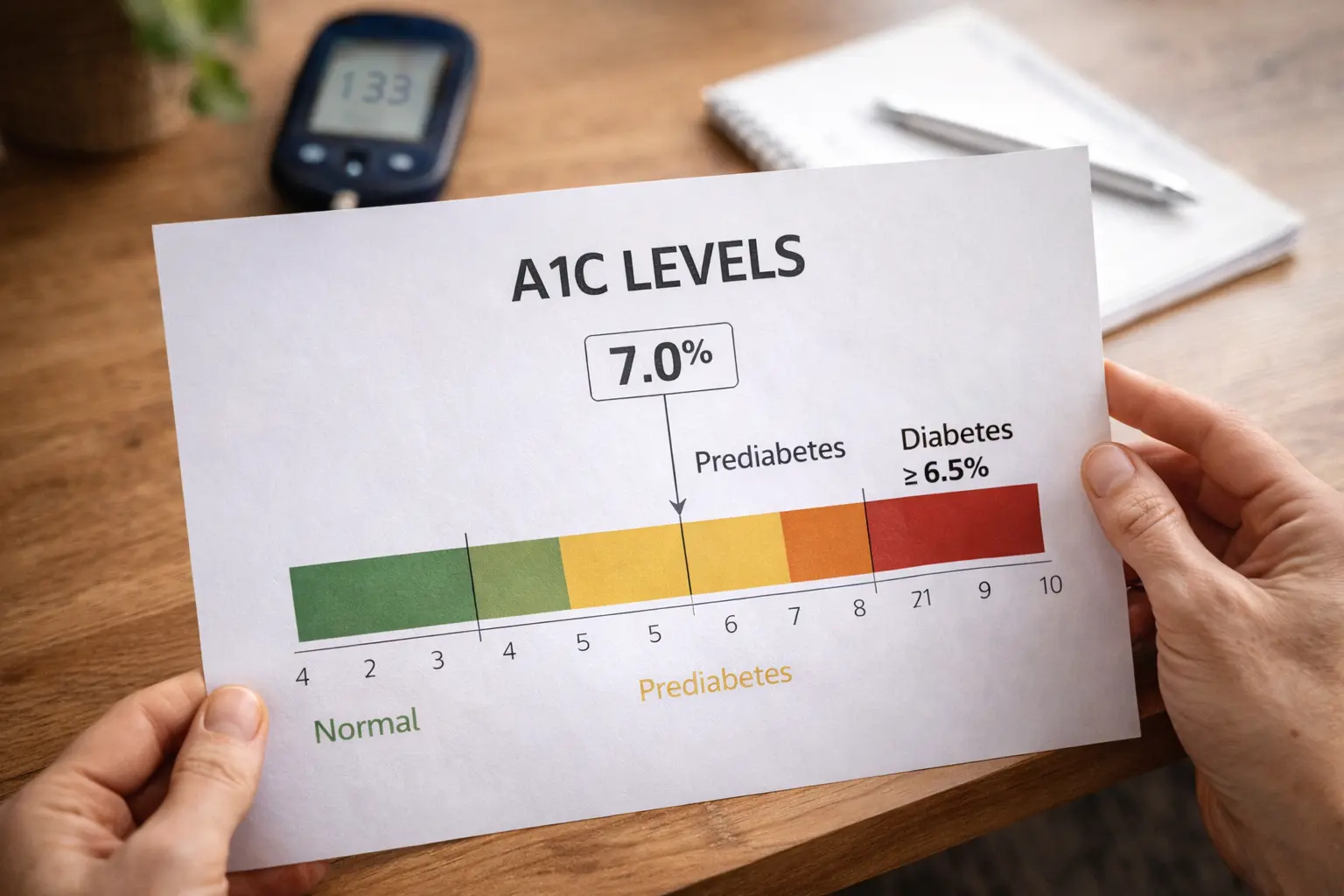
The A1C scale gives you clear categories that help you understand where you stand. Below 5.7% is considered normal, meaning your blood sugar regulation is working well and diabetes risk is low. Between 5.7% and 6.4% falls into prediabetes territory, which is actually a wake-up call but not a diagnosis of diabetes yet. This is the sweet spot for young adults to make changes: your body is showing signs of struggling with glucose, but you still have time to reverse the trend through diet and exercise before it becomes type 2 diabetes. An A1C of 6.5% or higher meets the diagnostic threshold for diabetes, meaning your blood sugar control has deteriorated enough that medical intervention is needed. But here’s what matters: these numbers aren’t destiny. Someone with a 6.8% A1C can bring it down to 6.2% through consistent effort over several months. The key is knowing your number, understanding what it means for your specific situation, and working with your healthcare provider to create a plan tailored to your life, not a generic approach.
Limitations of the A1C test
The A1C test is powerful, but it’s not perfect for everyone. If you have anemia, your red blood cells turn over faster, which can make your A1C appear lower than your actual average blood sugar. Certain blood disorders, chronic kidney disease, or conditions affecting hemoglobin can skew results. Pregnancy changes how your body handles glucose, so A1C isn’t the best tool for monitoring gestational diabetes. Some medications and supplements can interfere with test accuracy. Rapid changes in blood sugar, like if you just started a new medication or made major diet changes, might not show up fully in your A1C yet because it reflects the past 2-3 months. This is why your doctor might also order fasting glucose tests, random glucose tests, or glucose tolerance tests to get a complete picture. For young adults, the A1C is usually reliable, but it works best as part of a comprehensive assessment that includes your symptoms, other blood work, and your personal health history.
Future A1C test developments
Researchers are working on next-generation glucose monitoring that could make A1C testing even more precise and personalized. Continuous glucose monitors, which you wear on your skin, already give real-time data that’s more detailed than A1C alone. Scientists are exploring whether different A1C targets might be better for different age groups or populations, since a young adult’s risk tolerance differs from someone older. Genetic research is uncovering why some people’s A1C doesn’t always match their actual glucose patterns, which could lead to more individualized interpretation. Digital health platforms are making it easier to track your own glucose trends between A1C tests, so you don’t have to wait three months to know if your changes are working. Some labs are developing faster A1C tests that give results in minutes instead of days. For young adults today, these advances mean better tools are coming to help you stay on top of your blood sugar health with less guesswork and more precision.
The A1C test offers valuable insights into blood sugar management, with results reflecting long-term control. Understanding the significance of A1C levels and factors influencing them is crucial for effective diabetes management.
How often should I get an A1C test?
Individuals with diabetes should typically have the A1C test every 3 months to monitor blood sugar levels and see if current management strategies are working. Those with prediabetes might get tested annually or every 6 months to track whether lifestyle changes are preventing progression. Consult your healthcare provider for personalized recommendations based on your specific situation.
Can the A1C test be used for diagnosing diabetes?
Yes, an A1C level of 6.5% or higher is indicative of diabetes according to diagnostic guidelines. If your results fall within this range, further testing and evaluation are necessary for a confirmed diagnosis, and your doctor will discuss treatment options with you.
Others also read:
Disclaimer: This article is for informational purposes only and is not a substitute for professional medical advice. Always consult a healthcare professional for personal guidance.
This article has been prepared and reviewed by the GlobalHealthBeacon editorial team and is based on current medical research and published scientific literature available in 2026. It provides structured, evidence-based information to support informed health decisions.
