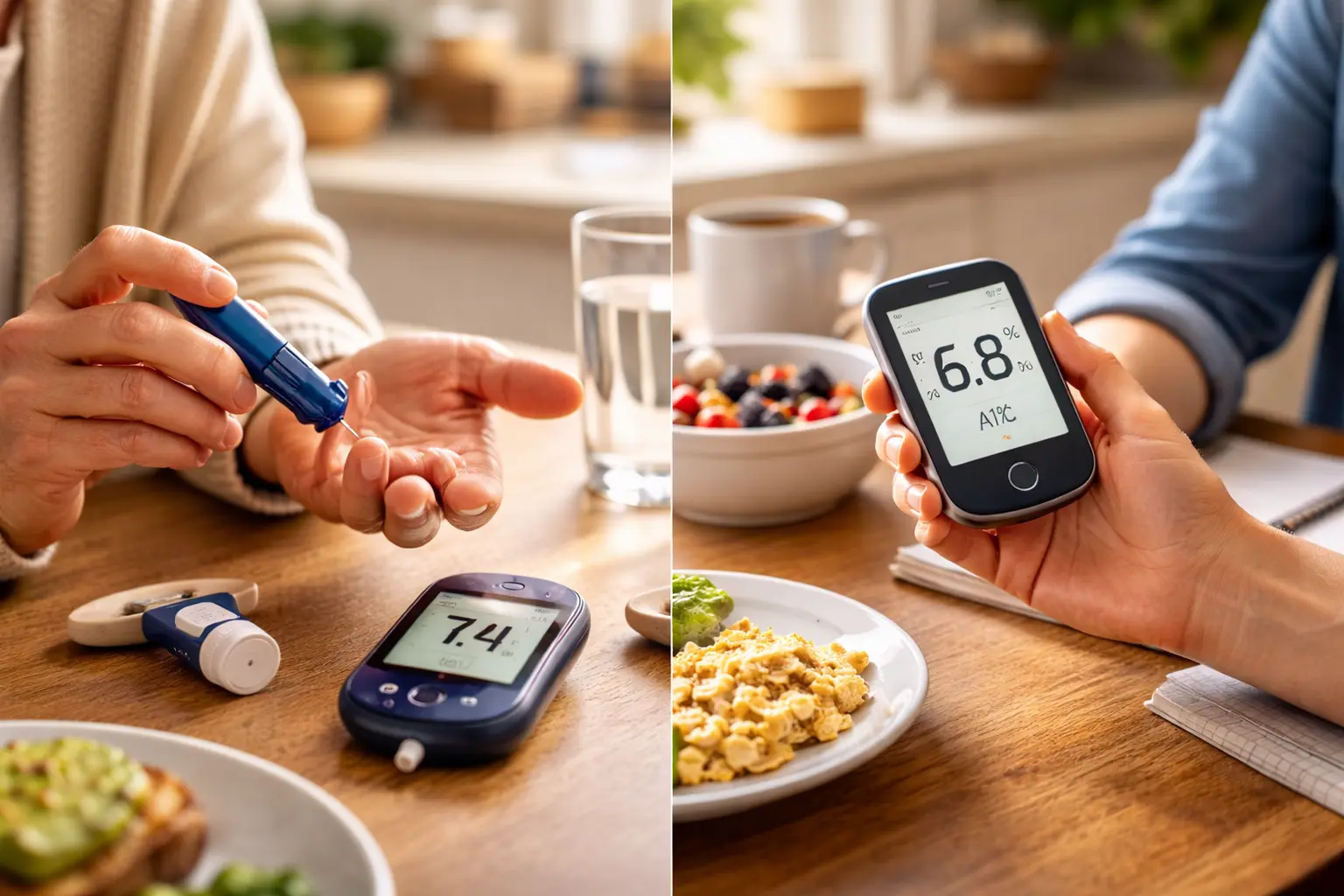
Your doctor mentions A1C and fasting glucose like they’re interchangeable, but they’re measuring completely different things, and that confusion could cost you early warning signs of diabetes.
Understanding A1C and fasting glucose
Think of A1C and fasting glucose as two different lenses on the same problem. A1C reflects your average blood sugar levels over the past 2 to 3 months, painting a picture of how your body has been managing glucose over time. Fasting glucose, on the other hand, measures the sugar in your blood after you’ve gone 8 hours without eating, typically first thing in the morning. Imagine A1C as a report card showing your overall semester performance, while fasting glucose is a single quiz score. A1C gives you that comprehensive view of trends and patterns, while fasting glucose offers a snapshot of your body’s immediate blood sugar status. For young adults, understanding this distinction matters because your habits today shape these numbers tomorrow. If you skip breakfast and run on coffee, your fasting glucose might look deceptively good. But if you’re consistently eating processed foods and staying sedentary, your A1C could be creeping upward without you realizing it. Both tests serve different purposes in the bigger picture of your metabolic health.
- A1C is measured as a percentage, with lower levels indicating better blood sugar control.
- Fasting glucose is measured in milligrams per deciliter (mg/dL), and normal levels typically range from 70 to 100 mg/dL.
- Both tests are crucial in diagnosing and managing conditions like diabetes.
Interpreting A1C levels
Your A1C result falls into one of three categories, and knowing where you land is the first step toward taking control. A1C levels below 5.7 percent are considered normal, meaning your body is handling glucose the way it should. If your result lands between 5.7 and 6.4 percent, you’re in the prediabetes range, which is essentially a wake-up call but not a diagnosis. Diabetes is confirmed at 6.5 percent or higher. Here’s what this means in real terms: if you’re a 28-year-old with an A1C of 6.2 percent, you’re not diabetic yet, but your body is showing signs of struggling to regulate blood sugar. This is actually the moment when lifestyle changes can make the biggest difference. You could reverse this trend with consistent exercise, dietary adjustments, and stress management. Knowing your A1C helps you track changes in your blood sugar control over time, and many young adults find that seeing improvement in these numbers motivates them to stick with healthier habits. Your doctor can help you set a personal target based on your age and health profile.
📘 Fix your day in under 2 minuteschoose where to begin:
Understanding fasting glucose readings
Fasting glucose is straightforward to interpret, but the numbers can be misleading if you don’t understand what they actually mean. Fasting glucose levels below 100 mg/dL are typically normal, suggesting your pancreas is doing its job well during rest periods. The range between 100 and 125 mg/dL indicates prediabetes, and 126 mg/dL or higher suggests diabetes. Here’s a practical example: imagine you’re 25 years old and your fasting glucose comes back at 105 mg/dL. You might feel fine, never experienced symptoms, and eat reasonably well. But this number tells you that even after 8 hours of fasting, your body is struggling to keep blood sugar in the normal range. This could mean your cells are becoming resistant to insulin, or your pancreas is working harder than it should. Fasting glucose readings provide insights into your body’s immediate blood sugar status, but they can fluctuate based on stress, sleep quality, and even what you ate the day before. One elevated reading isn’t a diagnosis, which is why doctors often order follow-up tests or look at your A1C alongside fasting glucose to get the full picture.
Key differences between A1C and fasting glucose
The most important distinction is timing and scope. A1C offers a long-term perspective on blood sugar control, showing patterns across months, while fasting glucose provides immediate feedback about a single moment in time. A1C is more stable and reliable for diagnosis because it reflects overall trends, whereas fasting glucose can vary throughout the day based on what you eat, how much you move, stress levels, and sleep quality. Consider this scenario: you might have a normal fasting glucose reading on Monday morning because you slept well and didn’t eat late the night before. But by Wednesday, after two nights of poor sleep and stress from work, your fasting glucose could be elevated. Your A1C, however, wouldn’t change much from one day to the next because it’s averaging your blood sugar over months. This is why doctors use both tests together. Fasting glucose catches immediate problems, while A1C confirms whether those problems are part of a larger pattern. For young adults managing their health proactively, understanding this difference means you can interpret your results without panic. A single high fasting glucose reading doesn’t mean you have diabetes, but a rising A1C trend definitely warrants lifestyle changes or medical intervention.
Taking control of your health
Knowledge is the first step, but action is what changes your numbers. Regular monitoring of both A1C and fasting glucose levels is essential for early detection and management of diabetes, especially if you have risk factors like family history, being overweight, or living a sedentary lifestyle. Start by scheduling a baseline test with your doctor if you haven’t had one recently. Once you know your numbers, you have a starting point. If your results show prediabetes or elevated readings, work with your healthcare provider or a registered dietitian to create a realistic plan. This might include adding 30 minutes of moderate exercise most days, reducing sugary drinks and processed foods, managing stress through meditation or yoga, and getting consistent sleep. Understanding the significance of these tests empowers you to make informed decisions about your health rather than waiting for a diabetes diagnosis to take action. Many young adults find that when they see their A1C improve after three months of lifestyle changes, it becomes the motivation they need to keep going. Your numbers aren’t fixed, they’re responsive to your choices.
A1C and fasting glucose tests play distinct roles in assessing your blood sugar levels. While A1C shows long-term trends over months, fasting glucose provides immediate feedback about your current status. Monitoring both is crucial for maintaining optimal health and catching problems early when lifestyle changes can make the biggest impact.
Which test is more accurate, A1C or fasting glucose?
Both A1C and fasting glucose tests are essential in evaluating blood sugar levels, but they provide different information. A1C reflects long-term trends, while fasting glucose offers a snapshot of your current blood sugar status. Neither is more accurate than the other, they’re complementary. Doctors use both together to get a complete picture of your metabolic health.
How often should young adults get A1C and fasting glucose tests?
Young adults should discuss with their healthcare provider the frequency of A1C and fasting glucose tests based on their risk factors and medical history. Generally, getting tested annually is recommended as a proactive approach to monitoring blood sugar levels. If you have prediabetes or family history of diabetes, your doctor may recommend testing every 3 to 6 months to track progress.
Disclaimer: This article is for informational purposes only and is not a substitute for professional medical advice. Always consult a healthcare professional for personal guidance.
This guide has been prepared and reviewed by the GlobalHealthBeacon editorial team and reflects current medical research as of 2026. It provides structured, evidence-based information to support informed health decisions.
