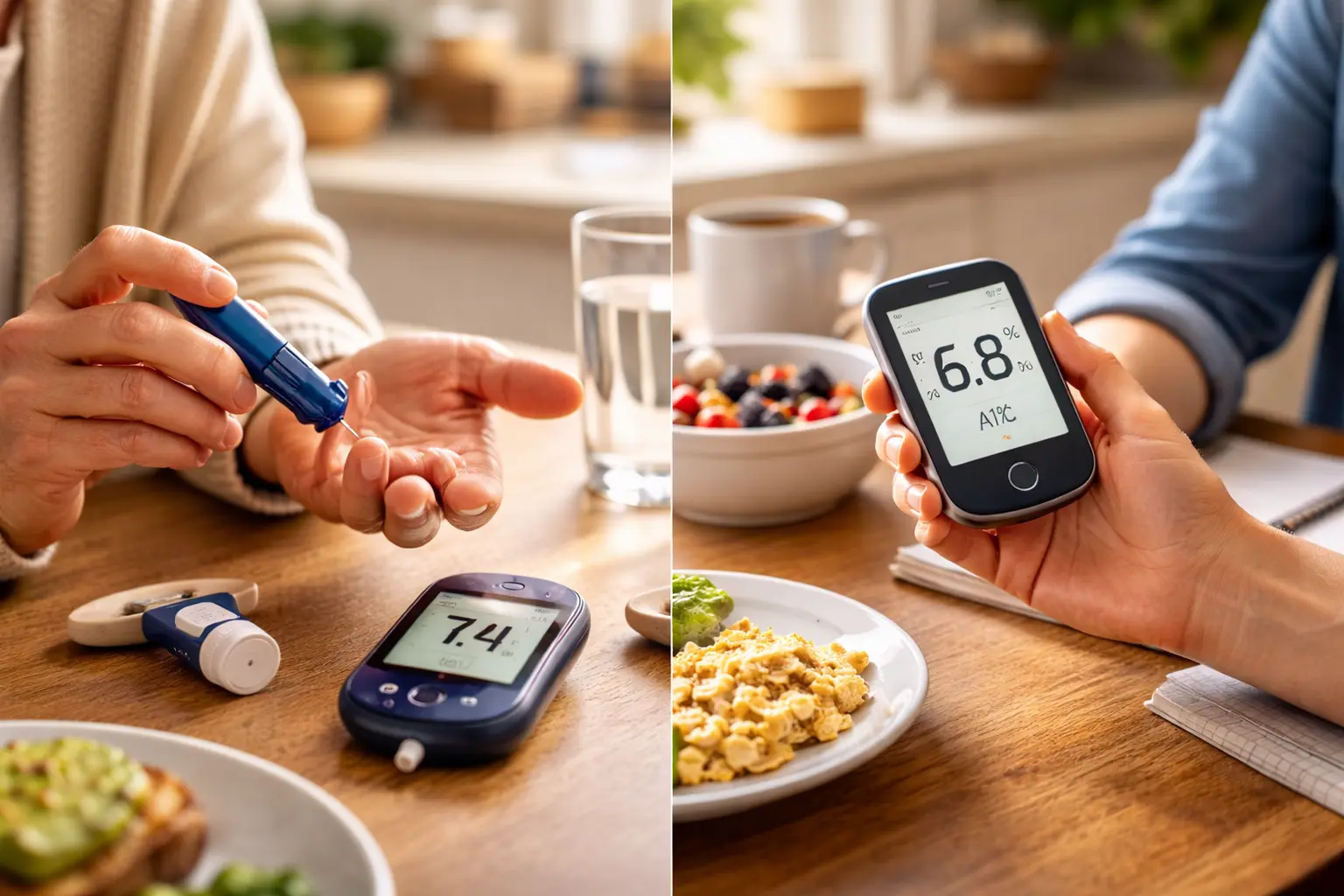
Your doctor throws around A1C and fasting glucose numbers like you should just know what they mean, leaving you nodding along while secretly wondering if a1c versus fasting glucose are basically the same thing or if you’re missing something crucial about your health.
Decoding A1C and fasting glucose
Picture this: you walk into your doctor’s office and they hand you lab results with two different numbers staring back at you. One says A1C, the other says fasting glucose. They sound related, but they’re actually telling you two very different stories about your blood sugar. A1C gives you a three-month snapshot of your average blood sugar levels, like a long-term report card showing how you’ve been doing overall. Fasting glucose, on the other hand, measures your blood sugar at one specific moment in time, right after you’ve gone without food overnight. Think of A1C as the big picture and fasting glucose as a single frame from a movie. A1C is less rattled by what you ate yesterday or whether you skipped your morning walk. It smooths out all those daily ups and downs. Fasting glucose is more sensitive to your immediate habits and what happened the night before.
- A1C reflects your average blood sugar levels over time, giving a better picture of how well your diabetes is managed.
- Fasting glucose measures your blood sugar after an overnight fast, providing a snapshot of your immediate glucose levels.
- A1C is less influenced by day-to-day fluctuations in diet and exercise compared to fasting glucose.
Interpreting the results
So you get your numbers back. Now what? Let’s break this down so it actually makes sense. For A1C, anything below 5.7% is considered normal range, meaning your blood sugar control is solid. If you’re between 5.7% and 6.4%, that’s the prediabetes zone, a yellow light telling you to pay attention. Hit 6.5% or higher, and that typically means diabetes. With fasting glucose, the numbers work differently because they’re measuring something more immediate. Below 100 mg/dL is normal. Between 100 and 125 mg/dL signals prediabetes. And 126 mg/dL or higher usually indicates diabetes. Here’s where it gets interesting: you might have one number in the normal range and another that’s elevated. That’s not unusual and doesn’t mean something’s wrong with the test. It just means your body’s glucose patterns are more complex than a single number can capture. Your doctor looks at both to get the full picture of what’s actually happening.
💬 Ready to feel better in 2 minutes?choose where to begin:
Implications for management
Understanding these two numbers is like having a dashboard for your health. Once you know what they mean, you can actually use them to steer your care in the right direction. Let’s say your A1C is creeping up. That tells you something about your overall habits over the past few months needs adjusting. Maybe you’ve been less active, or stress has been higher, or your eating patterns have shifted. Your fasting glucose might reveal that mornings are your trouble spot, which could mean adjusting your evening meal or timing of medications. Together, these numbers help you and your healthcare team spot patterns you might miss otherwise. Regular monitoring becomes your early warning system. You’re not just going to appointments and getting scolded about numbers. You’re actively tracking whether the changes you’re making actually work. Did that morning walk routine help? Is that new medication doing its job? These numbers give you real feedback, which is incredibly motivating and practical for making decisions about your health.
Seeking guidance and support
Here’s the truth: managing blood sugar is not a solo sport, especially as we get older and life gets more complicated. Your healthcare team exists for a reason. When you get your results, don’t just file them away. Sit down with your doctor or nurse and ask them to walk you through what the numbers mean specifically for you. Every person’s situation is different. Your A1C might be high because of one thing, and your neighbor’s might be high for a completely different reason. Ask questions about what these numbers suggest about your current management plan. Should you adjust medications? Try different lifestyle changes? Get more frequent monitoring? Your team can help you create a plan that actually fits your life, not some generic template. And don’t hesitate to reach out between appointments if something feels off or you’re struggling with changes you’re trying to make. Having that support makes a real difference in staying motivated and catching problems early.
Deciphering the nuances between A1C and fasting glucose levels is crucial for seniors managing diabetes. A1C offers a broader timeline of blood sugar control, while fasting glucose provides a snapshot view. Understanding and monitoring both values can empower seniors to take charge of their health effectively.
Can A1C levels fluctuate?
Yes, factors like diet, exercise, stress, and illness can influence A1C levels, causing fluctuations over time.
How often should I check my A1C and fasting glucose levels?
It’s recommended to monitor A1C every 3-6 months and fasting glucose levels at least once a year, or as advised by your healthcare provider.
Others also read:
Disclaimer: This article is for informational purposes only and is not a substitute for professional medical advice. Always consult a healthcare professional for personal guidance.
This article presents an experience-based perspective and has been reviewed by the GlobalHealthBeacon editorial team in 2026. It provides structured, evidence-based information to support informed health decisions.
