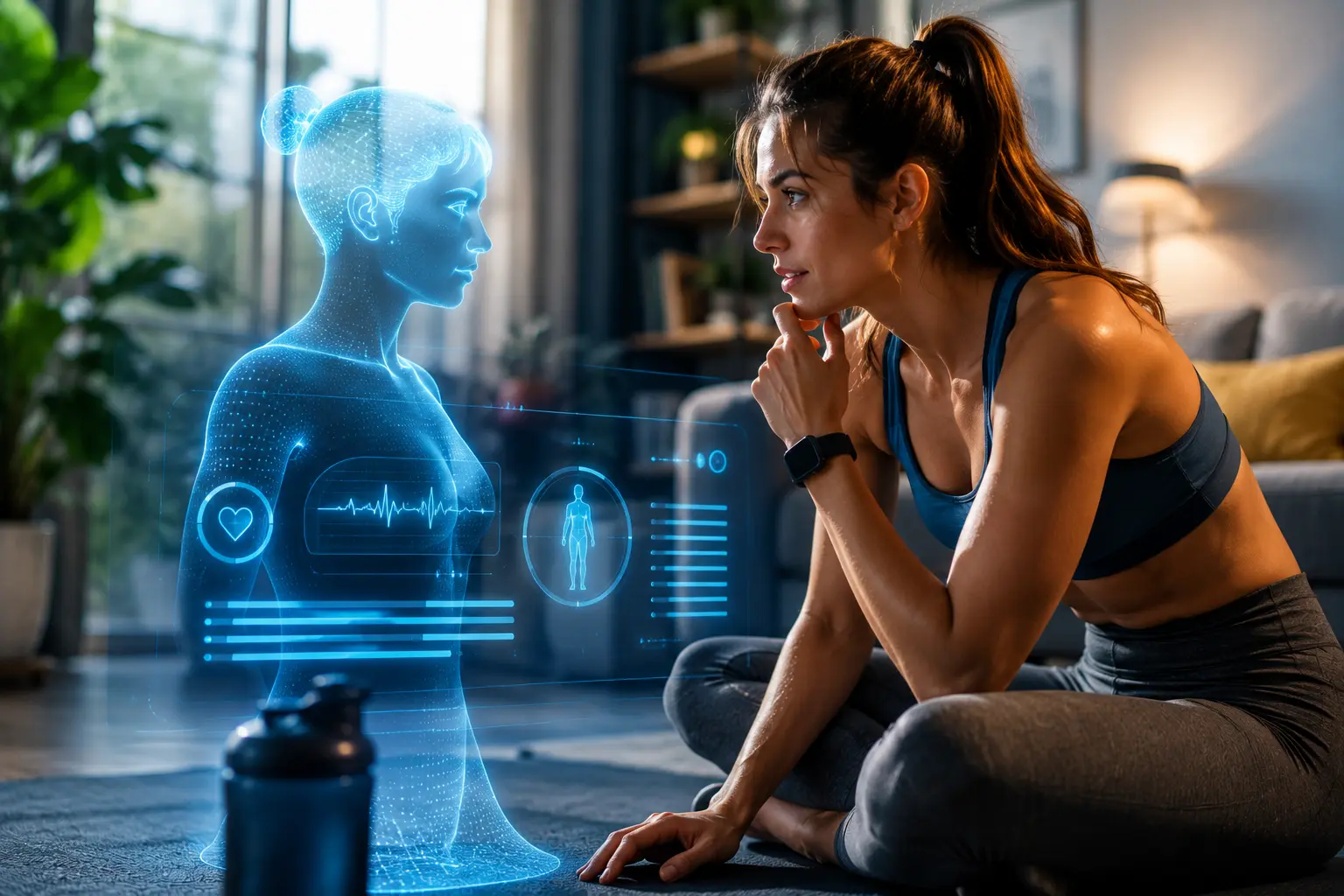
You’re juggling work, family, health concerns, and a nagging feeling that something needs to change but you have no idea where to start or who to trust with your wellness journey, and that’s exactly why understanding how an AI health coach explained through real neuroscience could be the game-changer you’ve been searching for.
Neural networks in AI health coaching
Think of neural networks as digital mirrors of how your brain actually works. When you use an AI health coach, these networks are constantly learning from your patterns, preferences, and responses in ways that feel almost intuitive. Imagine Sarah, a 52-year-old woman managing perimenopause symptoms alongside work stress. Her AI coach doesn’t just record that she walked 8,000 steps on Tuesday; it learns that her energy dips on high-stress days, that she sleeps better after evening walks, and that her mood improves when she hits certain activity thresholds. Over weeks, the system recognizes these interconnected patterns and adjusts recommendations accordingly. The neural network essentially builds a personalized model of Sarah’s unique physiology and psychology. This isn’t one-size-fits-all wellness advice. Instead, the technology adapts in real time, becoming more attuned to what actually works for her body and life circumstances. The more data the system processes, the smarter and more relevant its guidance becomes.
Biological signals and responses
Your body is constantly sending signals. Heart rate variability, sleep quality, activity patterns, stress markers, and even how you move throughout the day all tell a story about your health. AI health coaches read these signals like a skilled clinician reading vital signs. Consider Maria, who noticed her resting heart rate climbing during her busiest work weeks. Her AI coach flagged this pattern and connected it to her sleep logs, showing that nights with less than six hours of sleep preceded elevated morning heart rates by 24 hours. This insight helped Maria understand that her body was signaling overload. By monitoring these biological markers continuously, the AI coach identifies trends that might take months to notice on your own. You might feel generally tired without realizing it’s because your activity has dropped 30 percent. You might assume stress is just part of life without seeing how it’s disrupting your sleep architecture. These real-time biological insights transform abstract wellness goals into concrete, measurable feedback that helps you understand exactly how your lifestyle choices ripple through your physical and mental health.
The role of dopamine in behavior change
Dopamine gets a lot of hype, but here’s what actually matters: it’s the neurotransmitter your brain releases when you accomplish something, anticipate a reward, or experience progress. AI health coaches strategically leverage this biological reality to help you build lasting habits. When your coach celebrates hitting a hydration goal or acknowledges three consecutive days of morning movement, your brain releases dopamine. That chemical hit reinforces the behavior, making you more likely to repeat it. Women often struggle with consistency because life is unpredictable, but dopamine-driven feedback works differently than willpower alone. Instead of relying on motivation that fluctuates with your mood, the AI coach provides consistent, timely recognition of progress. Think of Jennifer, who struggled to maintain an exercise routine for years. When her AI coach started sending micro-celebrations for completing just 15 minutes of movement, something shifted. The dopamine reinforcement wasn’t about vanity or external pressure; it was about her brain recognizing and rewarding effort. Over time, the behavior became self-reinforcing. The dopamine system doesn’t judge whether you exercised for 60 minutes or 10 minutes; it responds to progress and consistency, which is why AI coaching can feel more sustainable than traditional approaches.
- Identify specific behavioral goals with your AI health coach that feel meaningful and achievable within your current life circumstances.
- Receive personalized rewards and positive feedback for achieving milestones, which triggers dopamine release and reinforces the behavior.
- Track progress and adjust strategies based on feedback from the AI coach, allowing the system to learn what motivates you most effectively.
🔬 Science-backed benefits in 2 minuteschoose where to begin:
Neuroplasticity and habit formation
Your brain isn’t fixed. Neuroplasticity is the scientific term for your brain’s remarkable ability to rewire itself based on repeated experience and intentional practice. This is especially relevant for women navigating life transitions, hormonal changes, and shifting priorities. When you repeat a behavior consistently, your brain literally strengthens the neural pathways associated with that behavior. An AI health coach leverages this principle by helping you practice new habits in a structured, supportive way. Consider Rachel, who wanted to shift from evening snacking to herbal tea and reading. Her AI coach didn’t just suggest this change; it helped her practice the new routine repeatedly, providing reminders and gentle encouragement. After about three weeks of consistent practice, Rachel’s brain had begun rewiring the evening wind-down pathway. What once felt effortful became almost automatic. The AI coach accelerates this neuroplastic process by providing consistent cues, immediate feedback, and celebration of progress. Rather than relying on willpower to override old patterns, you’re actually reshaping the neural architecture that drives your behavior. This is why habits formed with AI coaching support often feel more sustainable than those built through sheer determination alone.
Biometric feedback for real-time insights
Real-time biometric feedback is like having a conversation with your body instead of guessing what it needs. Your smartwatch or health device collects data about heart rate, sleep stages, activity, and stress levels. An AI health coach interprets this data and translates it into actionable insights you can actually use. Imagine Diana, who felt perpetually exhausted but couldn’t pinpoint why. Her biometric data revealed that she was spending only 12 percent of her sleep in deep sleep stages, far below optimal levels. The AI coach then connected this finding to her afternoon caffeine intake and evening screen time. By adjusting these factors based on real data rather than guesswork, Diana’s deep sleep improved significantly within two weeks. The power of biometric feedback lies in its immediacy and specificity. Instead of waiting months for a doctor’s appointment to discuss fatigue, you get daily insights about what’s actually happening in your body. The AI coach notices patterns you’d never catch alone: how a stressful meeting affects your heart rate for hours afterward, how skipping breakfast impacts your afternoon energy, how certain foods influence your sleep quality. This real-time conversation between you and your body’s data creates a feedback loop that drives genuine, sustainable behavior change.
The future of AI health coaching
AI health coaching is evolving rapidly, moving beyond basic step counting toward deeply personalized, neuroscience-informed wellness support. As technology advances, these systems are incorporating more sophisticated understanding of how hormones, stress, sleep, movement, and nutrition interact within a woman’s unique physiology. Future iterations will likely integrate genetic insights, menstrual cycle tracking, and hormonal fluctuations into personalized recommendations. The convergence of neuroscience, artificial intelligence, and wearable technology means that AI coaches will become increasingly attuned to the complexity of women’s health across different life stages. Whether you’re navigating your thirties, managing perimenopause, or optimizing health in your sixties, AI coaching will adapt to your specific biological and life context. The integration of cutting-edge neuroscience principles ensures that the guidance you receive isn’t generic wellness advice but rather a sophisticated reflection of how your individual brain and body actually function. As these tools continue to evolve, they promise to democratize access to personalized health insights that were once available only through expensive one-on-one coaching or medical consultations.
AI health coaching harnesses the power of neural networks, dopamine, neuroplasticity, and biometric feedback to provide personalized wellness support tailored to how women’s bodies and brains actually work. By understanding the neuroscience behind AI health coaching, you can make informed decisions about whether this approach aligns with your wellness goals and life circumstances.
How does AI health coaching personalize recommendations?
AI health coaching utilizes neural networks to analyze your individual data patterns, biometric feedback, and behavior history. The system learns your unique responses to different activities, foods, and stress levels, then generates recommendations specifically calibrated to what actually works for your body and life situation rather than generic advice.
Can AI health coaches adapt to changing health needs?
Yes, AI health coaches continuously adapt by leveraging neuroplasticity principles and processing real-time biometric feedback. As your health circumstances change, your hormones shift, or your life situation evolves, the system recognizes these changes and adjusts recommendations accordingly, making it particularly valuable for women navigating different life stages.
Others also read:
Disclaimer: This article is for informational purposes only and is not a substitute for professional medical advice. Always consult a healthcare professional for personal guidance.
This article has been prepared and reviewed by the GlobalHealthBeacon editorial team and is based on current medical research and published scientific literature available in 2026. It provides structured, evidence-based information to support informed health decisions.
