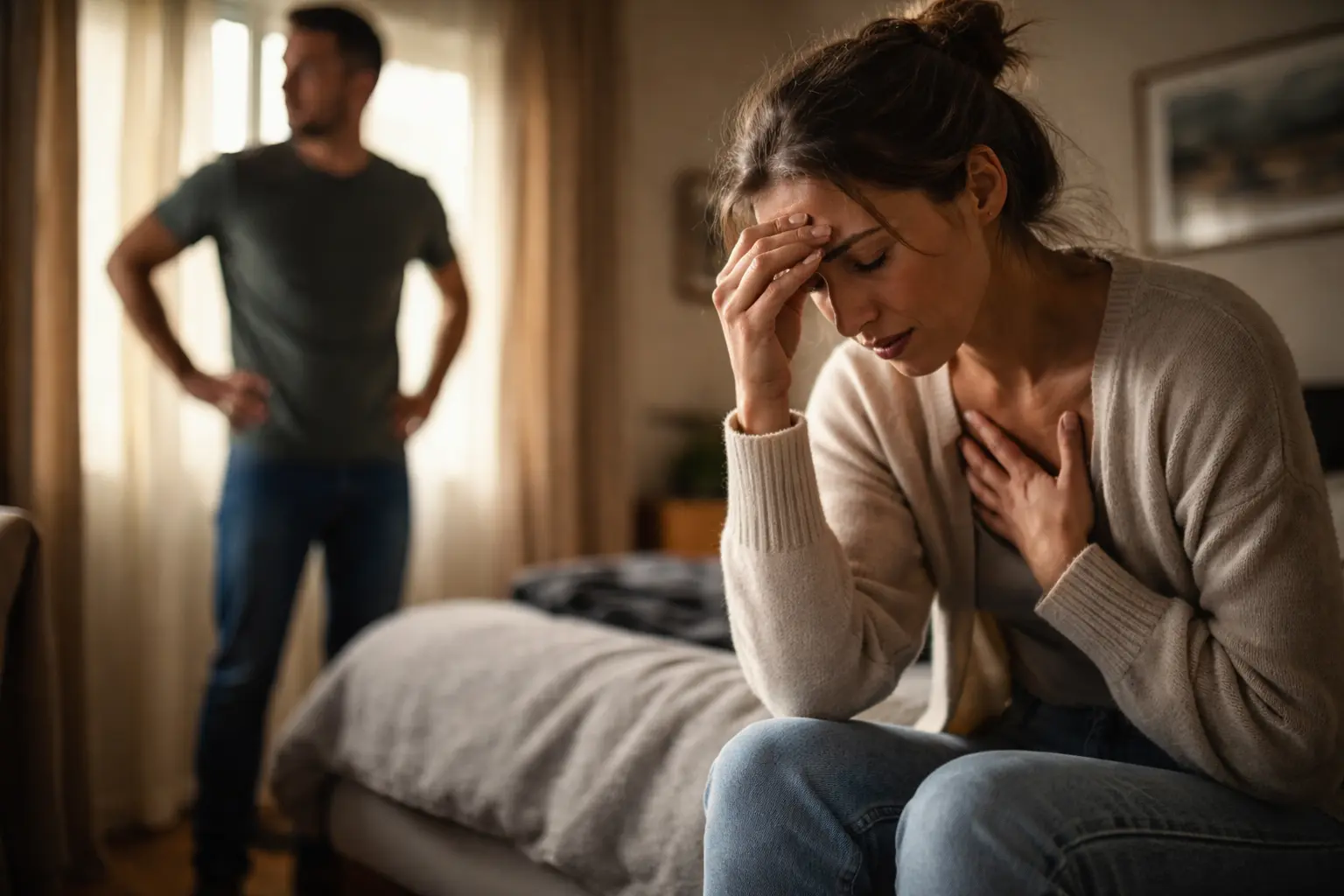
Your heart is racing, your palms are sweating, and you cannot tell if this is anxiety creeping up on you or if a full panic attack is about to hit you like a truck, and honestly, not knowing the difference is making everything feel worse.
Understanding anxiety
Anxiety is that persistent, nagging feeling of worry that settles into your chest and refuses to leave. Unlike panic attacks, anxiety builds gradually and can linger for hours, days, or even weeks. Picture this: you have a presentation at work next month. Three weeks before the date, you start feeling uneasy. Your mind races with what-if scenarios. You cannot concentrate during meetings. At night, your shoulders stay tense. You might experience physical symptoms like a tight throat, stomach discomfort, or difficulty sleeping. Women often experience anxiety triggered by work deadlines, relationship concerns, financial stress, or health worries. The key is that anxiety does not come out of nowhere. It usually has a source or trigger, even if that source feels vague or hard to pinpoint. Managing anxiety requires recognizing these patterns and addressing them early through breathing exercises, lifestyle adjustments, or professional support.
- Anxiety can be triggered by specific situations or be a general sense of unease.
- Symptoms of anxiety may include restlessness, irritability, and difficulty concentrating.
- Managing anxiety involves stress-reducing techniques, therapy, or medication.
Understanding panic attacks
Panic attacks are sudden, intense episodes of fear that hit without warning and escalate rapidly. Unlike anxiety, a panic attack peaks within minutes, often leaving you feeling confused and exhausted afterward. Imagine you are in a crowded grocery store. Everything feels normal until suddenly your chest tightens, your breathing becomes shallow, and you feel dizzy. Your hands shake. You might experience chest pain that makes you worry you are having a heart attack. Panic attacks include physical symptoms like rapid heartbeat, shortness of breath, trembling, sweating, and a sense of impending doom. Some women describe it as feeling like they are losing control or dying. The attack usually lasts 5 to 20 minutes, though it can feel much longer. Panic attacks can be triggered by specific situations like crowded spaces, driving on highways, or enclosed areas, but they can also occur randomly with no clear trigger. Many women experience their first panic attack during a stressful period and then develop fear around having another one.
📘 Fix your day in under 2 minuteschoose where to begin:
Differences between anxiety and panic attacks
The fundamental difference lies in onset, duration, and intensity. Anxiety develops gradually over time and persists for extended periods. Panic attacks arrive suddenly and peak within minutes before subsiding. Think of anxiety as a slow-burning fire that keeps you warm but uncomfortable. A panic attack is a sudden explosion that terrifies you but burns out quickly. Anxiety often has an identifiable cause. You worry about something specific. Panic attacks frequently feel random and causeless, which makes them more frightening. With anxiety, you can usually function, though uncomfortably. During a panic attack, you might feel completely unable to function. Understanding these distinctions helps you recognize what you are experiencing and respond appropriately. If you notice yourself feeling persistently worried for weeks, that is likely anxiety. If you experience sudden, overwhelming fear that peaks quickly, that is probably a panic attack. Many women experience both conditions, and one can sometimes trigger the other.
Coping strategies
Effective coping requires different approaches depending on whether you are managing anxiety or panic attacks. For anxiety, start with grounding techniques. Notice five things you see, four you can touch, three you hear, two you smell, and one you taste. This pulls your mind away from worry and into the present moment. Practice deep breathing by inhaling for four counts, holding for four, and exhaling for six. Progressive muscle relaxation, where you tense and release each muscle group, reduces physical tension. For panic attacks, the 5-4-3-2-1 grounding technique works well because it interrupts the panic cycle quickly. Cognitive-behavioral therapy teaches you to challenge anxious thoughts and reframe them realistically. Mindfulness meditation, even just 10 minutes daily, reduces overall anxiety sensitivity. Establish a consistent sleep schedule, limit caffeine, and move your body regularly. Consider journaling to identify anxiety patterns. Build a support system of trusted friends or family who understand what you are experiencing. If self-help strategies are not enough, therapy or medication can provide significant relief.
Seeking help
Reaching out for professional support is not weakness. It is wisdom. If anxiety is interfering with work, relationships, or sleep, or if panic attacks are happening frequently and limiting your life, schedule an appointment with your primary care doctor or a mental health professional. A therapist can diagnose whether you have generalized anxiety disorder, panic disorder, or another condition. They can teach you specific techniques tailored to your situation. A psychiatrist can evaluate whether medication might help. Many women find that a combination of therapy and medication works best. Your doctor might recommend cognitive-behavioral therapy, which has strong evidence for treating both anxiety and panic. Some women benefit from exposure therapy, where you gradually face situations that trigger anxiety. Others find relief through medication like SSRIs or short-term anti-anxiety medications. Do not wait until symptoms become severe. Early intervention makes treatment more effective. Your mental health deserves the same attention and care you would give to any physical health concern.
Understanding the differences between anxiety and panic attacks is crucial for women’s mental health. By recognizing the symptoms and seeking appropriate help, women can effectively manage these conditions and improve their overall well-being.
Can anxiety turn into a panic attack?
Yes, anxiety can escalate to a panic attack in some cases. It’s essential to monitor your symptoms and seek help if you notice a sudden increase in fear and physical discomfort.
Are women more prone to anxiety than men?
Research suggests that women are more likely to experience anxiety disorders than men. Hormonal fluctuations, societal pressures, and genetic factors may contribute to this gender difference.
Others also read:
Disclaimer: This article is for informational purposes only and is not a substitute for professional medical advice. Always consult a healthcare professional for personal guidance.
This guide has been prepared and reviewed by the GlobalHealthBeacon editorial team and reflects current medical research as of 2026. It provides structured, evidence-based information to support informed health decisions.

