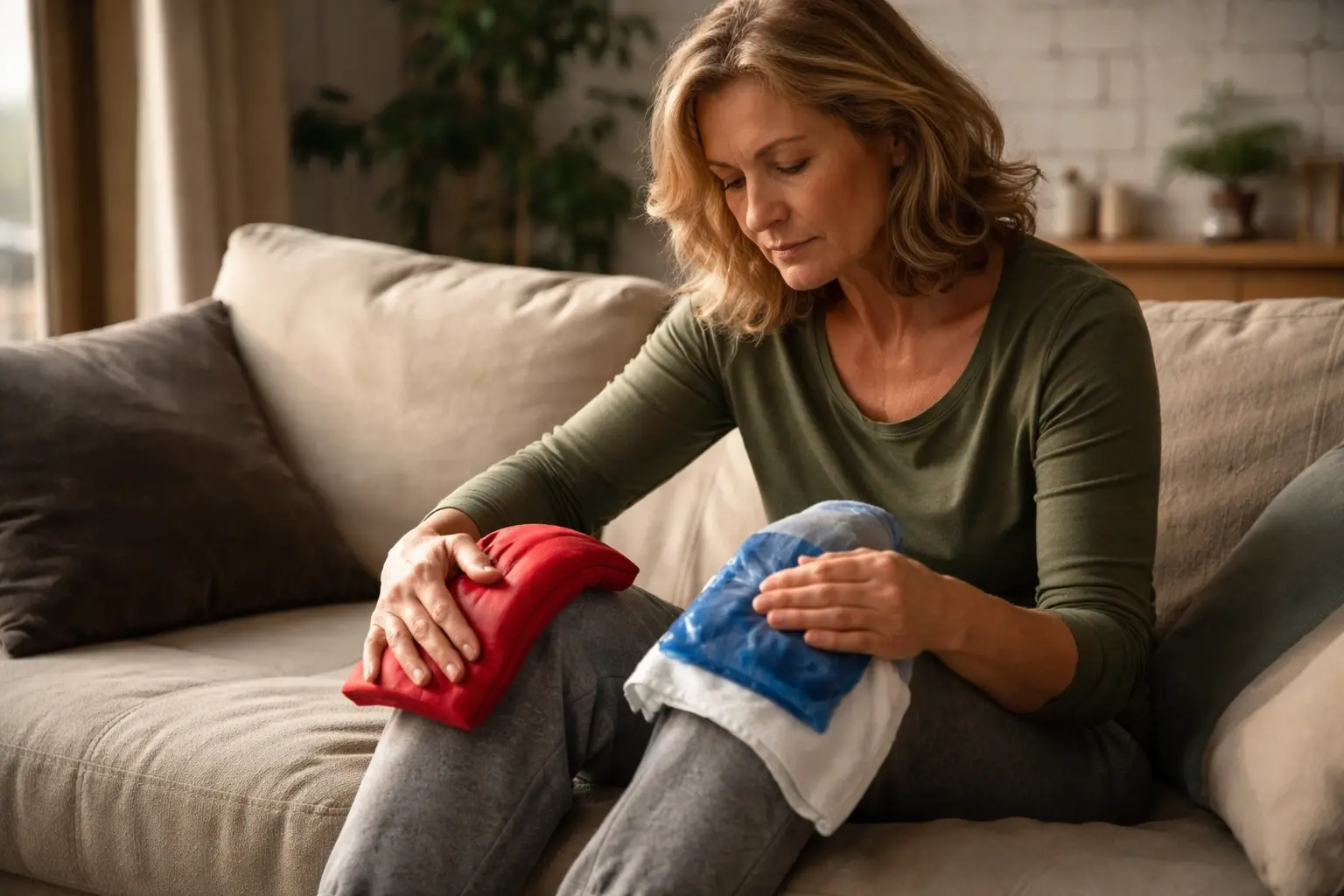
Your hands throb when you wake up, your knees feel stiff after sitting, and you are exhausted from wondering whether arthritis heat versus cold is actually going to help, or if you are just wasting time with another remedy that does not work.
The benefits of heat therapy
Heat therapy works by opening up blood vessels and increasing circulation to stiff, achy joints. When you apply warmth, your muscles relax and tension melts away, making movement easier and less painful. Many women find that a heating pad applied for 15 to 20 minutes before exercise or physical activity makes a real difference in how their joints respond. Think of heat as preparation: it primes your body for movement. You might use a microwaveable heat wrap while working at your desk, or soak your hands in warm water before gripping a jar or doing fine motor tasks. Some women prefer a warm bath in the evening to ease full-body stiffness accumulated throughout the day. Heat is particularly helpful for chronic arthritis where pain is constant and movement is limited. The warmth signals your nervous system to relax, which can reduce pain perception naturally. Just remember that heat works best when you give it time to penetrate, so patience is part of the strategy.
- Increases flexibility and range of motion
- Eases muscle spasms and reduces pain
- Enhances the effectiveness of exercise and physical therapy
Cold therapy for acute relief
Cold therapy is your go-to when arthritis flares up suddenly. You wake up with a swollen knee, or your wrist is throbbing after gardening, and you need immediate relief. Cold works by numbing pain signals and constricting blood vessels, which reduces inflammation and swelling at the source. A cold pack applied for 10 to 15 minutes can bring down swelling noticeably, especially in the first 48 hours after a flare. Many women keep a gel pack in the freezer specifically for these moments. Cold is also useful after activity if you have pushed your joints harder than usual. The key is wrapping your ice pack or cold compress in a thin cloth or towel before applying it to skin. Direct ice contact can cause frostbite or ice burns, which defeats the purpose of pain relief. Some women alternate between holding a cold pack and taking a break, repeating this cycle two or three times. Cold therapy is sharper and more immediate than heat, making it ideal when inflammation is the main problem rather than stiffness.
📘 Fix your day in under 2 minuteschoose where to begin:
Combining heat and cold therapy
Many women discover that alternating between heat and cold gives them the best results. You might start with cold to reduce swelling after a flare, then switch to heat the next day to restore mobility and ease stiffness. This contrast therapy improves circulation and helps your body manage both acute pain and chronic discomfort. A practical example: apply cold for 15 minutes to a swollen knee in the morning, wait an hour, then use heat for 20 minutes before your afternoon walk. Some women use this pattern throughout the week, adjusting based on how their joints feel. The alternating approach addresses the full cycle of arthritis: reducing inflammation when it is high, then preparing joints for movement when swelling subsides. You might also combine them within a single session, starting with cold to numb and reduce swelling, then finishing with heat to relax muscles and prepare for gentle stretching. This method requires listening to your body and adjusting timing based on your symptoms. Always consult your healthcare provider before starting any new therapy routine, especially if you have other health conditions or take medications that affect inflammation or circulation.
Tips for effective relief
Success with heat and cold therapy depends on technique and consistency. For heat, always place a damp towel between your skin and a heating pad to prevent burns, and never fall asleep with heat applied. Set a timer for 15 to 20 minutes so you do not overdo it. For cold, wrap ice in a cloth and apply for no longer than 15 to 20 minutes at a time, with at least an hour between sessions. Never apply ice directly to bare skin. A common mistake women make is using heat or cold too aggressively or for too long, which can backfire and increase pain. Another mistake is expecting immediate results; these therapies work best when used regularly over time. Keep a simple log of what works for you: which joints respond best to heat or cold, what time of day is most effective, and how long you need for relief. This personal data helps you refine your approach. Store reusable heat and cold packs in accessible places so you are more likely to use them. Some women keep a heating pad in their bedroom and a cold pack in the kitchen. The easier you make it to apply therapy, the more consistent you will be.
Staying active and healthy
Heat and cold therapy are tools, not cures. Real arthritis management happens when you combine therapy with movement, nutrition, and stress management. Staying physically active is crucial because gentle exercise keeps joints mobile and muscles strong, which protects your joints long-term. Walking, swimming, and water aerobics are low-impact options that many women with arthritis tolerate well. Nutrition matters too: anti-inflammatory foods like fatty fish, leafy greens, and berries can reduce overall inflammation in your body. Stress directly affects pain perception and inflammation levels, so practices like yoga, meditation, or simply taking quiet time help. Many women find that a combination of heat therapy before exercise, followed by consistent movement and a healthy diet, creates lasting improvement over months. Think of it as building a routine that supports your joints from multiple angles. You are not just treating pain in the moment; you are investing in your joints’ long-term health and your quality of life.
Heat therapy can enhance flexibility and prepare your joints for movement, while cold therapy is excellent for reducing acute pain and inflammation. Alternating between heat and cold, using proper techniques, staying active, and eating well are key to managing arthritis naturally and effectively.
Is it safe to use heat therapy for arthritis daily?
It is generally safe to use heat therapy daily for arthritis, but be mindful of not applying heat for extended periods to avoid burns. Consult with your healthcare provider for personalized recommendations.
Can I apply ice directly to my skin for cold therapy?
No, always wrap ice or cold packs in a cloth before applying to the skin to prevent frostbite and skin damage. Never apply ice directly as it can lead to cold burns.
Others also read:
Disclaimer: This article is for informational purposes only and is not a substitute for professional medical advice. Always consult a healthcare professional for personal guidance.
This guide has been prepared and reviewed by the GlobalHealthBeacon editorial team and reflects current medical research as of 2026. It provides structured, evidence-based information to support informed health decisions.
