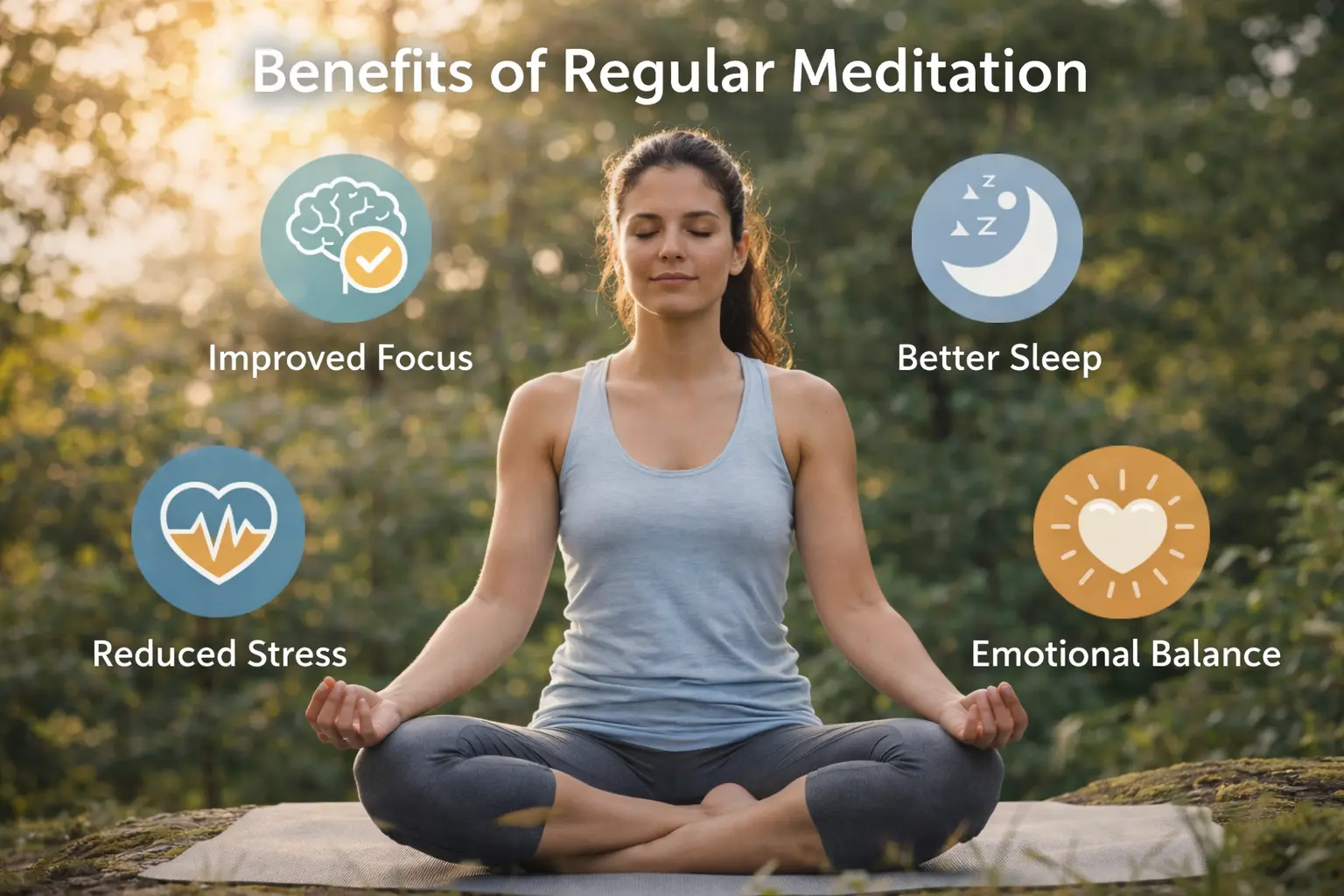
Your mind won’t stop racing, your shoulders are permanently tensed, and you can’t remember the last time you felt genuinely calm, but seniors are discovering that the benefits of regular meditation might be the missing piece that finally brings peace back into their lives.
Stress relief and mental clarity
Picture this: you’re sitting in your favorite chair, the afternoon sun streaming through the window, and for the first time in months, your mind feels quiet. That’s what many seniors experience when they commit to regular meditation. One retired teacher shared how she spent years carrying the weight of worry about her grandchildren, her health, her finances. Then she started meditating for just ten minutes each morning. Within weeks, she noticed something shift. The anxious thoughts still came, but they didn’t stick around like unwanted guests. Instead of spiraling into worst-case scenarios, she could observe them and let them pass. By focusing on her breath and gently redirecting her attention when her mind wandered, she rebuilt her ability to concentrate on what mattered. Her family noticed too. She became more present during conversations, less reactive to small frustrations, and genuinely more pleasant to be around. That mental clarity she regained? It transformed how she approached her days.
- Reduced anxiety levels
- Better ability to concentrate
- Enhanced emotional well-being
Improved sleep quality
Insomnia is a thief that steals more than just sleep from seniors. It robs them of energy, mood stability, and the ability to enjoy their days. Many seniors spend hours staring at the ceiling, their minds churning with thoughts about tomorrow or regrets from yesterday. One widower struggled with this for years after his wife passed. He’d lie awake until 2 or 3 a.m., exhausted but unable to quiet his mind. A friend suggested he try a simple bedtime meditation routine. He started with a guided body scan meditation, moving his attention slowly from his toes to his head, consciously relaxing each muscle group. The first night, he fell asleep before finishing it. Within two weeks of consistent practice, he was sleeping through most nights. He combined this with a gentle breathing technique he practiced while lying in bed, which signaled to his body that it was time to rest. The difference wasn’t just in the hours slept, but in how he felt when he woke up.
💬 Ready to feel better in 2 minutes?choose where to begin:
Physical health benefits
What happens inside your body when you meditate goes far beyond feeling calm. Your nervous system actually shifts into a different mode. A retired nurse named Margaret started meditating after her doctor mentioned her blood pressure was creeping up. She wasn’t interested in adding more medications if she could help it. Over several months of daily twenty-minute meditation sessions, she noticed her body felt different. Her shoulders weren’t constantly hunched. Her jaw wasn’t clenched. When her doctor checked her blood pressure at her next appointment, it had dropped noticeably. She also reported catching fewer colds that winter compared to previous years. While meditation alone isn’t a medical treatment, the relaxation response it triggers genuinely affects how your body functions. Your heart rate slows, your immune system gets a boost, and inflammation in your body decreases. These aren’t imaginary benefits. They’re measurable changes that ripple through your entire system.
Enhanced sense of purpose
Retirement can feel like stepping off a cliff. For decades, your identity was tied to your work, your role, your routine. Then suddenly, it’s all gone. Many seniors struggle with this identity shift, wondering what they’re supposed to do with the rest of their lives. Meditation became an unexpected tool for reconnection. A former executive found that through regular meditation, he stopped trying to fill every moment with activity and achievement. Instead, he started asking himself deeper questions. What actually brings him joy? What relationships matter most? What legacy does he want to leave? These weren’t questions he’d had time to ask before. Through quiet reflection during meditation, he discovered a passion for mentoring young entrepreneurs. He started volunteering with a local nonprofit, and suddenly his days felt meaningful again. He wasn’t chasing productivity or status anymore. He was living with intention. That shift from doing to being, from striving to reflecting, helped him find a new chapter of purpose.
Exploring the benefits of regular meditation, seniors uncover a multitude of advantages, including stress relief, improved sleep quality, better physical health, and a heightened sense of purpose. This ancient practice offers a holistic approach to wellness, addressing both mind and body concerns.
Can seniors with mobility issues practice meditation?
Absolutely! Meditation can be adapted to suit various physical abilities. Seniors can explore seated or lying-down meditation techniques that accommodate their specific needs.
How often should seniors meditate for optimal benefits?
Consistency is key. Seniors can start with just a few minutes a day and gradually increase their meditation practice. Aim for at least 10-15 minutes daily to experience the full benefits of meditation.
Others also read:
Disclaimer: This article is for informational purposes only and is not a substitute for professional medical advice. Always consult a healthcare professional for personal guidance.
This article presents an experience-based perspective and has been reviewed by the GlobalHealthBeacon editorial team in 2026. It provides structured, evidence-based information to support informed health decisions.
