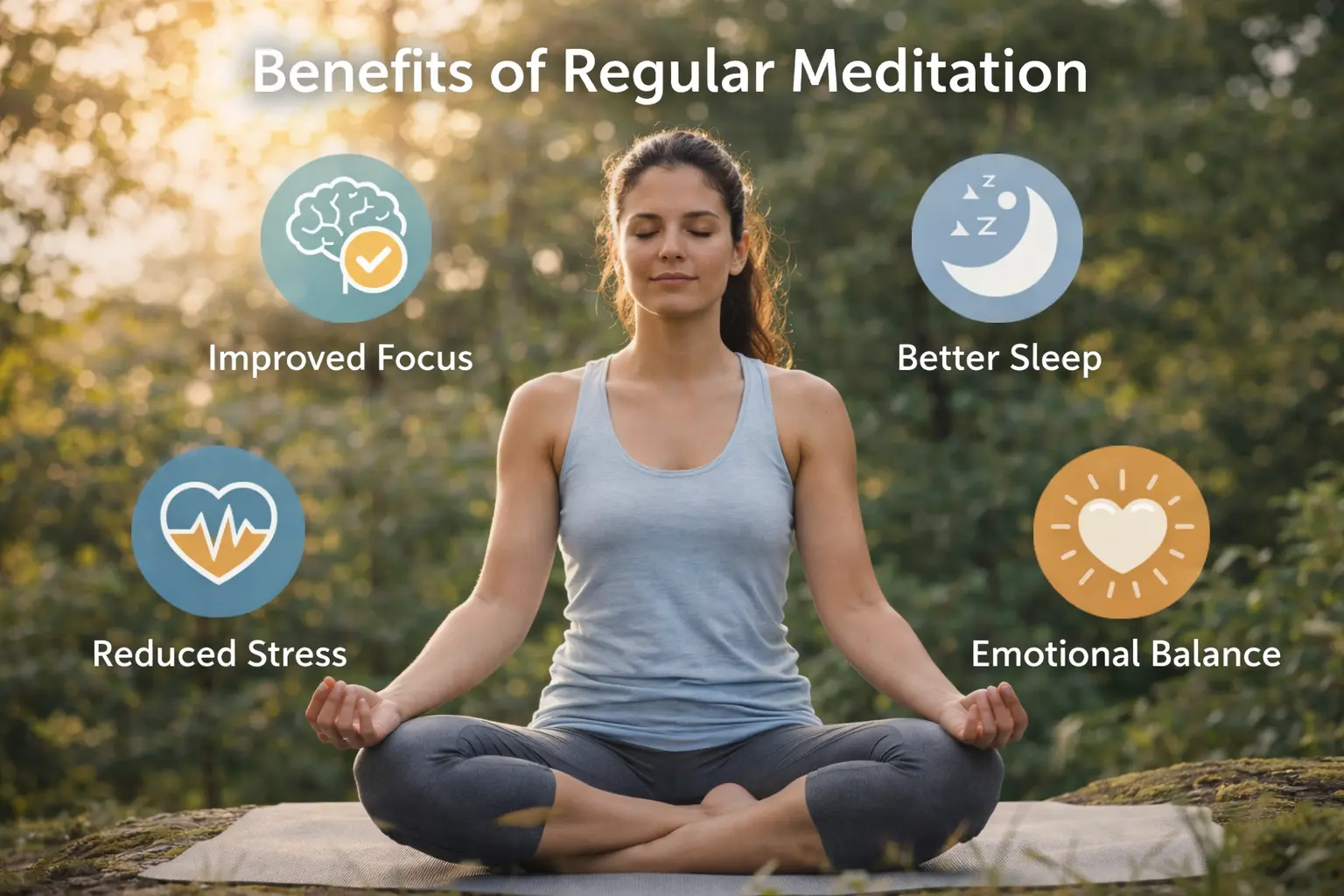
If you’re tired of racing thoughts keeping you awake at 3 AM, constant worry about health or family, and that heavy feeling that won’t lift no matter what you try, then the benefits of regular meditation might be exactly what your mind and body have been asking for.
Reduced stress and anxiety
Stress accumulates differently as we age. A senior might worry about health changes, family responsibilities, or simply the weight of accumulated life experiences. Meditation directly addresses this by activating your parasympathetic nervous system, the part of your body that tells you it’s safe to relax. When Margaret, a 68-year-old retiree, started meditating for just 10 minutes each morning, she noticed her shoulders weren’t perpetually tense anymore. Within two weeks, she stopped reaching for her anxiety medication as frequently. The practice works by giving your mind a focal point, whether that’s your breath, a mantra, or a guided visualization. Instead of letting worries spiral, you gently redirect your attention. Many seniors find that consistent practice creates a buffer between stressful situations and their emotional response, giving them space to choose how they react rather than defaulting to anxiety.
- Promotes relaxation and reduces stress
- Increases mindfulness and mental clarity
- Improves overall emotional well-being
Enhanced cognitive function
Memory lapses and slower processing speed frustrate many seniors, but meditation actually rebuilds neural pathways. Research shows that regular meditators develop thicker gray matter in areas responsible for memory and attention. Consider Robert, a 72-year-old who struggled to recall names at social gatherings. After practicing meditation four times weekly for six weeks, he noticed sharper focus during conversations and better retention of details. The mechanism is straightforward: meditation trains your attention like a muscle. When you sit quietly and notice your mind wandering, then gently bring it back to your breath, you’re literally strengthening your ability to concentrate. Seniors also report improved decision-making and clearer thinking during complex tasks. The practice reduces mental fog and increases mental acuity, making everyday activities like managing finances, following conversations, or learning new skills feel less overwhelming and more manageable.
📘 Fix your day in under 2 minuteschoose where to begin:
Better sleep quality
Sleep troubles plague many seniors, whether from racing thoughts, physical discomfort, or simply changing sleep patterns with age. Meditation addresses the mental component directly. When you practice meditation in the evening, you’re essentially training your nervous system to downshift before bed. Helen, a 70-year-old who had relied on sleep aids for years, incorporated a 15-minute guided body scan meditation into her bedtime routine. Within three weeks, she was sleeping through the night without medication. The technique works by releasing physical tension you might not even realize you’re holding and quieting the mental chatter that keeps you awake. A practical approach is to use a meditation app or recording specifically designed for sleep, focusing on slow breathing and progressive muscle relaxation. Many seniors find that consistency matters more than duration, so even five minutes of meditation before bed can signal to your body that rest is coming, leading to deeper, more restorative sleep and waking feeling genuinely refreshed.
Pain management
Chronic pain is common in later years, whether from arthritis, back issues, or past injuries. While meditation won’t eliminate pain, it fundamentally changes your relationship with it. Pain perception happens partly in your mind, and meditation reduces the emotional suffering attached to physical discomfort. James, a 75-year-old with persistent knee pain, learned a technique called mindful observation of pain. Instead of tensing against the sensation and amplifying it mentally, he observed it with curiosity and acceptance. This shifted his pain from an 8 out of 10 to a manageable 4 or 5. The practice increases your pain tolerance and reduces the anxiety that often accompanies chronic conditions. Meditation also lowers inflammation markers in the body, providing a physiological benefit beyond mental reframing. Seniors can combine meditation with other pain management strategies, creating a holistic approach. Many find that regular practice reduces their reliance on pain medication, improves mobility because they’re less tense, and restores quality of life activities they thought were permanently lost.
Social connection and empathy
Loneliness affects many seniors, but meditation actually enhances your capacity for genuine connection. Practices like loving-kindness meditation specifically cultivate compassion, making you more attuned to others’ emotions and needs. Dorothy, a 69-year-old widow, felt isolated after her husband passed. When she started a meditation group at her community center, something shifted. The practice of meditating alongside others, combined with the compassion meditation she learned, made her more present during conversations and more genuinely interested in others’ experiences. She developed deeper friendships than she’d had in years. Meditation reduces defensiveness and increases emotional intelligence, helping seniors navigate relationships with more patience and understanding. Regular practitioners report feeling less judgmental and more connected to their communities. The practice also combats the rumination and negative self-talk that can isolate seniors, replacing it with self-compassion and openness. Whether meditating alone or in groups, seniors find that the inner calm and clarity developed through practice naturally extends outward, enriching relationships and creating meaningful social bonds.
Regular meditation offers seniors a wide range of benefits, including reduced stress, enhanced cognitive function, improved sleep quality, better pain management, and increased social connection and empathy.
Can seniors of any physical ability practice meditation?
Yes, meditation can be adapted to accommodate various physical abilities. Seniors can explore seated meditation, guided meditation, or gentle movement practices to find what works best for them.
How long does it take to experience the benefits of meditation?
The benefits of meditation can vary from person to person. Some seniors may notice immediate effects, while others may take a few weeks of consistent practice to experience significant changes in their well-being.
Others also read:
Disclaimer: This article is for informational purposes only and is not a substitute for professional medical advice. Always consult a healthcare professional for personal guidance.
This guide has been prepared and reviewed by the GlobalHealthBeacon editorial team and reflects current medical research as of 2026. It provides structured, evidence-based information to support informed health decisions.
