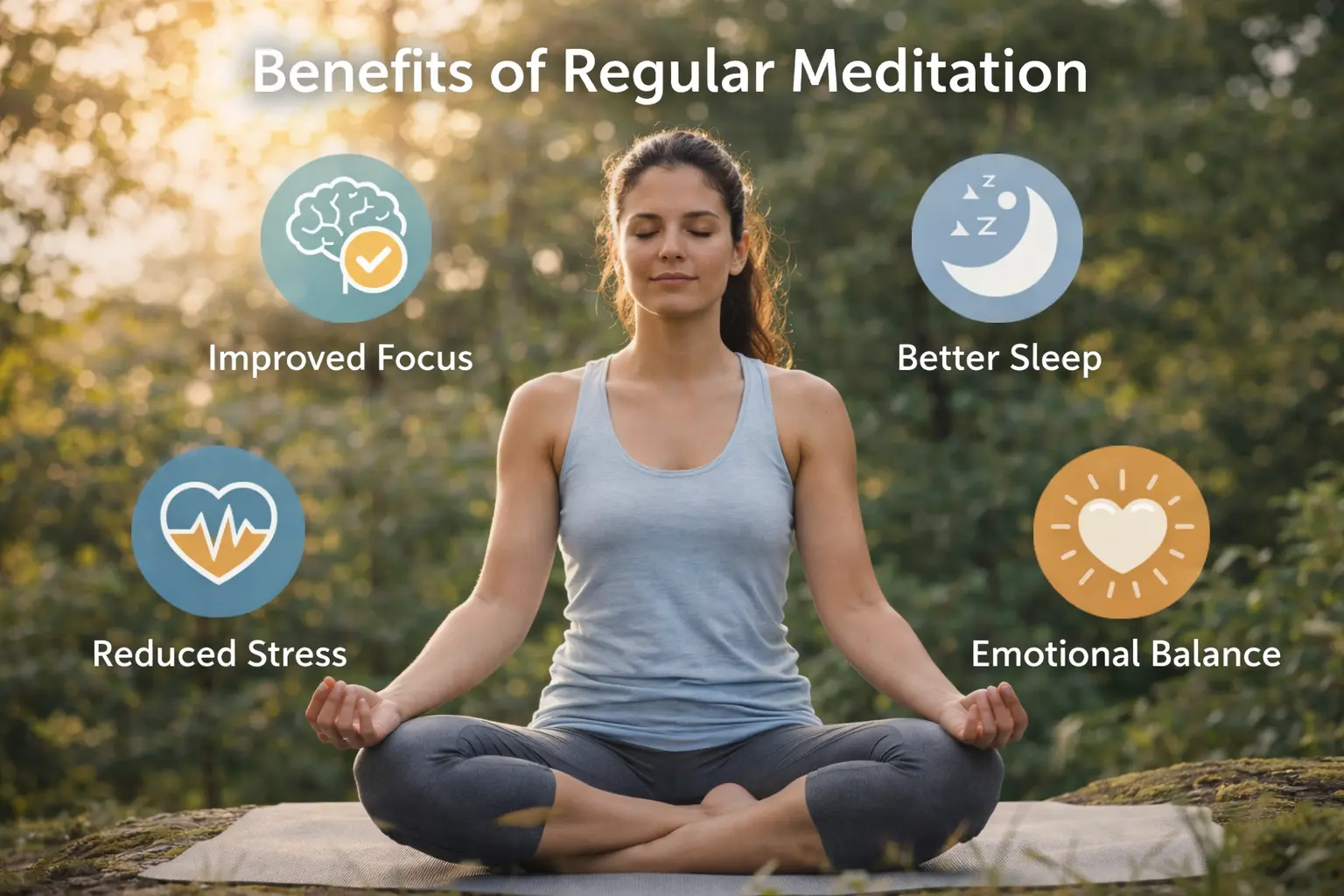
You’re juggling work emails, family obligations, and your own needs all at once, and your nervous system is basically screaming for mercy—the benefits of regular meditation might be the reset button you actually need.
Enhanced mental well-being
When stress builds up day after day, it doesn’t just disappear on its own. By incorporating meditation into your routine, you create a dedicated space where your nervous system can finally downshift. Women often carry the mental load of managing multiple roles simultaneously, and meditation offers a tangible way to interrupt that cycle. Start with just five minutes of focused breathing each morning. Notice how your shoulders drop, how the constant mental chatter quiets. Over weeks, you’ll find that situations that once triggered immediate anxiety now feel more manageable. One common mistake is expecting instant transformation. Real change happens gradually as you build the neural pathways that support calm. Another pitfall is meditating only when you’re already in crisis mode. Consistency during calm periods strengthens your resilience for harder days. Research shows that regular practitioners experience measurable reductions in cortisol levels and report feeling less reactive to daily frustrations.
- Decreases stress levels
- Alleviates symptoms of anxiety
- Improves overall mental health
Improved focus and concentration
Your attention span feels like it’s shrinking by the day. Meditation trains your mind to stay with one thing at a time, which is increasingly rare in our distracted world. When you practice focusing on your breath for ten minutes, you’re literally strengthening the neural circuits responsible for sustained attention. Women managing careers, households, and personal goals often find their concentration scattered across too many priorities. Meditation acts like a mental reset, allowing you to approach tasks with clearer intention. Try this practical approach: meditate for ten minutes before tackling your most important work task. You’ll notice you enter a state of flow more easily and complete work with fewer interruptions. A common mistake is trying to force perfect concentration during meditation itself. Instead, gently redirect your attention each time your mind wanders, which is the actual exercise. Over time, this translates to better focus in meetings, while reading, and during creative work. Many women report finishing projects faster and feeling less mentally exhausted by day’s end.
📘 Fix your day in under 2 minuteschoose where to begin:
Enhanced emotional regulation
Emotions don’t disappear when you meditate, but your relationship with them transforms. Instead of being swept away by frustration or sadness, you develop the ability to observe your feelings without immediately reacting. This is emotional regulation in action. Consider a typical scenario: someone makes a critical comment at work. Without meditation practice, you might replay it for hours, spiraling into self-doubt. With regular practice, you notice the feeling arise, acknowledge it, and choose your response rather than defaulting to old patterns. Women are often socialized to manage everyone else’s emotions while suppressing their own, which creates internal pressure. Meditation reverses this by teaching you to witness your own emotional landscape with compassion. Start by noticing emotions during meditation without judgment. Label them silently: anger, sadness, joy. This simple act creates space between feeling and reaction. A key mistake is using meditation to suppress difficult emotions rather than process them. The goal is acceptance, not avoidance. Over months of practice, you’ll handle life’s ups and downs with noticeably more grace and resilience.
Better sleep quality
Lying awake at three in the morning, mind racing through tomorrow’s tasks, is exhausting. Meditation addresses the root cause of poor sleep by calming your nervous system before bed. When you practice a short meditation routine thirty minutes before sleep, your body receives a clear signal that it’s time to transition from activity to rest. Many women struggle with sleep due to racing thoughts and unprocessed stress from the day. A practical approach is to use a body scan meditation where you progressively relax each muscle group from head to toe. This redirects attention away from anxious thoughts and into physical sensation. Another effective strategy is alternate nostril breathing, which activates your parasympathetic nervous system and naturally induces drowsiness. A common mistake is expecting meditation to work like a sleep aid on the first night. Consistency matters more than intensity. After two to three weeks of nightly practice, most people notice they fall asleep faster and wake fewer times during the night. Avoid meditating in bed itself, as this can blur the boundary between wakefulness and sleep. Instead, meditate nearby, then transition to bed when you feel ready. Quality sleep then cascades into better mood, clearer thinking, and more energy throughout your day.
Enhanced self-awareness
You spend so much time responding to others’ needs that you’ve lost touch with what you actually want. Meditation reverses this by creating quiet space to listen to yourself. Through regular practice, you develop what researchers call metacognition, the ability to observe your own thoughts and patterns. This heightened self-awareness reveals patterns you never noticed before. Maybe you realize you say yes to everything out of guilt, or that you criticize yourself constantly, or that certain relationships drain your energy. Once you see these patterns clearly, you can make intentional changes. A practical example: during meditation, you notice a recurring thought about not being good enough. By observing this thought without judgment, you realize it’s a habitual pattern, not truth. This awareness alone begins to weaken its grip. Women often internalize critical voices from childhood or society, and meditation helps you distinguish between your authentic self and these borrowed beliefs. Start journaling after meditation to capture insights that emerge. Over weeks, you’ll notice themes and understand yourself more deeply. This self-knowledge becomes the foundation for making choices that actually align with your values rather than others’ expectations. Many women report feeling more authentic and purposeful after developing this deeper self-awareness through consistent meditation practice.
Regular meditation offers a myriad of benefits, including enhanced mental well-being, improved focus, emotional regulation, better sleep quality, and increased self-awareness.
How long should I meditate each day to experience benefits?
Start by dedicating a few minutes to meditation daily and gradually increase the duration as you become more comfortable. Consistency is key to reaping the rewards of this practice.
Can anyone practice meditation, regardless of experience?
Absolutely! Meditation is accessible to individuals of all levels, from beginners to seasoned practitioners. The key lies in finding a style that resonates with you and committing to regular practice.
Others also read:
Disclaimer: This article is for informational purposes only and is not a substitute for professional medical advice. Always consult a healthcare professional for personal guidance.
This guide has been prepared and reviewed by the GlobalHealthBeacon editorial team and reflects current medical research as of 2026. It provides structured, evidence-based information to support informed health decisions.
