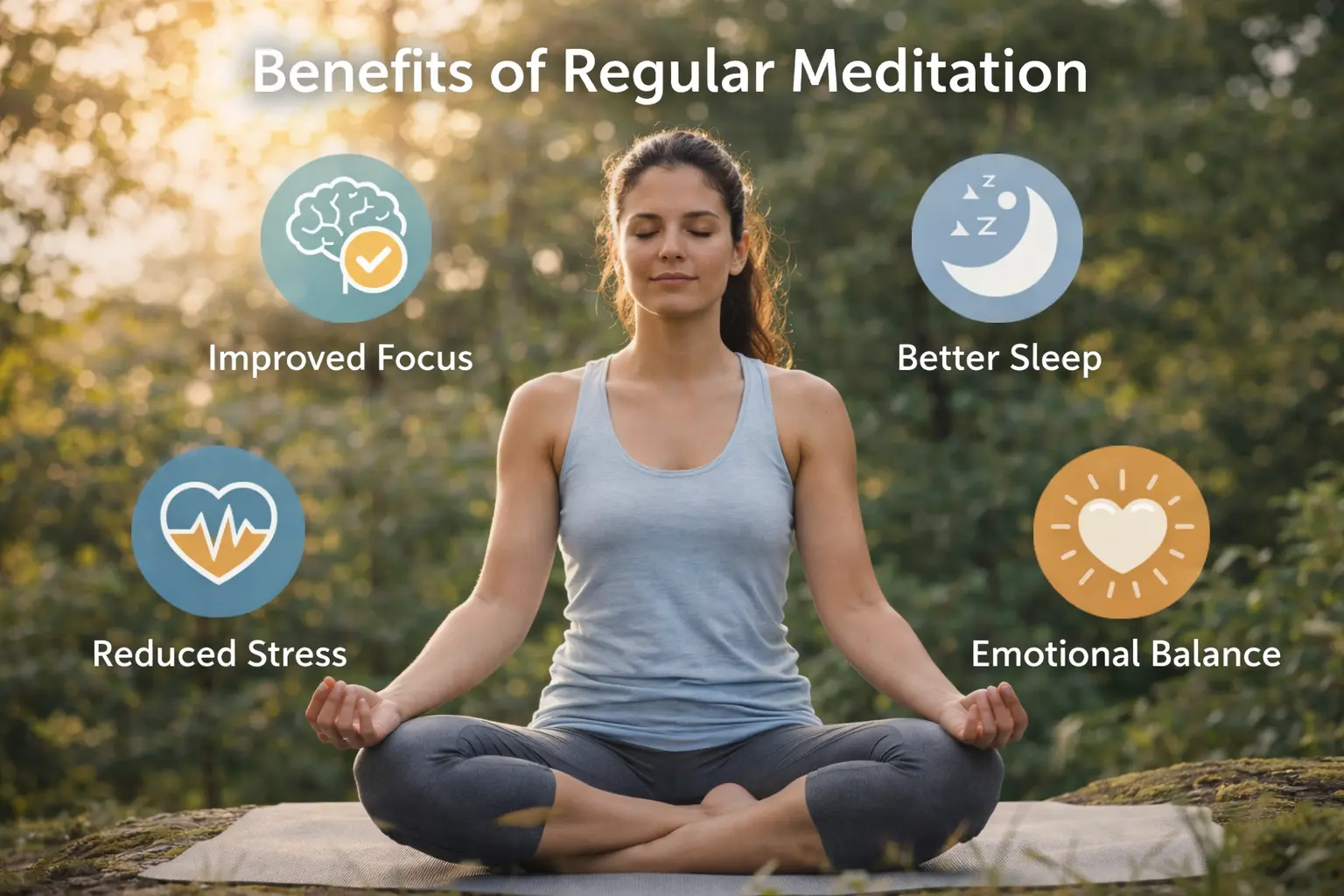
Your mind is racing at 3 AM, your chest feels tight during meetings, and you can’t remember the last time you felt genuinely calm, but the benefits of regular meditation might be the reset button you’ve been searching for.
The science behind meditation
Meditation isn’t just ancient wisdom wrapped in mysticism. Modern neuroscience has caught up, revealing that when you sit quietly and focus your attention, your brain actually rewires itself. Brain imaging studies show that regular practitioners develop increased gray matter density in areas responsible for learning, memory, and emotional processing. Think of it like this: every time you meditate, you’re essentially strengthening neural pathways the same way lifting weights strengthens muscles. Researchers at institutions like MIT and Harvard have documented measurable changes in brain structure after just eight weeks of consistent practice. The prefrontal cortex, which handles decision-making and impulse control, becomes more active. Meanwhile, the amygdala, your brain’s alarm system, literally shrinks. This isn’t metaphorical improvement. It’s biological transformation happening at the cellular level.
Stress reduction and emotional well-being
Imagine your stress hormone cortisol as a dimmer switch that’s been stuck on high. Meditation gradually turns it down. When you’re stressed, your body floods with cortisol and adrenaline, preparing you for fight or flight. But modern stress isn’t usually a physical threat you can run from. It’s deadlines, social anxiety, financial pressure. Your body stays activated, exhausted. Studies show that regular meditators have significantly lower baseline cortisol levels and recover faster from stress spikes. Simultaneously, meditation increases serotonin and dopamine production, the neurotransmitters responsible for mood stability and motivation. A young professional might notice they stop catastrophizing about work presentations. A student might find their anxiety before exams becomes manageable rather than paralyzing. This isn’t about forcing positivity. It’s about creating the neurochemical conditions where calm and resilience become your default state.
Enhanced cognitive function
Your attention span is under siege. Between notifications, social media, and competing demands, focusing on one task feels nearly impossible. Meditation directly addresses this. Research shows that even brief daily practice improves sustained attention, working memory, and cognitive flexibility. A student meditating for ten minutes before studying might find they absorb information more efficiently. A young professional might make better decisions because they’re not operating in reactive mode. The mechanism is straightforward: meditation trains your prefrontal cortex to maintain focus despite distractions. You’re literally building mental discipline. Beyond attention, meditation enhances your ability to switch between tasks without losing efficiency and improves your capacity to hold multiple pieces of information simultaneously. Some studies suggest regular practitioners score higher on problem-solving tasks and show improved academic performance. The cognitive gains aren’t dramatic overnight, but they compound. After two months of consistent practice, many people report thinking more clearly and making decisions with greater confidence.
- Start by setting aside a few minutes each day for meditation, ideally at the same time to build habit consistency.
- Find a quiet, comfortable space to sit or lie down where you won’t be interrupted by notifications or external noise.
- Focus on your breath or a specific mantra to anchor your mind, using this as your mental anchor when attention wanders.
- Observe any thoughts or distractions without judgment, letting them pass like clouds rather than engaging with them.
- Gradually extend your meditation time as you become more comfortable with the practice, moving from five minutes to ten or beyond.
🔬 Science-backed benefits in 2 minuteschoose where to begin:
Physical health benefits
Meditation’s impact extends beyond your mind into measurable physical changes. Your nervous system has two modes: sympathetic (fight or flight) and parasympathetic (rest and digest). Most young adults spend too much time in sympathetic mode. Meditation activates the parasympathetic system, which lowers blood pressure, slows heart rate, and reduces inflammation throughout your body. Studies show regular practitioners have lower resting heart rates and better heart rate variability, markers of cardiovascular health. Sleep quality often improves dramatically because meditation reduces the racing thoughts that keep people awake. Your immune function strengthens as chronic stress, which suppresses immunity, decreases. Some research suggests meditation reduces inflammatory markers linked to chronic diseases. A young adult with persistent tension headaches might find them diminishing. Someone struggling with insomnia might sleep through the night for the first time in months. These aren’t side effects. They’re direct physiological responses to activating your body’s natural healing systems.
Mind-body connection
Your body keeps score of everything you experience. Stress lives in your shoulders. Anxiety tightens your chest. Unprocessed emotions create chronic tension. Meditation bridges the gap between mind and body awareness. When you sit quietly and pay attention to physical sensations, you develop what neuroscientists call interoception: the ability to sense your internal state. This awareness is transformative. You notice tension building before it becomes a problem. You recognize anxiety patterns earlier. You understand how your thoughts directly influence physical sensations. A young adult might realize their stomach tightness during work presentations is connected to perfectionist thinking. Someone else might notice their jaw clenching relates to unexpressed frustration. This isn’t therapy, but it creates the self-awareness that makes therapy more effective. By cultivating this mind-body connection, you develop agency over your nervous system. You’re no longer a passenger in your own body, reacting automatically. You become the driver, capable of conscious choice.
Incorporating meditation into your routine
The biggest obstacle to meditation isn’t understanding its benefits. It’s actually starting and maintaining consistency. You don’t need a perfect setup or an hour of free time. A student can meditate for five minutes before opening their laptop. A young professional can practice during their lunch break. Someone with a chaotic schedule can meditate right after waking up, before the day’s demands take over. The key is integration, not addition. Attach meditation to an existing habit. After your morning coffee. Before bed. During your commute if you take public transit. Start absurdly small. Five minutes feels too short to matter, but it’s long enough to create neurological change and build the habit. Most people who quit meditation do so because they set unrealistic expectations. They expect instant calm or perfect focus. In reality, your mind will wander constantly at first. That’s normal. That’s the practice. Each time you notice your mind wandering and gently return attention to your breath, you’re strengthening neural pathways. Consistency matters infinitely more than duration.
Meditation, supported by rigorous scientific research, offers measurable benefits including stress reduction through lowered cortisol levels, improved cognitive function including attention and memory, enhanced emotional well-being through increased neurotransmitter production, better physical health markers, and deeper mind-body connection through increased self-awareness.
How long should I meditate to experience benefits?
Even short sessions of 5-10 minutes of meditation daily can yield positive results. Consistency is key to experiencing the full benefits of the practice. Research suggests that neurological changes begin appearing within two to three weeks of daily practice, though some people report noticing improvements in focus and mood within days.
Can anyone practice meditation?
Meditation is a versatile practice that can be adapted to suit individuals of all ages and backgrounds. There are various techniques and styles available, allowing everyone to find a method that resonates with them. Some people prefer breath-focused meditation, others use mantras or body scans. If sitting still feels difficult, walking meditation or movement-based practices offer alternatives.
Others also read:
Disclaimer: This article is for informational purposes only and is not a substitute for professional medical advice. Always consult a healthcare professional for personal guidance.
This article has been prepared and reviewed by the GlobalHealthBeacon editorial team and is based on current medical research and published scientific literature available in 2026. It provides structured, evidence-based information to support informed health decisions.
