This report and its visuals are free to use in editorial content if you link to this page as the original source. Suggested source attribution: Global Health Beacon – Biohacking Industry Report 2026
Biohacking is becoming a major part of the global wellness, longevity, wearable technology, and preventive health economy. This page highlights the most important biohacking statistics for 2026, including wearable adoption, sleep tracking, supplements, AI health tools, and human optimization trends. All statistics are structured for quick reference and citation use.
Most Cited Biohacking Statistics
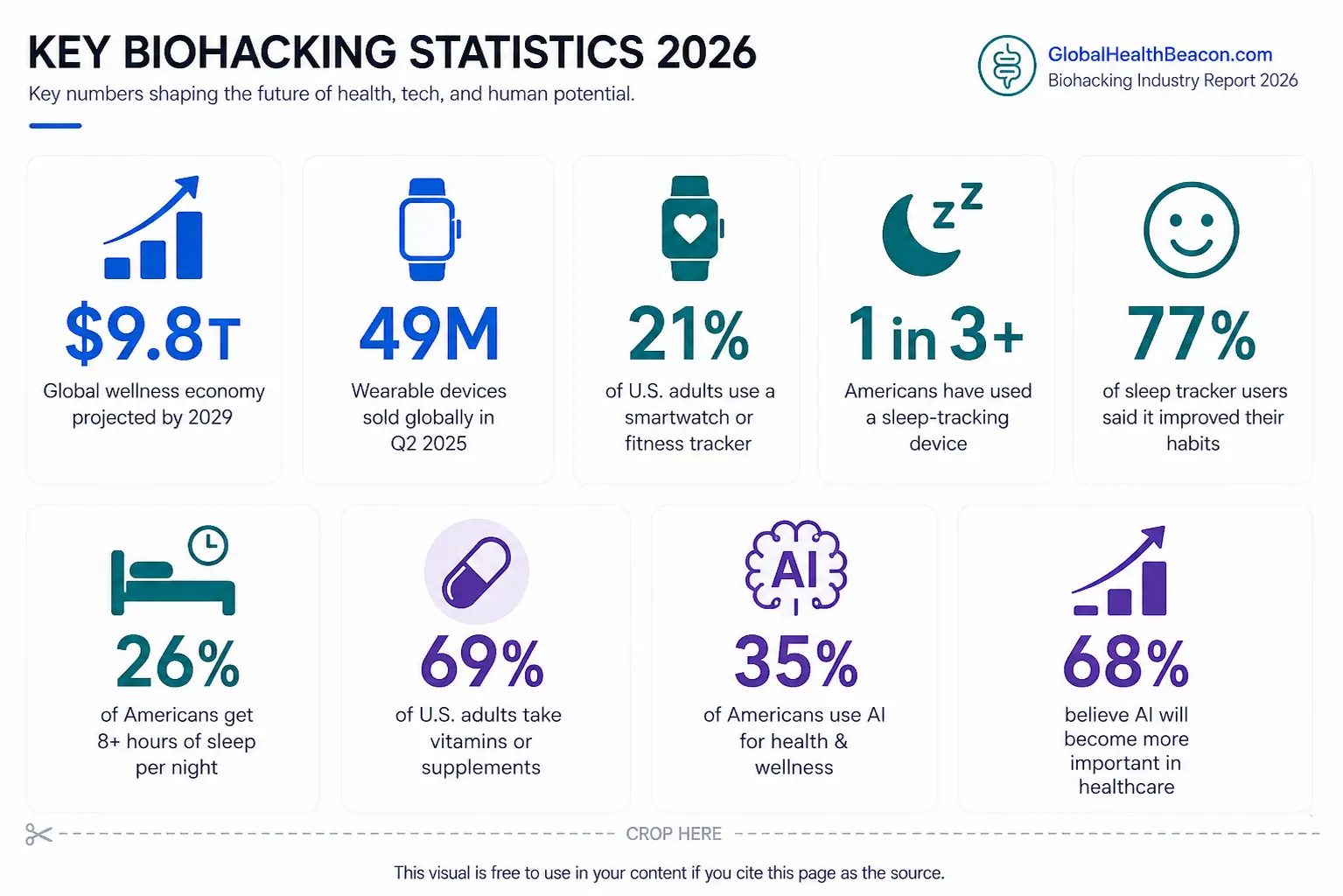
- The global wellness economy is projected to reach $9.8 trillion by 2029.
- Around 49 million wearable devices were sold globally in Q2 2025.
- 35% of Americans report using AI tools for health or wellness.
- 69% of U.S. adults take vitamins or supplements.
- Only 26% of Americans report getting eight or more hours of sleep.
Key Biohacking Statistics 2026
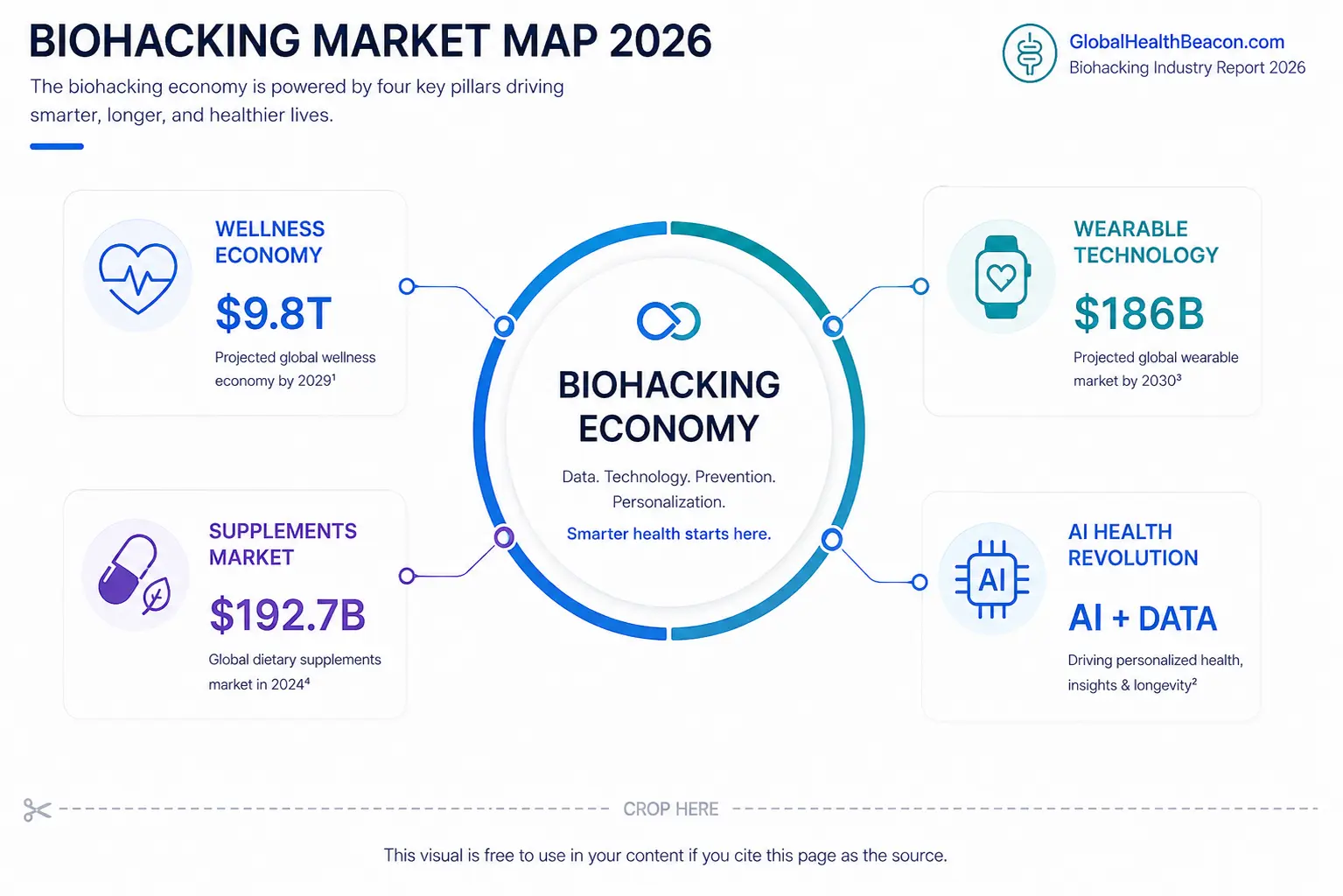
- The global wellness economy is projected to approach $9.8 trillion by 2029.¹
- Around 49 million wearable devices were sold globally in Q2 2025.²
- About 21% of U.S. adults use a smartwatch or fitness tracker.³
- More than one-third of Americans have used a sleep-tracking device.⁴
- 77% of sleep tracker users said the device improved their habits.⁴
- Only 26% of Americans report getting eight or more hours of sleep.⁵
- About 69% of U.S. adults take vitamins or supplements.⁶
- Roughly 35% of Americans use AI tools for health or wellness.⁶
- 68% of consumers believe AI will become more important in healthcare.⁶
Wearable Technology Statistics 2026
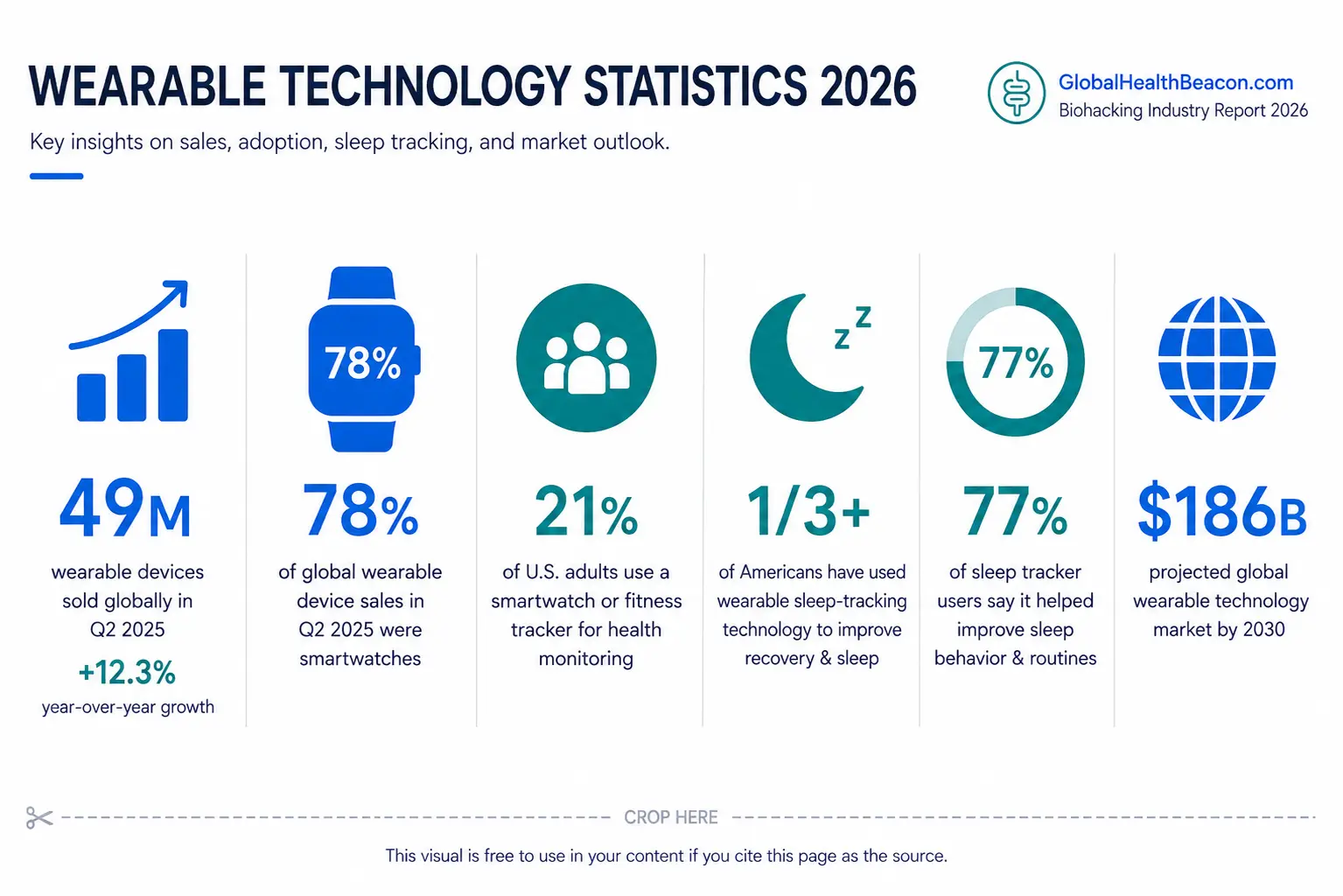
- Around 49 million wearable devices were sold globally in Q2 2025, up 12.3% year over year¹
- Smartwatches accounted for approximately 78% of global wearable device sales in Q2 2025¹
- About 21% of U.S. adults reported regularly using a smartwatch or fitness tracker for health monitoring³
- More than one-third of Americans have used wearable sleep-tracking technology to improve recovery and sleep habits⁴
- Among sleep tracker users, 77% said the device helped improve sleep behavior and daily routines⁴
- The global wearable technology market is projected to reach approximately $186 billion by 2030²
- AI-powered biometric tracking and recovery monitoring are becoming increasingly integrated into consumer wellness devices²
- Continuous health monitoring is emerging as a major trend within preventive healthcare and biohacking ecosystems²
Supplements & Nootropics Statistics 2026
- About 69% of U.S. adults reported taking vitamins or supplements as part of their wellness routine¹
- The global dietary supplements market is projected to surpass $414 billion by 2033²
- The nootropics market continues to grow as consumers seek better focus, cognition, and mental performance³
- Sleep, energy, longevity, peptides, and recovery remain among the fastest-growing supplement categories¹
- Personalized supplementation and AI-driven nutrition recommendations are becoming more common in digital wellness ecosystems¹
- Brain health supplements continue to attract strong demand, although evidence for some “focus” and “memory” products remains mixed⁴
- In the U.S., dietary supplements generally do not require FDA approval before marketing, increasing the importance of third-party testing and transparent labeling⁵
Sleep Optimization & Recovery Statistics 2026
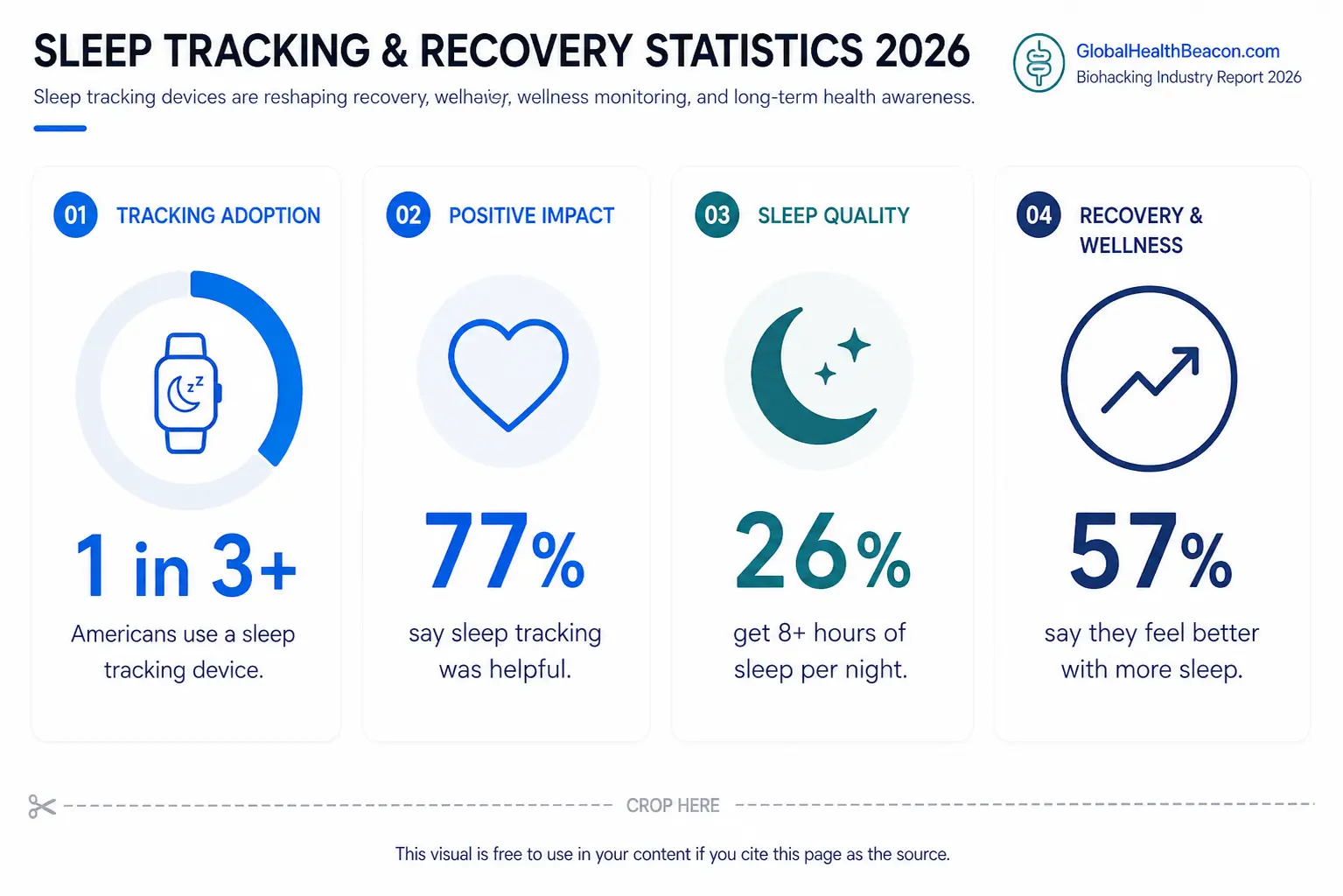
- More than one-third of Americans have used an electronic sleep-tracking device¹
- Among sleep tracker users, 77% said the device was helpful and 68% changed their behavior after using it¹
- Only 26% of Americans reported getting eight or more hours of sleep per night²
- About 57% of Americans said they would feel better if they could get more sleep²
- Approximately 20% of Americans report sleeping five hours or less per night²
- Sleep trackers are increasingly used for recovery monitoring, stress management, and long-term wellness optimization¹
- Sleep optimization remains closely connected to recovery, mental performance, and preventive health behaviors³
Consumer Behavior & Motivation Statistics 2026
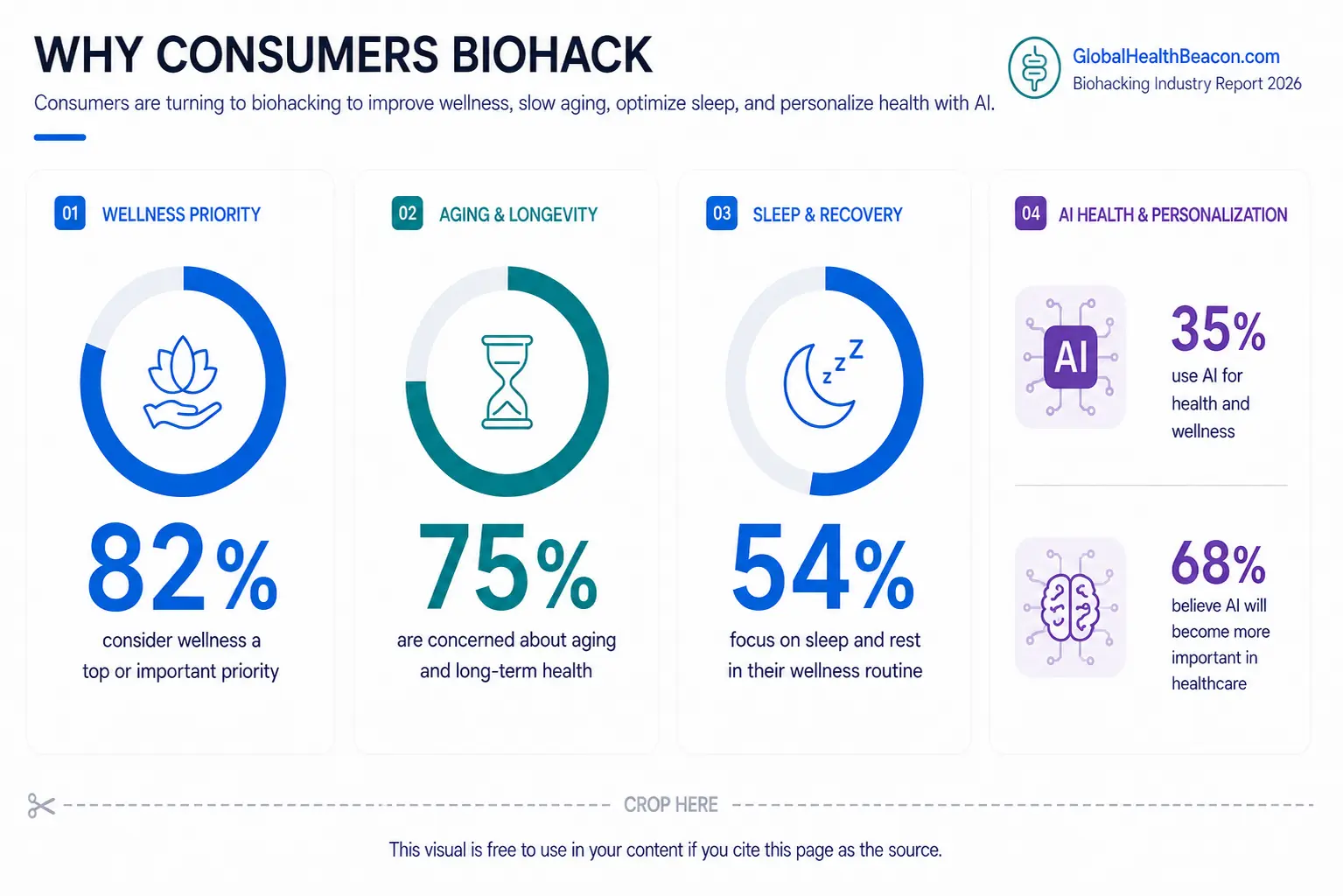
- About 82% of U.S. consumers consider wellness an important priority in daily life¹
- Approximately 73% of Americans say they actively follow health and wellness trends²
- Around 75% of Americans are concerned about aging and its long-term impact on health²
- About 54% of consumers say sleep and recovery are major priorities in their wellness routines²
- Approximately 46% of Americans prioritize fitness and exercise, while 42% prioritize mental wellness²
- Roughly 35% of Americans report using AI tools for health or wellness support²
- About 68% of consumers believe AI will become increasingly important in future healthcare and wellness management²
Biohacking Market Statistics 2026
- The global wellness economy is projected to approach $9.8 trillion by 2029¹
- Biohacking continues to expand across wellness, wearables, supplements, sleep technology, AI health, and longevity services²
- The global wearable technology market is projected to reach approximately $186 billion by 2030³
- Around 49 million wearable devices were sold globally in Q2 2025, with smartwatches accounting for 78% of units sold³
- The global dietary supplements market was valued at approximately $192.7 billion in 2024 and continues to expand rapidly⁴
- Consumer demand for preventive health, sleep optimization, mental performance, and personalized wellness continues to support biohacking-related market growth¹
- AI health tools, wearable analytics, biomarker tracking, and personalized health recommendations are becoming central themes within the modern biohacking economy²
Technology & Future Trends Statistics 2026–2030
- About 35% of Americans report using AI tools for health or wellness support¹
- Approximately 68% of consumers believe AI will become increasingly important in future healthcare and wellness management¹
- AI wellness tools are increasingly being used for meal planning, fitness support, symptom research, and personalized health recommendations¹
- Consumer health tracking continues expanding beyond steps and calories into sleep, stress, glucose, recovery, and biometric analysis²
- Wearables and digital health apps are increasingly used to collect personalized health data and recovery insights³
- Privacy, biometric security, and health-data governance are becoming more important as digital health tools collect larger amounts of personal health information⁴
Explore Biohacking Topics & Research Areas
How We Verified These Statistics
This report combines market research, consumer surveys, regulatory sources, and selected medical references. Market-size estimates are not medical claims and may vary by methodology.
How to Cite This Report
When referencing this report or its visuals, please cite Global Health Beacon – Biohacking Industry Report 2026 as the original source.
Sources
This page is based on data from global health organizations, research institutions, and peer-reviewed studies.
- Grand View Research
- MarketsandMarkets Research
- IDC Worldwide Wearables Tracker
- McKinsey Health Institute
- National Institutes of Health (NIH)
- PubMed (Peer-Reviewed Medical Research)
- World Health Organization (WHO)
- Statista Digital Health Statistics
- Gartner Technology Research
- Nature Publishing Group
- Science Journal
- Sleep Foundation
- Harvard Health Publishing
- Cleveland Clinic
