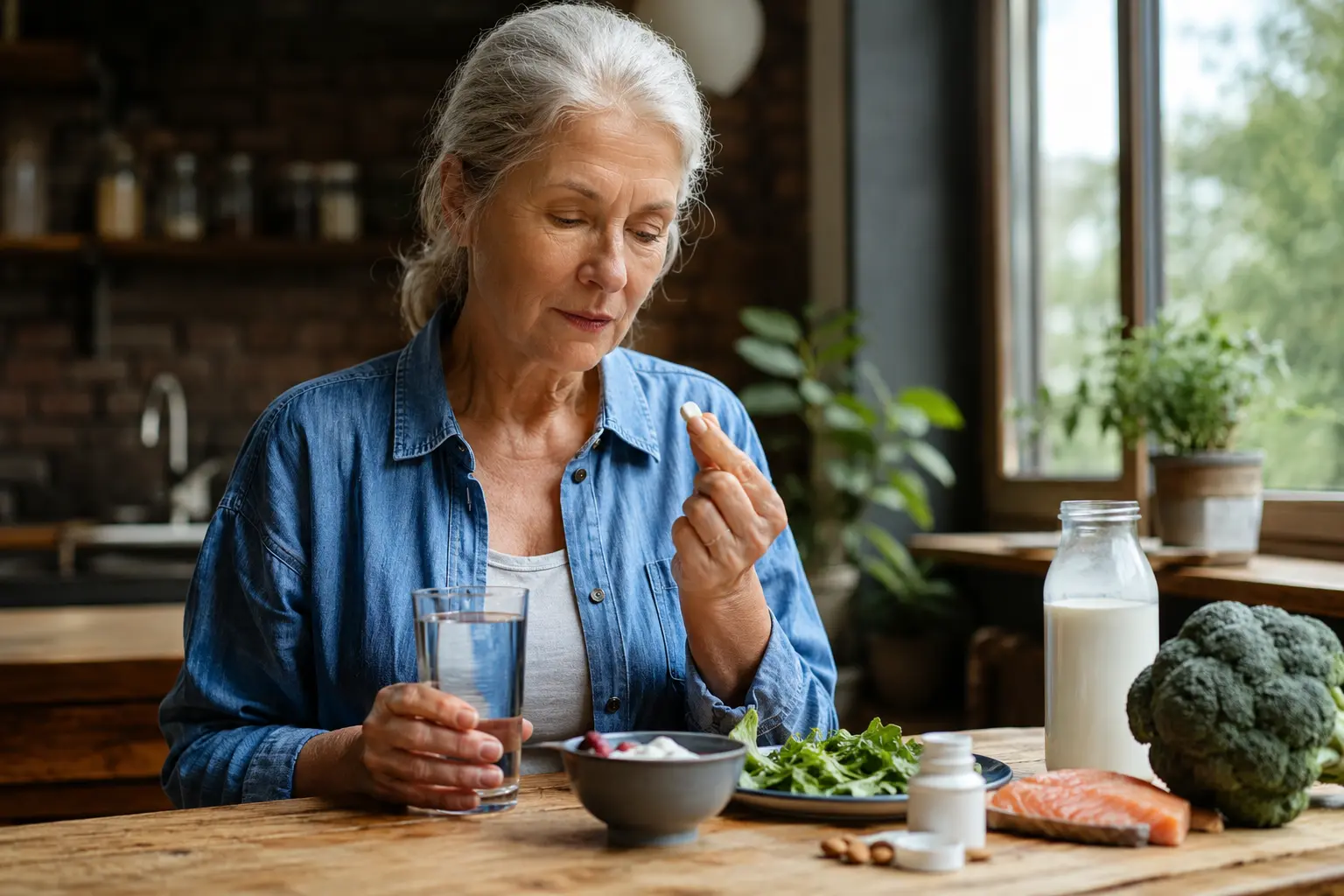
Your bones are getting weaker and you don’t even feel it happening until something breaks, and suddenly you’re realizing you’ve been neglecting your calcium vitamin d bone health for years while life got in the way.
Understanding bone health: the basics you need to know
Think of your bones as a living bank account. Every day, your body makes deposits and withdrawals of calcium and other minerals. Calcium acts as the primary building block, while vitamin D is the key that unlocks calcium absorption in your intestines. Without adequate vitamin D, your body can’t access the calcium you consume, no matter how much cheese or yogurt you eat. For many women, this relationship becomes critical around midlife when hormonal shifts begin affecting bone density. A woman in her 40s might notice she’s more prone to fractures or feels less stable, not realizing her bones are silently losing density. The good news is that understanding this foundation lets you take control now, before problems develop.
- Consume calcium-rich foods like dairy products, leafy greens, and fortified foods.
- Get plenty of sunlight or consider taking vitamin D supplements if needed.
- Avoid excessive consumption of caffeine, alcohol, and carbonated drinks that can hinder calcium absorption.
Exercise for stronger bones
Walking on a treadmill won’t cut it if you want real bone strength. Your bones respond to stress and load-bearing activities by becoming denser and more resilient. Weight-bearing exercises like brisk walking, jogging, dancing, or stair climbing force your bones to work against gravity, triggering them to build more mineral density. Resistance training with weights or resistance bands goes even further by creating tension that stimulates bone-forming cells. A woman who starts a regular strength routine at 50 can actually reverse some bone loss within months. The key is consistency and progression. Start with activities you enjoy, whether that’s a dance class twice weekly or lifting light weights at home, then gradually increase intensity. Even 30 minutes most days makes a measurable difference in bone density scans.
📘 Fix your day in under 2 minuteschoose where to begin:
Balanced diet for optimal bone health
Calcium and vitamin D are just the opening act. Your bones also need magnesium, potassium, phosphorus, and protein to function properly. Salmon provides both vitamin D and omega-3s that reduce inflammation. Almonds deliver magnesium and calcium in one snack. Broccoli and kale offer calcium plus vitamin K, which activates proteins that bind calcium to bone. Sweet potatoes provide potassium and other minerals that support bone structure. Rather than obsessing over one nutrient, think about eating a rainbow of whole foods throughout your day. A practical approach is to build each meal around a protein source, add two servings of colorful vegetables, include a whole grain, and add a small portion of healthy fat. This pattern naturally covers most bone-supporting nutrients without requiring supplement bottles or complicated tracking.
Lifestyle choices that impact bone health
Smoking accelerates bone loss by interfering with estrogen production and calcium absorption, sometimes causing bone density to drop 10 percent faster than normal aging. Excessive alcohol consumption, particularly more than one drink daily for women, directly damages bone-forming cells and increases fracture risk. Being significantly underweight or overweight both stress your skeletal system in different ways. The positive side is that quitting smoking shows results within months, not years. Reducing alcohol to moderate levels (one drink daily or less) immediately improves your body’s ability to absorb calcium. Maintaining a healthy weight through balanced eating and movement takes pressure off your joints and allows your bones to function optimally. These aren’t restrictions; they’re investments in your future mobility and independence.
Regular bone health check-ups
A bone density scan, called a DEXA scan, is painless, quick, and reveals exactly where you stand. Most women should have their first screening around age 50, though earlier screening is recommended if you have risk factors like family history of osteoporosis, early menopause, or long-term use of certain medications. The scan produces a T-score that tells you whether your bone density is normal, low, or in the osteoporosis range. Rather than waiting for a fracture to discover a problem, getting screened gives you years to make changes that genuinely prevent serious breaks. Your healthcare provider can also assess your individual risk factors and recommend specific interventions tailored to your situation. Some women benefit from medication, others from intensive lifestyle changes, and most from a combination approach.
Understanding the importance of calcium and vitamin D, engaging in weight-bearing exercises, following a balanced diet, making healthy lifestyle choices, and seeking regular check-ups are key steps to support women’s bone health.
How much calcium should women consume daily for optimal bone health?
Women aged 19-50 require 1,000 mg of calcium daily, while those over 50 need 1,200 mg. It’s best to get calcium from food sources but supplements can be used if dietary intake is insufficient.
Can menopause affect bone health in women?
Yes, menopause can lead to a decrease in estrogen levels, affecting bone density. It’s important for women post-menopause to focus on bone-strengthening activities and adequate calcium and vitamin D intake.
Others also read:
Disclaimer: This article is for informational purposes only and is not a substitute for professional medical advice. Always consult a healthcare professional for personal guidance.
This guide has been prepared and reviewed by the GlobalHealthBeacon editorial team and reflects current medical research as of 2026. It provides structured, evidence-based information to support informed health decisions.
