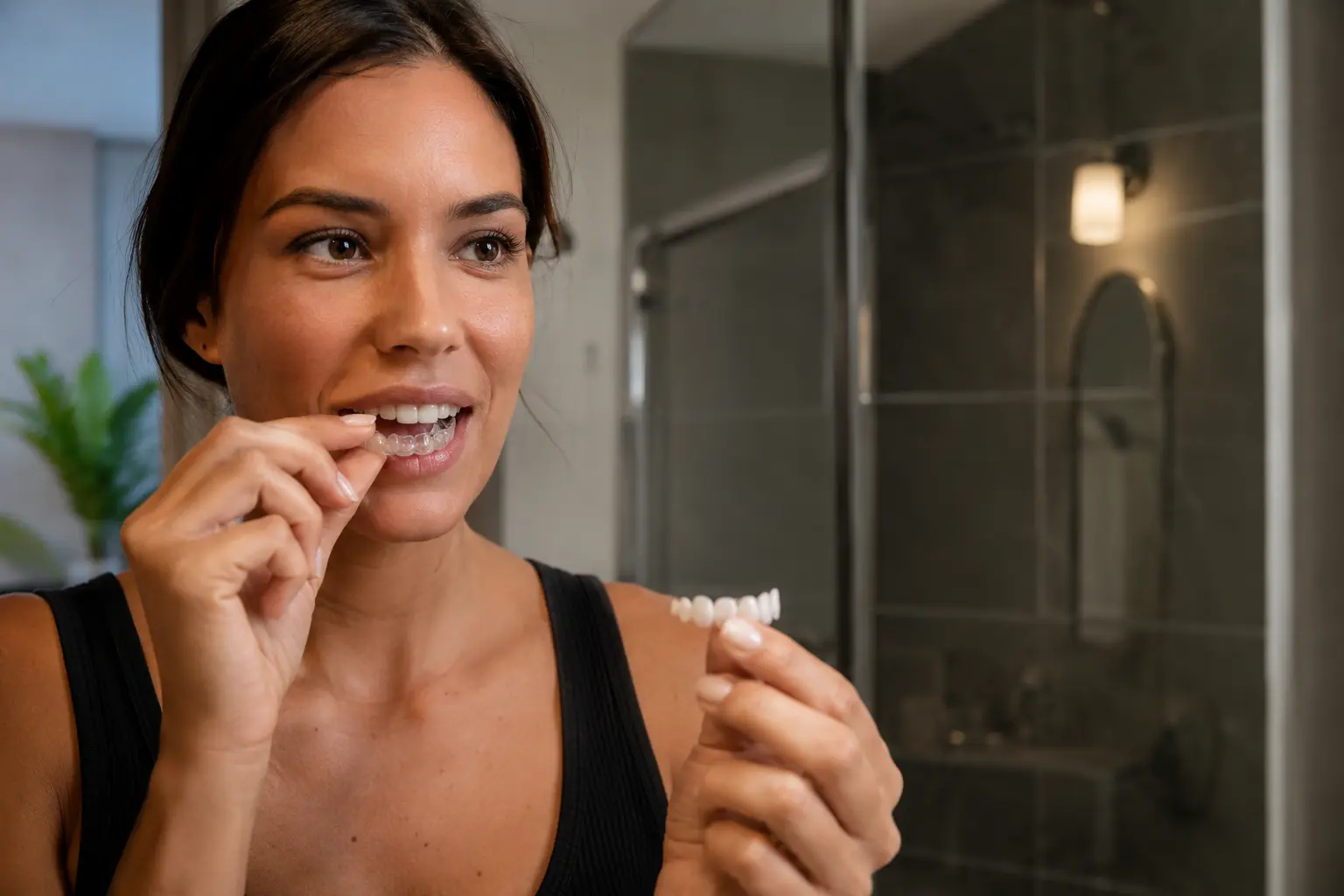
You’ve spent decades with a smile you’ve learned to hide, and now you’re staring at two completely different paths to fix it, but nobody’s telling you which one actually works for people like you, and the confusion is eating at you.
Understanding clear aligners
Clear aligners have become a game-changer for many seniors I’ve spoken with who thought their window for orthodontic treatment had closed years ago. Picture this: Margaret, a 68-year-old retired teacher, spent her whole life avoiding photos because her lower teeth had shifted over decades. When she discovered clear aligners, she was skeptical at first. These transparent trays work by gradually nudging your teeth into position over months, and what makes them appealing for seniors is the invisibility factor. You slip them in, go about your day, and most people won’t even notice you’re undergoing treatment. Margaret appreciated that she could remove them during meals, which meant no dietary restrictions and no awkward moments at family dinners. The commitment involves wearing them 20 to 22 hours daily and attending regular dental check-ups to monitor progress, but for many seniors, the trade-off feels worth it.
- Clear aligners are nearly invisible, making them a discreet option for seniors.
- They are removable, allowing you to eat and drink without restrictions during treatment.
- Regular visits to the dentist are necessary to monitor progress and ensure the aligners are fitting correctly.
The versatility of veneers
Veneers operate on a completely different philosophy. Instead of moving teeth gradually, they cover the front surface with custom-made shells of porcelain or composite resin. Think of them as a cosmetic makeover rather than an orthodontic correction. Robert, a 72-year-old former businessman, chose veneers because he had yellowed teeth from decades of coffee and red wine, plus a couple of chipped edges from an old accident. He wasn’t looking to shift his bite or straighten misaligned teeth. He wanted instant transformation. Within two dental visits, his smile was completely different. Veneers work beautifully for seniors dealing with discoloration, gaps between teeth, or teeth that are structurally fine but aesthetically worn. The procedure involves shaving down a thin layer of tooth enamel and bonding the veneer shell to the tooth surface. Results are immediate and dramatic, which appeals to seniors who want to see change right away.
💬 Ready to feel better in 2 minutes?choose where to begin:
Comparing the benefits
Here’s where the real decision-making happens, and it’s not as simple as one being better than the other. Clear aligners take time, usually 6 to 18 months depending on how much movement your teeth need, but they address the underlying structure of your bite and alignment. If your teeth are genuinely crooked or crowded, aligners fix the root issue. Veneers, on the other hand, deliver instant cosmetic results but don’t change the position of your teeth. They’re perfect if your teeth are already reasonably aligned but look worn, stained, or damaged. Dorothy, a 70-year-old grandmother, realized this distinction the hard way. She initially wanted veneers to fix her smile, but her dentist pointed out that her teeth were also crowded. Veneers would have looked great on the surface, but her bite would still be off. She chose aligners instead and now has both proper alignment and a beautiful smile. The lesson: your specific dental situation determines which path makes sense.
Personalize your decision
Choosing between clear aligners and veneers isn’t about finding the objectively better option. It’s about matching the treatment to your actual needs and lifestyle. Start by asking yourself: Are my teeth structurally misaligned, or are they just cosmetically imperfect? How much time am I willing to invest in gradual improvement? Do I want results I can see immediately, or am I comfortable waiting for transformation? Seniors often have the advantage of time and patience that younger people don’t, but you also might want to enjoy the results sooner. Talk honestly with your dentist about your expectations. Some seniors discover they’re candidates for both treatments combined. Others realize that one option aligns perfectly with their goals and comfort level. James, a 75-year-old retiree, spent an hour with his dentist mapping out scenarios before deciding on veneers because he valued quick results and his teeth weren’t significantly misaligned. There’s no one-size-fits-all answer here.
Clear aligners offer seniors a discreet and flexible solution for correcting misaligned teeth, while veneers provide a quick and effective way to enhance the appearance of teeth. The decision between the two treatments should be based on individual dental needs and preferences.
Are clear aligners suitable for seniors with complex dental issues?
Clear aligners can address a range of orthodontic issues, but seniors with complex dental problems may require additional treatments or consultations to determine the best course of action.
Do veneers require special maintenance for seniors?
Maintaining veneers involves regular dental check-ups and proper oral hygiene practices, similar to caring for natural teeth. Seniors should avoid habits like nail-biting or using teeth as tools to protect their veneers.
Others also read:
Disclaimer: This article is for informational purposes only and is not a substitute for professional medical advice. Always consult a healthcare professional for personal guidance.
This article presents an experience-based perspective and has been reviewed by the GlobalHealthBeacon editorial team in 2026. It provides structured, evidence-based information to support informed health decisions.
