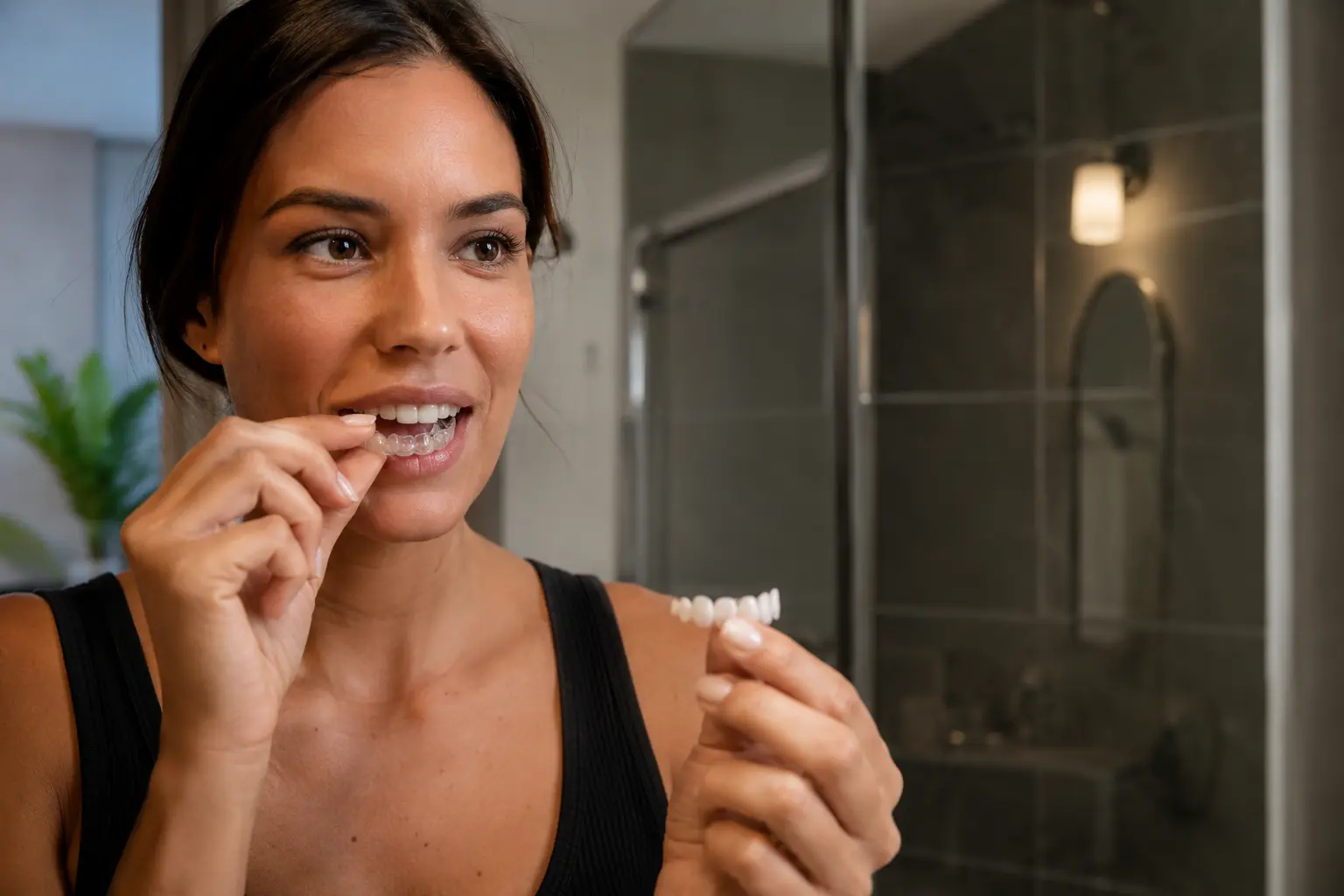
You catch your reflection in a store window and immediately look away, that familiar knot tightening in your chest as you realize you’re hiding your smile again, and when you finally decide to do something about it, you’re faced with the bewildering choice between clear aligners versus veneers.
Clear aligners: a game-changer for misaligned teeth
When Sarah first got her aligners, she was skeptical. She’d worn traditional braces as a teenager and couldn’t imagine voluntarily putting something in her mouth again. But clear aligners work differently. They’re custom-molded trays that gradually shift your teeth into alignment over months, not years. The magic is in the invisibility and flexibility. You can remove them to eat, drink coffee without staining, and brush your teeth properly. Many women find this freedom transformative. You might wear them during work meetings without anyone noticing, then pop them out for lunch. The process is gradual, which means less dramatic discomfort than traditional braces. Some experience mild pressure or soreness for a few days after switching to a new tray, but it’s manageable. You’ll need consistent wear, usually 20 to 22 hours daily, and regular check-ins with your orthodontist to monitor progress. The timeline varies, but most treatments take 12 to 18 months.
- Invisible and removable for enhanced comfort
- Less impact on daily activities compared to traditional braces
- Customized treatment plans for individual needs
Veneers: the solution for teeth discoloration and damage
Veneers are a completely different beast. Think of them as custom shells that bond directly to the front surface of your teeth, covering stains, chips, gaps, and shape irregularities. Jennifer had years of coffee and wine stains that whitening couldn’t touch, plus a small chip from a childhood accident. After two appointments, she had a Hollywood-worthy smile. Veneers work fast, usually requiring just two visits. The first involves shaping your natural tooth slightly and taking impressions. The second, a week or two later, involves bonding the permanent veneer. The results are instant and dramatic. Unlike aligners, which gradually shift your bite, veneers are purely cosmetic. They don’t fix misalignment or bite problems, but they excel at covering surface-level imperfections. They’re also durable, typically lasting 10 to 15 years with proper care. However, they’re irreversible. Once your tooth is shaped, you’ll always need a veneer. And they’re a significant investment, often costing more upfront than aligners.
💬 Ready to feel better in 2 minutes?choose where to begin:
A closer look at durability and maintenance
Here’s where the choice gets real. Aligners require discipline. You must wear them consistently, remove them carefully, clean them daily, and attend regular appointments. If you’re someone who forgets to charge her phone or loses her keys constantly, aligners might frustrate you. But if you’re committed, the payoff is permanent. Your teeth stay straight once treatment ends, though many people wear a retainer at night indefinitely. Veneers demand different maintenance. You can’t bite your nails, chew ice, or open packages with your teeth. You must brush and floss carefully around the edges. They can chip or crack if you’re not mindful. Professional cleanings are gentler on veneers. Over time, the tooth underneath may develop decay if your oral hygiene slips. When veneers eventually fail, replacing them means repeating the whole process. Think of aligners as an investment in your natural teeth’s future. Veneers are an investment in immediate appearance with ongoing maintenance costs.
Embracing change: personal testimonials
Women who’ve chosen aligners often describe a journey of gradual confidence building. Maria wore hers through her entire MBA program. She loved that nobody knew she was straightening her teeth. By graduation, her smile had transformed, and it felt like her own accomplishment. She wished she’d done it sooner. Women who’ve chosen veneers describe a different kind of transformation. Emma walked out of her dentist’s office and cried in her car, not from pain but from finally seeing the smile she’d always wanted staring back at her. She’d spent years covering her mouth when laughing. Now she laughs freely. Both paths lead to confidence, but the emotional journey differs. Aligners reward patience and consistency with a subtle, personal victory. Veneers deliver immediate gratification and visible transformation. Neither is inherently better. The right choice depends on what you need, your timeline, your budget, and honestly, your personality. Are you someone who values process and patience, or do you crave immediate results?
Choosing between clear aligners and veneers isn’t just a dental decision. It’s about understanding what matters most to you. Aligners straighten teeth gradually and invisibly, rewarding commitment with permanent results. Veneers cover imperfections instantly, transforming your smile in two appointments but requiring ongoing care. Consider your specific concerns, whether it’s misalignment or discoloration. Think about your lifestyle and how much maintenance you’re willing to manage. Most importantly, consult with a dental professional who can assess your unique situation and help you make a choice that aligns with your goals and values.
Are clear aligners painful to wear?
Clear aligners may cause temporary discomfort or soreness as your teeth adjust to the treatment, but they are generally considered less painful than traditional braces.
Can veneers be whitened if they become stained?
Veneers are resistant to staining, but if discoloration occurs, professional whitening treatments can be applied to the natural teeth surrounding the veneers for a uniform smile.
Others also read:
Disclaimer: This article is for informational purposes only and is not a substitute for professional medical advice. Always consult a healthcare professional for personal guidance.
This article presents an experience-based perspective and has been reviewed by the GlobalHealthBeacon editorial team in 2026. It provides structured, evidence-based information to support informed health decisions.
