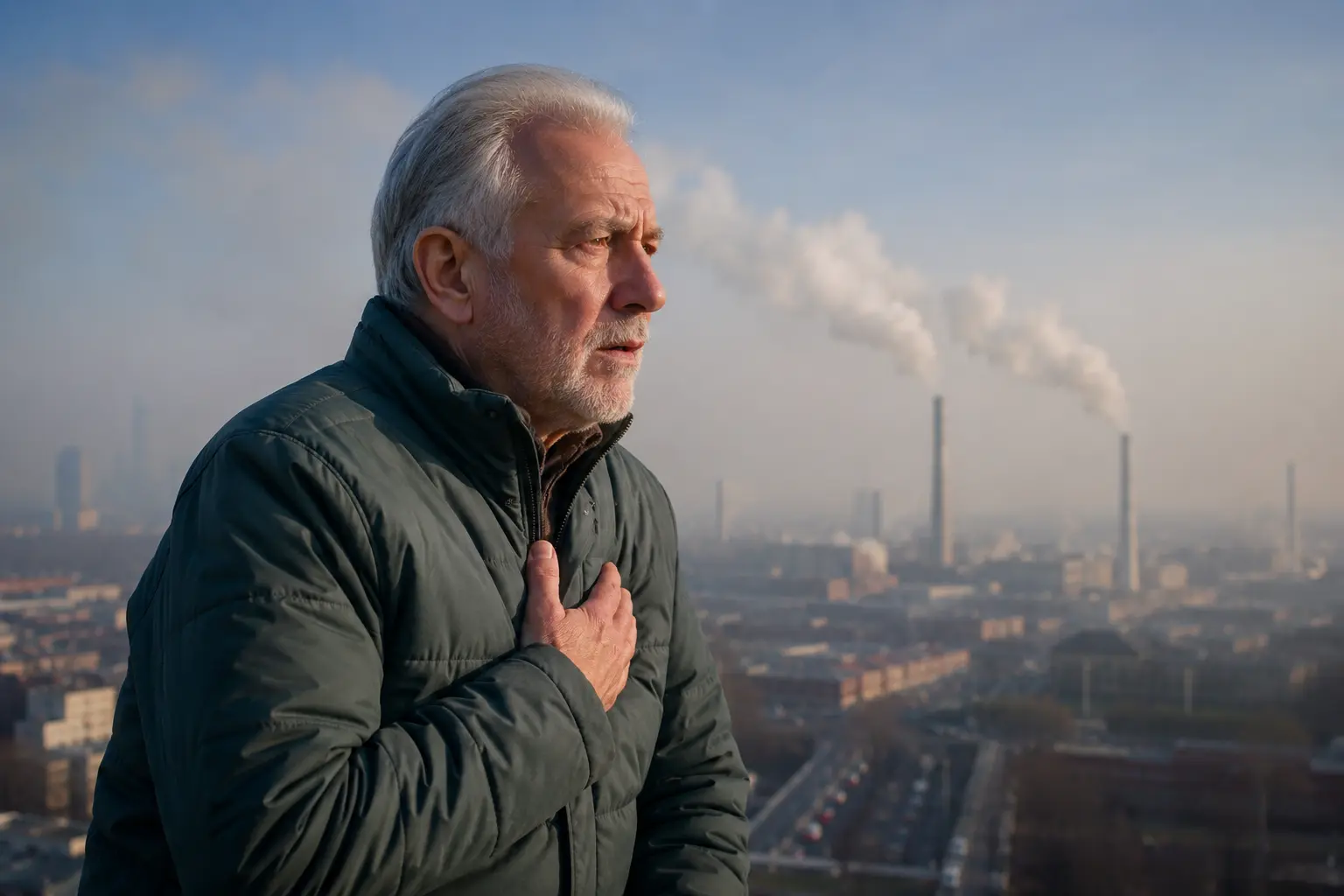
Every breath feels like a battle when you have COPD and air quality plummets, and understanding how particulate matter directly attacks your lungs is the first step to taking back control.
What is COPD?
Chronic Obstructive Pulmonary Disease, or COPD, is a progressive lung condition that develops over time, often silently at first. The disease encompasses two main conditions: emphysema, where the air sacs in your lungs gradually lose their elasticity and break down, and chronic bronchitis, which causes persistent inflammation and mucus production in the airways. When these conditions exist together, they create a compounding problem. Your airways become narrower and more rigid, making it harder to push air out of your lungs during exhalation. Imagine trying to breathe through a straw that keeps getting smaller. Many seniors develop COPD after decades of exposure to irritants like cigarette smoke or occupational dust, though genetics also play a role. The disease progresses at different rates for different people, but early recognition and understanding of how environmental factors like air quality affect your symptoms is crucial for managing it effectively.
The link between COPD and air quality
The relationship between COPD and air quality is direct and measurable. Particulate matter, especially the tiny particles classified as PM2.5 and PM10, acts like an irritant that penetrates deep into your respiratory system. PM2.5 particles are so small they can bypass your nose and throat defenses and lodge directly in the alveoli, the tiny air sacs where oxygen exchange happens. When these particles settle in your lungs, they trigger an inflammatory response. Your body perceives them as a threat and sends immune cells to attack, causing swelling and mucus production. For someone with COPD, this inflammation compounds an already compromised system. The airways tighten further, mucus thickens, and breathing becomes noticeably more difficult. Research shows that on days with elevated particulate matter levels, hospital admissions for COPD exacerbations increase significantly. This isn’t just about discomfort; it’s about your body’s ability to function. Understanding this connection helps explain why some days feel harder than others.
How to protect yourself from particulate matter exposure
Protecting yourself from particulate matter requires a multi-layered approach tailored to your daily life. First, stay informed about air quality in your area by checking the Air Quality Index regularly, which provides real-time data on pollution levels. On days when the AQI reaches unhealthy levels, limiting outdoor activities is the most effective strategy. This doesn’t mean staying completely isolated, but rather adjusting your routine. Instead of a morning walk outside, consider walking in a climate-controlled mall or exercising indoors. Second, invest in a quality air purifier with a HEPA filter for your home, particularly in the bedroom where you spend eight hours breathing. Position it strategically to maximize air circulation. Third, when you must go outside during poor air quality days, wear a properly fitted N95 or P100 mask. Many seniors worry about comfort, but modern masks come in various sizes and styles. Practice wearing it at home first so it feels natural. Additionally, seal windows and doors during high pollution events, and avoid strenuous outdoor activity during peak pollution hours, typically late afternoon and early evening.
- Check your local Air Quality Index daily to understand pollution levels in your area.
- Stay indoors on days with poor air quality, or limit outdoor time to early morning hours.
- Use a HEPA-filter air purifier in your bedroom and main living spaces.
- Wear a properly fitted N95 or P100 mask when outdoor air quality is unhealthy.
- Avoid strenuous outdoor activities during peak pollution hours in the late afternoon.
- Keep windows and doors sealed during high pollution events.
- Maintain your air purifier by replacing filters according to manufacturer guidelines.
🔬 Science-backed benefits in 2 minuteschoose where to begin:
Measuring air quality and COPD symptoms
Air quality monitoring has become increasingly accessible to seniors through multiple channels. Government agencies operate monitoring stations that measure particulate matter, ozone, nitrogen dioxide, and sulfur dioxide in real-time. You can access this data through smartphone apps, websites, or even local news forecasts that now routinely report the Air Quality Index. The AQI uses a color-coded system: green means good air quality, yellow indicates moderate levels, orange signals unhealthy for sensitive groups, and red or purple indicates unhealthy or hazardous conditions. For someone with COPD, you are in the sensitive group category. Tracking both air quality data and your own symptoms creates a personal pattern. Keep a simple log noting the AQI on days you experience increased coughing, shortness of breath, or chest tightness. Over time, you’ll identify your personal threshold. Some people notice symptoms when the AQI reaches 100, while others tolerate higher levels. This self-knowledge allows you to make informed decisions about your activities and medication use before symptoms escalate.
Improving indoor air quality for COPD management
Your home should be your sanctuary, a place where air quality is optimized for your respiratory health. Start with ventilation: ensure your HVAC system has clean filters and consider upgrading to MERV 13 or higher rated filters that capture smaller particles. Open windows strategically during low-pollution hours, typically early morning, to bring in fresh air without inviting pollutants. Eliminate indoor sources of particulate matter and irritants. Avoid burning candles, incense, or fireplaces, which release particles directly into your breathing space. If someone in your household smokes, establish smoke-free zones, ideally making your bedroom completely smoke-free. Dust surfaces regularly with a damp cloth rather than dry dusting, which stirs particles into the air. Use a vacuum with a HEPA filter if you must vacuum. Consider humidity levels too; air that’s too dry irritates airways, while excessive moisture promotes mold growth. A humidifier set to 40-50% relative humidity creates an optimal environment. These measures work together to reduce the overall particulate load in your home, decreasing the frequency and severity of COPD exacerbations.
Staying informed and taking precautions
Managing COPD in an era of variable air quality requires ongoing awareness and proactive decision-making. The foundation is understanding your condition: know your baseline lung function from spirometry tests, recognize early warning signs of exacerbations, and maintain open communication with your healthcare provider about how air quality affects you personally. Stay informed by subscribing to air quality alerts from your local environmental agency, which can send notifications when pollution reaches unhealthy levels. Create a personal action plan with your doctor that specifies what you’ll do on different air quality days. This might include adjusting medication timing, modifying activity levels, or knowing when to seek medical attention. Keep rescue medications accessible and ensure prescriptions are filled before you run low. Connect with others who have COPD through support groups, either in-person or online, to learn how they manage environmental challenges. Finally, advocate for yourself during medical appointments by discussing specific air quality concerns and asking for personalized guidance. Your healthcare team can help you interpret air quality data in the context of your unique respiratory status and overall health.
Understanding the relationship between COPD and particulate matter in the air is crucial for seniors with this condition. By managing exposure to harmful pollutants and improving indoor air quality, individuals with COPD can lead healthier lives.
How does particulate matter affect COPD?
Particulate matter in the air can exacerbate COPD symptoms by causing inflammation and making it harder to breathe. Seniors with COPD should be aware of air quality levels to minimize exposure to harmful pollutants.
What can seniors with COPD do to reduce air pollution exposure?
Seniors with COPD can protect themselves by staying indoors on poor air quality days, using air purifiers, and wearing masks when going outside in polluted areas. These measures can help minimize the impact of particulate matter on their condition.
Others also read:
Disclaimer: This article is for informational purposes only and is not a substitute for professional medical advice. Always consult a healthcare professional for personal guidance.
This article has been prepared and reviewed by the GlobalHealthBeacon editorial team and is based on current medical research and published scientific literature available in 2026. It provides structured, evidence-based information to support informed health decisions.
