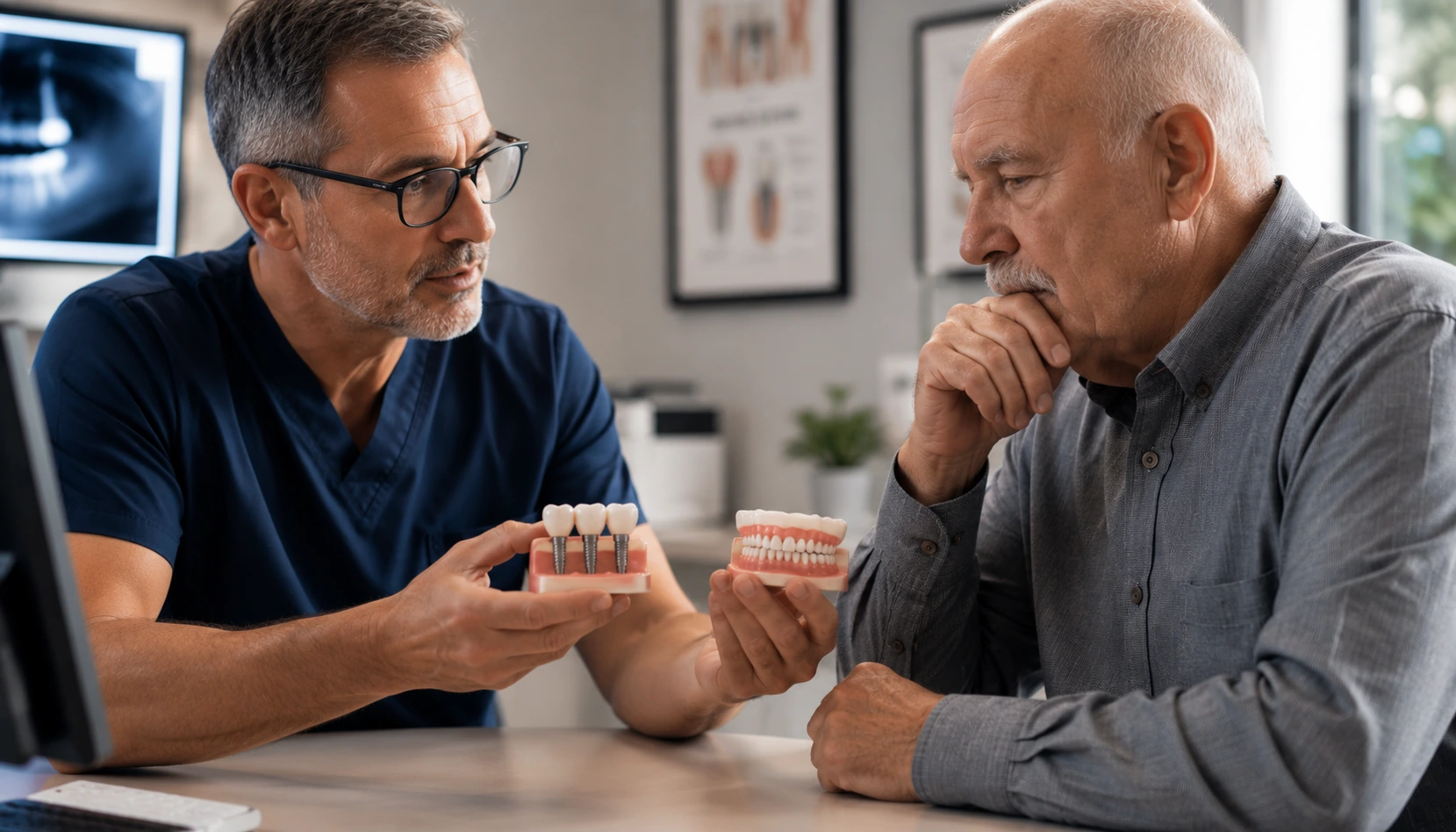
You’re tired of struggling with loose teeth, avoiding your favorite foods, and feeling self-conscious about your smile, so now you’re stuck trying to figure out whether dental implants versus dentures is actually the right move for you.
Benefits of dental implants
Dental implants function like your natural teeth because they anchor directly into your jawbone, creating a permanent foundation that doesn’t shift or slip. Many seniors report feeling confident again when eating hard foods, speaking without worry, or laughing freely in social situations. Unlike dentures that require daily removal and cleaning routines, implants integrate seamlessly into your life. Consider Margaret, a 68-year-old who chose implants after years of denture frustration. Within months, she stopped avoiding crunchy vegetables and sticky foods. The stability means you won’t experience the embarrassment of dentures moving during conversation or meals. Implants also preserve your bone structure by stimulating the jawbone, preventing the facial collapse and sunken appearance that often accompanies tooth loss. This preservation of bone density maintains your natural facial contours and keeps you looking like yourself.
- Improved ability to chew and speak effectively.
- Long-lasting solution with proper care and maintenance.
- Preserves bone structure and prevents facial sagging.
Drawbacks of dental implants
The path to implants requires patience and commitment. The surgical procedure itself involves placing a titanium post into your jawbone, which demands adequate bone density and overall good health. Healing typically takes three to six months before the implant fully integrates, during which you’ll need to follow strict dietary guidelines and avoid strenuous activity. The upfront cost ranges from three to six thousand dollars per tooth, which can strain budgets even with insurance coverage. Some seniors discover they lack sufficient bone density and require bone grafting, adding time and expense to the process. Additionally, not everyone qualifies as a candidate. Those with uncontrolled diabetes, certain medications, or compromised immune systems may face complications. The surgical aspect itself makes some older adults nervous, particularly if they have anxiety about dental procedures or multiple health conditions requiring careful medical coordination.
📘 Fix your day in under 2 minuteschoose where to begin:
Benefits of dentures
Dentures represent the most accessible path to a complete smile, requiring no surgery and minimal waiting time. You can have functional dentures within weeks rather than months, making them ideal if you need results quickly. The cost is significantly lower, typically ranging from one thousand to three thousand dollars for a full set, making them manageable for most seniors on fixed incomes. Adjustments and repairs are straightforward and affordable. If your dentures break or need refitting, a dentist can usually address the problem quickly without extensive procedures. Many seniors appreciate the flexibility of removing dentures for cleaning, soaking, and maintenance. Tom, a 72-year-old, chose dentures and found the simplicity appealing. He could remove them at night, soak them in a cleaning solution, and wake up with fresh dentures. There’s no ongoing surgical risk or complex integration period. For seniors with multiple health conditions or those taking medications that complicate healing, dentures offer a practical solution that doesn’t require ideal health status.
Drawbacks of dentures
Dentures demand consistent adjustment and maintenance that some seniors find tedious. Your mouth changes shape over time, requiring periodic refitting to maintain proper fit and comfort. Ill-fitting dentures can cause sore spots, difficulty eating, and speech problems. Many seniors report that dentures slip or shift during eating or speaking, creating embarrassing moments at family dinners or social events. You’ll need to remove them nightly, store them properly, and handle them carefully to avoid breakage. Some people struggle with the sensation of having a foreign object in their mouth, experiencing gagging or discomfort that never fully resolves. Unlike implants, dentures don’t stimulate your jawbone, so bone loss continues over time, eventually requiring denture adjustments every few years. Additionally, dentures can affect your ability to taste food fully and may make eating sticky or hard foods challenging. The psychological impact matters too. Some seniors feel self-conscious about wearing dentures or worry about others noticing them, affecting their confidence and social participation.
Making the decision
Your choice between dental implants versus dentures depends on several interconnected factors that deserve careful consideration. Start by assessing your overall health status with your dentist. Do you have adequate bone density? Are your health conditions stable? Can your body handle a surgical procedure and healing period? Next, evaluate your financial situation realistically. Implants require significant upfront investment, while dentures demand ongoing maintenance costs. Consider your lifestyle and eating preferences. If you enjoy crunchy foods and want maximum stability, implants align better with your goals. If you prefer simplicity and lower costs, dentures might suit you. Think about your comfort level with surgery and commitment to long-term care. Implants require diligent oral hygiene and regular dental visits, while dentures need daily cleaning routines. Many seniors find it helpful to discuss both options with their dentist, asking specific questions about their individual candidacy, expected outcomes, and realistic timelines. Some choose a hybrid approach, using implants for front teeth where appearance matters most and dentures for back teeth to reduce costs.
Dental implants provide a permanent, stable solution for missing teeth, while dentures offer a more affordable and easily replaceable alternative. Seniors must evaluate their individual needs and preferences to make an informed choice between the two options.
Are dental implants suitable for all seniors?
Not every senior is a candidate for dental implants due to factors like bone density and overall health. Consulting with a dental professional is crucial to determine eligibility.
How long do dentures typically last?
The lifespan of dentures varies depending on usage and maintenance. On average, dentures can last between 5 to 10 years before requiring replacement.
Others also read:
Disclaimer: This article is for informational purposes only and is not a substitute for professional medical advice. Always consult a healthcare professional for personal guidance.
This guide has been prepared and reviewed by the GlobalHealthBeacon editorial team and reflects current medical research as of 2026. It provides structured, evidence-based information to support informed health decisions.
