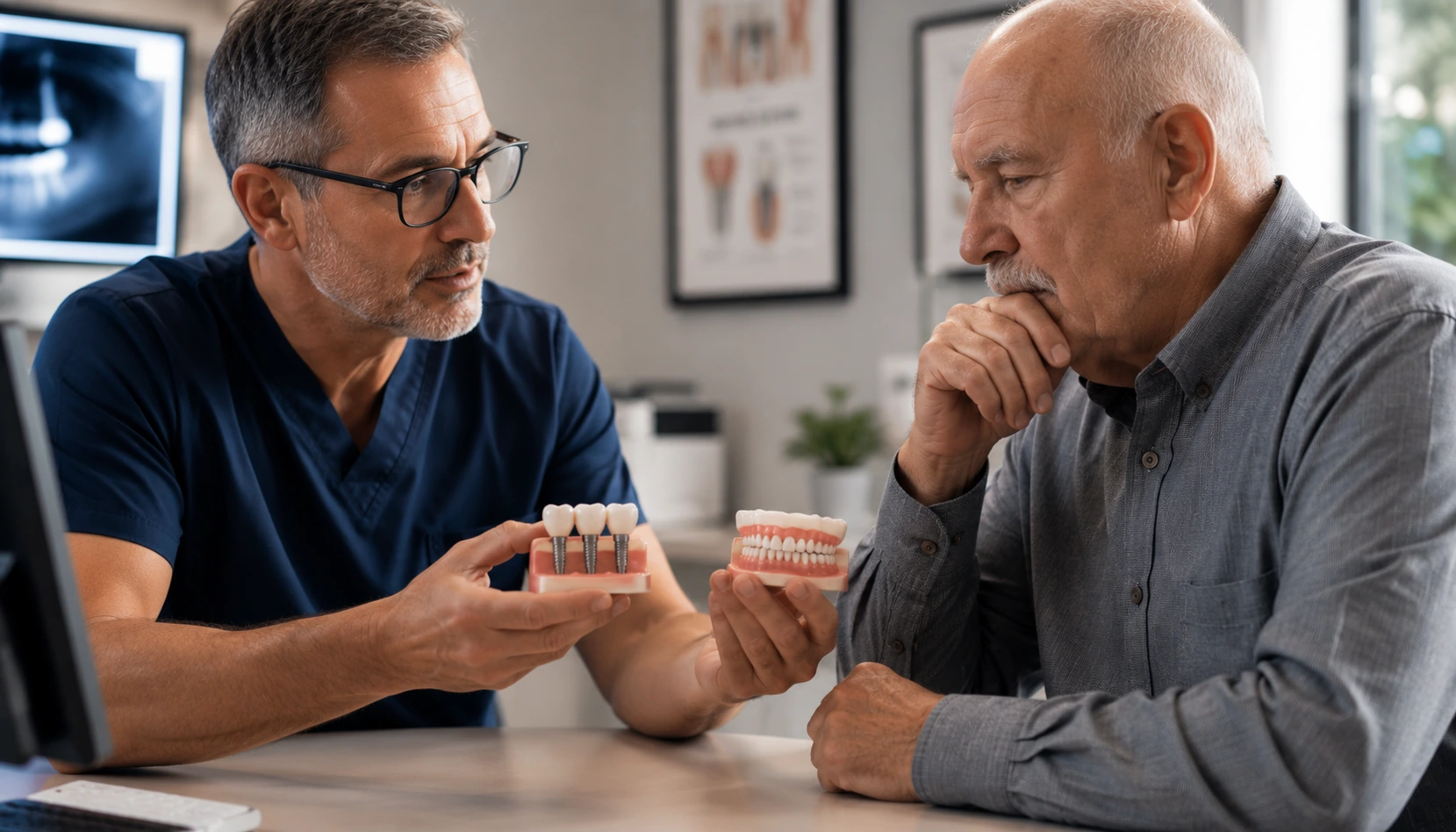
You’re struggling to chew your favorite foods, avoiding social situations because you’re self-conscious about your smile, and wondering if dental implants versus dentures is even a real choice or just marketing hype.
Implants: the rooted solution
Dental implants function as artificial tooth roots, surgically anchored directly into your jawbone through a titanium post. This creates a foundation that mimics the natural structure of a real tooth. Consider Margaret, a 68-year-old retired teacher who chose implants after losing a molar to decay. Within months, she reported that chewing felt natural again, and the implant remained stable during everyday activities like eating crunchy vegetables or speaking during her book club meetings. The implant integrates with bone tissue through a process called osseointegration, where bone cells grow around the titanium surface. This biological fusion creates remarkable stability. Unlike dentures that can shift during meals or conversation, implants stay fixed in place. The jawbone continues to receive stimulation from chewing forces, which helps maintain bone density over time. This is particularly important for seniors, as bone loss is a natural part of aging. Implants essentially preserve the structural integrity of your jaw that would otherwise deteriorate.
Dentures: the removable alternative
Dentures are custom-made prosthetic teeth that rest on your gums and can be removed for cleaning and sleeping. They come in two types: full dentures replacing all teeth, and partial dentures filling gaps where some natural teeth remain. Think of Robert, a 72-year-old who chose dentures after losing multiple teeth to gum disease. He appreciated the simplicity of popping them out each night and soaking them in cleaning solution. Dentures provide immediate restoration of chewing function and improve speech clarity for those with significant tooth loss. However, they do require adjustment periods. New denture wearers often experience a few weeks of minor discomfort as their mouth adapts to the foreign object. Over time, the gums and jawbone reshape naturally, which means dentures may need periodic adjustments or replacements to maintain proper fit. Some people experience slight movement during eating or speaking, though modern denture adhesives have improved stability considerably. The removable nature means you have complete control over cleaning and maintenance, which appeals to many seniors who prefer non-surgical solutions.
Clinical considerations
The choice between implants and dentures involves weighing several clinical factors specific to your situation. Implants offer superior long-term stability and preserve jawbone structure, but they require surgical intervention and a healing period of several months before the crown is attached. Dentures avoid surgery entirely and can be fitted relatively quickly, making them accessible for seniors with certain health conditions that make surgery risky. Implants prevent bone loss by stimulating the jaw through normal chewing forces, while dentures can accelerate bone resorption because the gums bear all pressure without root stimulation beneath the surface. This means denture wearers may notice their facial appearance changing slightly over years as the jaw reshapes. Cost differs significantly: implants typically require a larger upfront investment but last 20 to 30 years or longer with proper care, while dentures cost less initially but need replacement every 5 to 10 years. Your overall health status matters too. If you have uncontrolled diabetes, severe osteoporosis, or are taking medications that affect bone healing, dentures might be the safer choice. Conversely, if you have good bone density and no contraindications to surgery, implants could provide decades of stable function.
- Schedule a consultation with a dental professional who can evaluate your bone density, overall health, and specific tooth loss situation.
- Discuss the pros and cons of each option honestly, including realistic timelines, costs, and maintenance requirements for your lifestyle.
- Consider your oral health history, current medications, and any surgical risks that might influence your decision.
- Decide on the most suitable choice based on your personal priorities, whether that is stability, cost, convenience, or avoiding surgery.
- Follow post-treatment care instructions diligently to ensure successful outcomes and longevity of your chosen solution.
🔬 Science-backed benefits in 2 minuteschoose where to begin:
Aging and oral health
As we age, bone density naturally decreases throughout the body, and the jawbone is no exception. This process, called bone resorption, accelerates after tooth loss because the bone no longer receives stimulation from tooth roots. For seniors considering implants, adequate bone volume is essential for successful integration. Some older adults have experienced significant bone loss and may require bone grafting procedures before implant placement, adding time and cost to treatment. Dentures sidestep this surgical complexity entirely, making them a more accessible option for seniors with advanced bone loss or those who prefer to avoid additional procedures. However, dentures themselves can accelerate further bone loss because the gums absorb all chewing pressure without the underlying support that natural roots or implants provide. This creates a paradox: dentures solve the immediate problem of missing teeth but may contribute to long-term changes in facial structure and fit. Some seniors find that after wearing dentures for many years, their face appears slightly sunken or their chin seems more prominent as the jaw reshapes. Understanding this trade-off helps you make decisions aligned with your long-term comfort and appearance goals.
Maintenance matters
Both implants and dentures require consistent care, but the maintenance routines differ significantly. Implants demand the same oral hygiene as natural teeth: daily brushing with a soft-bristled toothbrush, flossing around the implant crown, and regular dental check-ups every six months. Some seniors find that special floss threaders or water flossers work better around implant crowns. The implant itself is made of titanium and cannot decay, but the surrounding gums and bone can develop problems if plaque accumulates. Dentures require a different approach: remove them after meals and before bed, rinse them under running water to remove food debris, and soak them overnight in a denture cleaning solution. Many seniors appreciate this routine because it gives their gums a break from wearing the prosthetic. However, dentures need periodic professional adjustments as the gums reshape, typically every one to two years. Some denture wearers experience sore spots where the denture rubs against gum tissue, requiring a dentist to adjust the fit. Both options benefit from professional care: implant crowns may need replacement after 15 to 20 years, while dentures may crack or break and require repair or replacement.
Choosing wisely
The decision between implants and dentures is deeply personal and should reflect your individual circumstances, not generic advice. Consider your priorities: do you value long-term stability and bone preservation, or do you prefer avoiding surgery and maintaining simplicity? Think about your lifestyle. If you travel frequently or prefer minimal dental appointments, dentures might suit you. If you want a solution that feels and functions like natural teeth and you are willing to commit to surgical recovery and ongoing maintenance, implants could be ideal. Your financial situation matters too. Implants represent a significant investment upfront but spread the cost over decades of use, while dentures require smaller initial payments but repeat expenses over time. Your overall health, bone density, and any medical conditions that affect healing should guide your choice. Most importantly, consult with a dental professional who can examine your specific situation, discuss realistic expectations, and answer your individual questions. They can assess your bone structure, review your medical history, and help you understand which option aligns best with your goals for oral function, appearance, and quality of life.
The comparison between dental implants and dentures highlights the importance of stability, maintenance, and patient-specific factors in making an informed choice for oral health.
Are dental implants painful to get?
The placement of dental implants involves surgery, typically performed under local anesthesia to minimize discomfort during the procedure. After the surgery, mild pain and swelling may occur for a few days, but these sensations can be managed with prescribed medications and proper post-operative care. Most patients report that discomfort is manageable and temporary.
Can dentures improve my ability to eat and speak?
Yes, dentures can significantly enhance chewing and speaking functions for individuals with missing teeth. Correctly fitted dentures restore proper oral function, aiding in better digestion and clearer speech. However, an adjustment period of a few weeks is common as your mouth adapts to wearing the prosthetic.
Others also read:
Disclaimer: This article is for informational purposes only and is not a substitute for professional medical advice. Always consult a healthcare professional for personal guidance.
This article has been prepared and reviewed by the GlobalHealthBeacon editorial team and is based on current medical research and published scientific literature available in 2026. It provides structured, evidence-based information to support informed health decisions.
