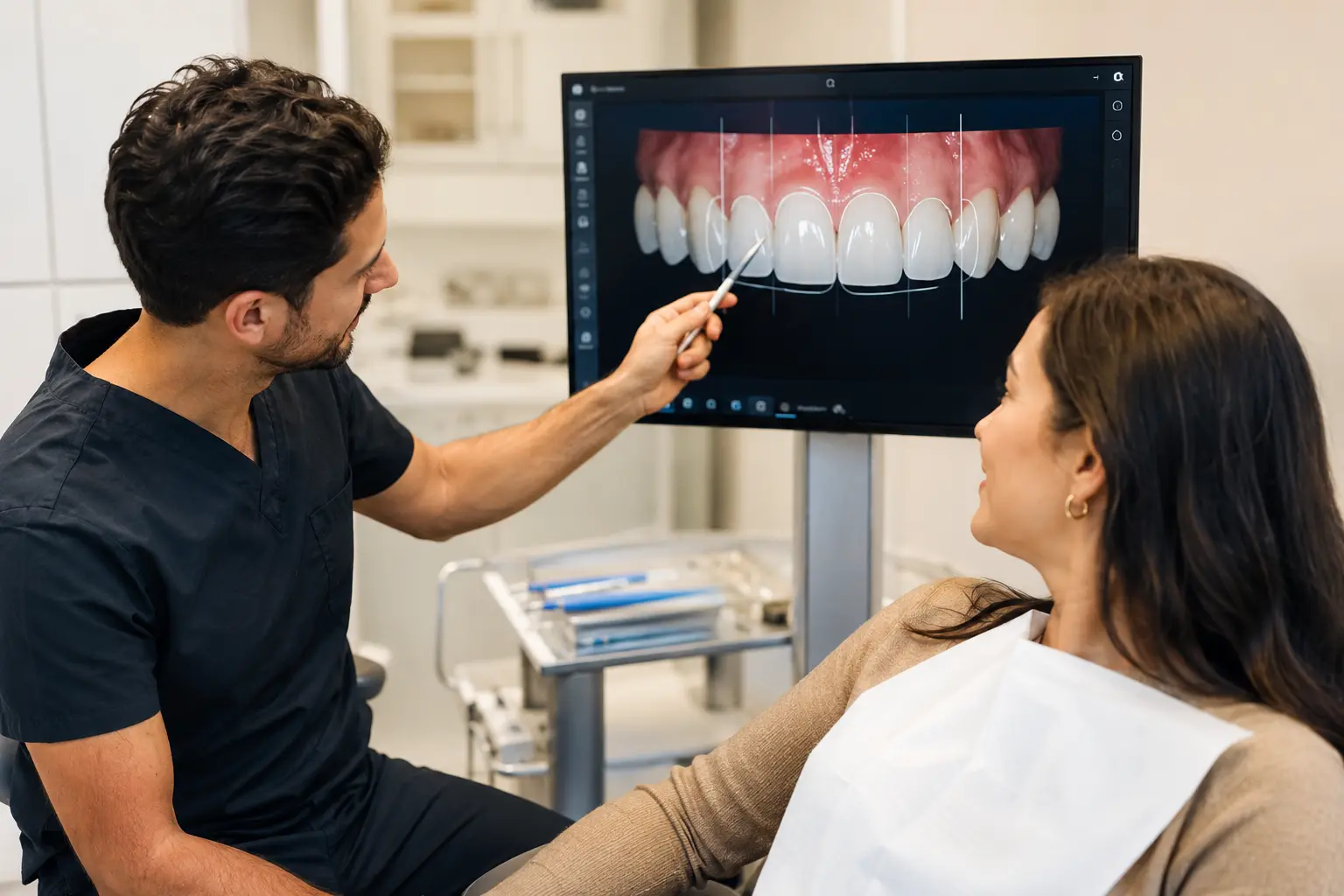
You’ve spent decades hiding your smile in photos, avoiding the dentist, and feeling self-conscious about your teeth, but digital smile design changes everything by showing you exactly what your transformed smile will look like before any work even begins.
Understanding digital smile design
Digital Smile Design represents a fundamental shift in how dentists approach cosmetic and restorative work. Instead of relying on guesswork or vague descriptions, this technology lets your dentist create a precise digital map of your mouth, teeth, and facial structure. Imagine walking into a consultation feeling uncertain about what’s possible, and walking out with a clear, detailed image of your future smile on a screen in front of you. The process begins with high-resolution photographs and sometimes 3D scans of your teeth and face. Your dentist then uses specialized software to analyze your facial proportions, tooth shape, color, and alignment. They can adjust elements like tooth width, length, and position to create a design that complements your unique features. For seniors, this approach eliminates the anxiety of the unknown. You’re not trusting someone’s artistic interpretation alone. You’re seeing the actual plan, understanding the reasoning behind each decision, and having complete control over the direction before any treatment begins. This technology has transformed cosmetic dentistry from an art form into a collaborative science.
- Visualizes the final result before treatment begins
- Tailored specifically to your unique smile and facial features
- Utilizes advanced technology for precise planning
The benefits of digital smile design
The advantages of Digital Smile Design extend far beyond just seeing a preview of your smile. First, communication becomes crystal clear. Rather than describing what you want in words that might be misunderstood, you and your dentist are looking at the same image and discussing specific details. You might say, I want my teeth slightly whiter, and your dentist can show you exactly what that looks like on your face. Second, predictability improves dramatically. Seniors often worry about whether a procedure will actually deliver results. With Digital Smile Design, the plan is precise, and outcomes align closely with the preview. Third, you gain complete autonomy in decision-making. You can request changes, ask questions about specific elements, and approve the plan only when you feel confident. This reduces anxiety and builds trust. Additionally, if multiple treatment options exist, your dentist can show you how each one would look, allowing you to weigh cosmetic results against cost, time, and complexity. Many seniors find this comparison invaluable when deciding between options like veneers, crowns, or orthodontic work.
📘 Fix your day in under 2 minuteschoose where to begin:
Getting started with digital smile design
Beginning your Digital Smile Design journey starts with finding the right dentist. Look for a practice that specifically advertises Digital Smile Design services and has experience working with older adults. During your initial consultation, arrive prepared to discuss what bothers you about your current smile and what you hope to achieve. Do you want whiter teeth? Straighter alignment? Better proportions? Be honest about your concerns. Your dentist will then conduct a thorough evaluation, examining your teeth, gums, bite, and overall oral health. This step matters because Digital Smile Design works best when your mouth is healthy. If you have gum disease or significant decay, those issues need addressing first. Next, your dentist takes high-quality photographs and possibly 3D images. You’ll sit comfortably while they capture images from different angles. This typically takes 10 to 15 minutes. Some practices also use digital scanning technology that creates a precise model of your teeth without traditional molds. For many seniors, this is far more comfortable than the old impression materials. Once images are captured, your dentist begins the design process, which may happen during your appointment or in the days following.
Reviewing your digital smile design plan
After your dentist completes the initial design, you’ll return for a presentation appointment. This is where the magic happens. Your dentist displays the Digital Smile Design on a screen, showing you before-and-after images of your smile. You’ll see exactly how your teeth would look with the proposed changes. This is your moment to ask questions without hesitation. Do you like the shape? Does the color feel right? Are the proportions balanced with your face? A good dentist will encourage feedback and be willing to make adjustments. Perhaps you want the teeth slightly longer, or you prefer a different shade of white. Your dentist can modify the design in real-time or take notes and refine it further. This review process also covers the treatment plan itself. Your dentist explains what procedures are needed, how many appointments you’ll need, the timeline, and the cost. For seniors on fixed incomes, understanding the financial commitment is crucial. Ask about payment plans, insurance coverage, and whether the practice offers financing options. Once you feel completely comfortable with both the design and the treatment plan, you approve it and move forward. Some practices provide you with printed or digital copies of your design to take home, which can be helpful for thinking things over or discussing with family.
Embarking on your smile transformation
Once you’ve approved your Digital Smile Design plan, your dentist schedules your treatment appointments. The timeline depends on the complexity of your case. A simple whitening might take one appointment, while full-mouth restorations could span several months. Your dentist will explain the sequence of treatments and what to expect at each step. Throughout the process, your dentist keeps you informed and involved. If you’re undergoing multiple procedures, they may show you progress photos comparing your current smile to the original design, confirming that everything is tracking as planned. This ongoing communication is especially important for seniors who want reassurance that their investment is paying off. You’ll receive clear instructions about aftercare, whether that means avoiding certain foods after veneers are placed, managing sensitivity after whitening, or maintaining new restorations. Your dentist’s team should be available to answer questions or address concerns between appointments. The transformation process is a partnership. You’re not just sitting passively in the chair. You’re an active participant in achieving the smile you designed together. Many seniors report that seeing their smile gradually transform according to the plan they approved brings genuine joy and renewed confidence. By the time your final appointment arrives, you’re not just getting a new smile. You’re reclaiming a part of yourself that may have felt lost for years.
Digital Smile Design transforms cosmetic dentistry from an uncertain process into a collaborative, transparent journey. By understanding how the technology works, recognizing its benefits, taking the first step with a consultation, carefully reviewing your personalized plan, and committing to the treatment process, seniors can achieve the smile they’ve always wanted with confidence and clarity. This approach removes guesswork and puts you in control of your own smile transformation.
Is Digital Smile Design suitable for all dental procedures?
Digital Smile Design can be used for a wide range of dental treatments, including cosmetic procedures, restorations, and orthodontic work. Your dentist will determine if it is the right approach for your specific needs.
How long does the Digital Smile Design process take?
The timeline for Digital Smile Design varies depending on the complexity of the case and the treatments involved. Your dentist will provide you with a personalized schedule and keep you informed throughout the process.
Others also read:
Disclaimer: This article is for informational purposes only and is not a substitute for professional medical advice. Always consult a healthcare professional for personal guidance.
This guide has been prepared and reviewed by the GlobalHealthBeacon editorial team and reflects current medical research as of 2026. It provides structured, evidence-based information to support informed health decisions.
