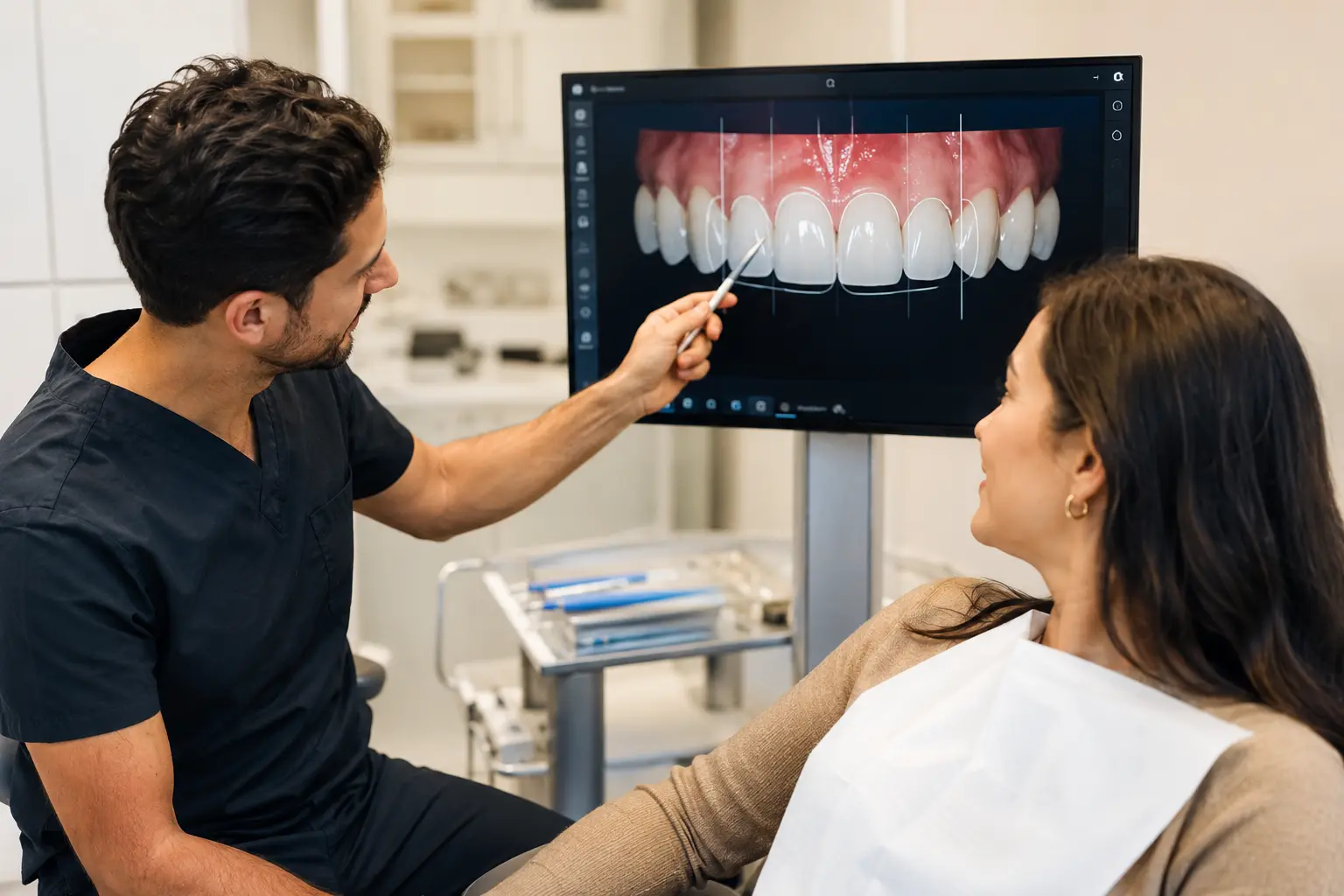
You’ve spent decades hiding your smile in photos, avoiding the dentist because you’re tired of hearing what needs fixing, and wondering if it’s even worth trying to change anything at this point in your life. Digital smile design changes that entire conversation by showing you exactly what’s possible before you commit to anything.
Understanding digital smile design
Digital smile design is a technology-driven approach that goes beyond traditional dental consultations. Instead of your dentist describing what could happen, you actually see it. The process starts with high-resolution photographs of your face and teeth taken from multiple angles. Your dentist then uses specialized software to map out your facial proportions, tooth shape, color, and alignment. Think of it like having a blueprint before building a house. For seniors, this matters because it removes guesswork. You’re not imagining what veneers might look like or hoping dental implants will match your face. You see a digital simulation that accounts for your unique facial structure, skin tone, and age-related changes. The software can show you different smile widths, tooth shapes, and colors side by side so you can actually choose what appeals to you rather than accepting whatever the dentist recommends.
- Personalized assessment of your smile needs based on your facial anatomy
- Improved communication between you and your dentist through visual references
- Visual representation of the proposed smile makeover before any treatment begins
Benefits for seniors
The real benefit for seniors isn’t just cosmetic. Yes, a refreshed smile can boost confidence, but there’s more happening beneath the surface. Many seniors have spent years managing dental problems piece by piece. A cracked tooth here, a missing tooth there, discoloration from decades of coffee and tea. Digital smile design lets you see how addressing these issues together creates a cohesive result rather than a patchwork of individual fixes. Consider Margaret, a 68-year-old who had three missing teeth and significant wear on her remaining teeth. She’d avoided smiling for years. With digital smile design, she saw a complete plan that included implants, crowns, and whitening. Seeing the final result beforehand made her confident enough to move forward. Six months later, she wasn’t just smiling more in photos. She reported feeling more engaged in social situations and more willing to speak up in group settings. That psychological shift often matters as much as the physical transformation.
📘 Fix your day in under 2 minuteschoose where to begin:
Digital smile design process
The process unfolds in clear, manageable steps. First, your dentist captures detailed images of your smile at rest and while smiling, plus close-ups of individual teeth and your full face profile. You’ll sit in the chair for about 15 to 20 minutes while they take these photos under proper lighting. Next comes the analysis phase, which happens mostly behind the scenes. Your dentist loads the images into specialized software and begins mapping your facial proportions using established guidelines for smile aesthetics. They measure the relationship between your teeth and lips, the width of your smile, and how your teeth align with your facial midline. Then comes the simulation. Your dentist creates digital mockups showing different treatment options. You might see what your smile looks like with veneers versus implants, or with different tooth shapes and shades. This is where you get to experiment without commitment. You can request adjustments. Want the teeth slightly smaller? Done. Prefer a warmer shade of white? They adjust it. This back-and-forth continues until you see something that feels like you, not like someone else’s idea of a perfect smile.
Customized treatment plans
Once you’ve approved a digital design, your dentist creates a detailed treatment roadmap. This isn’t a one-size-fits-all approach. A 70-year-old with healthy bone density might be a candidate for dental implants, while someone with significant bone loss might benefit more from bridges or dentures. Your dentist considers your overall health, medications, and any conditions like diabetes or osteoporosis that affect healing. The plan breaks down into phases. Maybe phase one is addressing decay and gum health. Phase two might involve tooth whitening or reshaping. Phase three could be placing implants or veneers. Spacing these phases out makes treatment more manageable and gives your mouth time to heal between procedures. Cost becomes clearer too. Instead of discovering mid-treatment that you need additional work, you know upfront what everything costs and can plan accordingly. Some seniors choose to do everything at once. Others spread treatment over a year or more. The digital plan accommodates both approaches.
Consultation and follow-up
Your first consultation sets the tone for everything that follows. Come prepared to discuss not just what you want your smile to look like, but why. Do you want to feel more confident at social events? Are you returning to work or dating? Are you dealing with functional issues like difficulty chewing? A dentist experienced with seniors understands that smile goals vary widely. Some want dramatic transformation. Others prefer subtle refinement that looks natural for their age. Discuss your budget openly. Digital smile design doesn’t change the cost of actual procedures, but knowing the full financial picture upfront prevents surprises. Ask about the dentist’s experience with seniors specifically. Older mouths have different healing patterns and may require modified techniques. After treatment begins, follow-up appointments become your accountability checkpoints. Your dentist monitors how you’re healing, makes sure you’re adjusting to new teeth or implants, and catches any issues early. These visits also let you voice concerns. If something doesn’t feel right or look right, your dentist can adjust. This ongoing partnership is what transforms a procedure into a successful outcome.
Digital smile design offers seniors a modern approach to achieve a beautiful smile while enhancing their confidence and overall well-being. By leveraging advanced technology and personalized treatment plans, seniors can enjoy a tailored solution that meets their unique smile goals.
Is digital smile design suitable for seniors with dental issues?
Yes, digital smile design is beneficial for seniors with various dental concerns, including missing teeth, discoloration, or misalignments. Dentists use this technology to address specific issues and create a customized treatment plan for each individual.
How long does the digital smile design process take?
The duration of the digital smile design process varies depending on the complexity of the case and the treatments involved. Typically, seniors can expect multiple appointments for consultations, digital simulations, and follow-up visits to ensure optimal results.
Others also read:
Disclaimer: This article is for informational purposes only and is not a substitute for professional medical advice. Always consult a healthcare professional for personal guidance.
This guide has been prepared and reviewed by the GlobalHealthBeacon editorial team and reflects current medical research as of 2026. It provides structured, evidence-based information to support informed health decisions.
