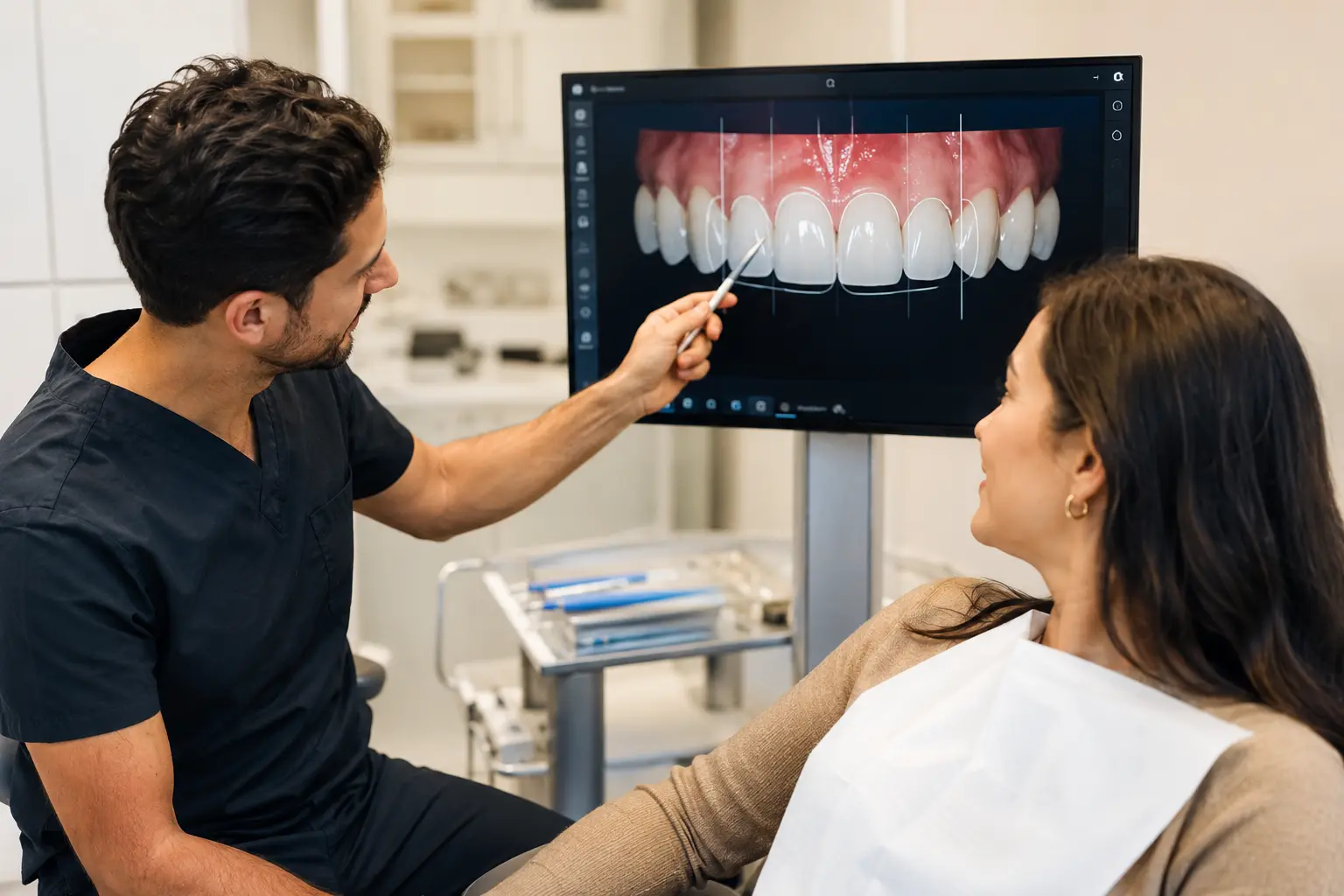
Years of hiding your smile in photos because your teeth don’t match who you are inside – that ends with digital smile design, a technology that lets you see your future smile before committing to a single procedure.
Understanding digital smile design
Digital Smile Design is a systematic approach that combines photography, video analysis, and advanced imaging technology to map out exactly what your smile could become. Rather than relying on a dentist’s intuition alone, this method captures precise measurements of your facial proportions, the angle of your smile, how your lips frame your teeth, and even how your smile changes when you laugh or speak. Think of it as creating a detailed blueprint before any construction begins. For seniors, this is particularly valuable because it accounts for natural changes that come with age – the way your face has shifted, how your gums have receded, and the wear patterns on your existing teeth. The process begins with high-resolution photographs taken from multiple angles, often including video of you smiling naturally and speaking. This data feeds into specialized software that dentists use to visualize potential outcomes with remarkable accuracy.
The science behind digital smile design
The technology underlying digital smile design draws from principles of facial aesthetics that have been studied for decades. Dentists use established ratios and proportions – such as the golden ratio that appears throughout nature – to guide their digital designs. When you upload your photos into the software, it analyzes the relationship between your teeth, lips, gums, and facial structure. The system measures angles, distances, and symmetry to identify what’s working well and what could be improved. Three-dimensional imaging takes this further by creating a virtual model of your mouth that can be rotated and examined from every angle. This isn’t guesswork dressed up in technology. Research shows that patients who see digital previews before treatment report significantly higher satisfaction rates because expectations align with reality. The precision also reduces the need for adjustments after treatment is complete, saving you time and additional appointments.
Key steps in digital smile design
The digital smile design process unfolds in three main phases that work together to create your personalized treatment plan. First comes the preliminary assessment, where your dentist evaluates your overall oral health, examines your existing teeth and gums, and studies your facial structure in detail. This isn’t just about teeth – your dentist is looking at how your face is proportioned, where your smile line sits, and how much gum shows when you smile. They’ll ask about your goals and concerns, listen to what bothers you about your current smile, and understand what you hope to achieve. Next is the digital mock-up phase, where your photos and measurements are loaded into specialized software. Your dentist uses digital tools to redesign your smile, adjusting tooth shape, size, color, and position to create a preview of potential outcomes. You’ll see multiple options and can provide feedback on what appeals to you and what doesn’t. Finally, the treatment planning phase takes that approved digital design and translates it into a concrete plan. Your dentist explains exactly which procedures will be needed, in what order they’ll happen, how long the process will take, and what you can expect at each stage.
- Preliminary Assessment
- Digital Mock-Up
- Treatment Planning
🔬 Science-backed benefits in 2 minuteschoose where to begin:
Advantages of digital smile design
One of the most powerful benefits of digital smile design is that it eliminates the guesswork from cosmetic dentistry. You’re not imagining what your smile might look like – you’re seeing it before treatment begins. This visual preview reduces anxiety because you know exactly what to expect. Communication between you and your dental team becomes clearer too. Instead of trying to describe what you want verbally, you can point to the digital design and say yes, that’s what I want, or no, let’s adjust that. This back-and-forth refinement happens before any irreversible procedures, so changes are easy and cost nothing. The precision of digital planning also leads to better clinical outcomes. Your dentist can plan the exact shade of whitening needed, the precise shape of veneers, or the specific alignment targets for orthodontic treatment. This level of detail means fewer surprises and adjustments after treatment is complete. Many patients report that seeing their future smile motivates them to follow through with treatment and maintain their results long-term.
Long-term benefits for seniors
For seniors, digital smile design addresses challenges that are specific to aging. Over decades, teeth naturally wear down, become discolored from years of coffee and tea, and may shift slightly due to bone loss. Your smile might not feel like it matches who you are anymore. Digital smile design allows your dentist to create solutions that look natural for your age while still being a noticeable improvement. The designs account for the reality of aging – they won’t make you look like you’re trying too hard to appear 30 again, but rather like the best version of yourself at your current age. The customized approach means your new smile complements your facial features, your skin tone, and your overall appearance. Seniors also benefit from the reduced treatment time that digital planning provides. Because everything is mapped out precisely beforehand, procedures are often more efficient, meaning fewer appointments and less time in the dental chair. The confidence that comes from a smile you’re proud of often has ripple effects – people report smiling more freely, feeling more comfortable in social situations, and even experiencing improved self-esteem.
The future of dental aesthetics
Digital Smile Design represents a fundamental shift in how cosmetic dentistry works. Rather than being an art form based primarily on a dentist’s training and experience, it’s becoming a science-based discipline where technology and artistry work together. Artificial intelligence is beginning to play a role too, with some newer systems able to suggest design options based on your facial structure and preferences. For seniors, this evolution is particularly meaningful because it democratizes access to high-quality cosmetic dentistry. You no longer need to find a dentist with decades of experience and hope they understand your vision. The technology helps level the playing field, ensuring that excellent results are possible regardless of where you live or which dentist you choose. As these tools continue to improve, they’ll become faster, more accurate, and more accessible. The future likely holds even more sophisticated imaging, virtual reality previews where you can see your new smile in three dimensions, and integration with other health data to ensure your smile design supports your overall oral health.
Digital Smile Design blends artistry with technology, providing seniors with personalized and natural-looking smile enhancements. By utilizing advanced digital tools, dentists can create precise treatment plans tailored to each individual’s unique smile characteristics. The technology reduces uncertainty, improves communication, and leads to outcomes that match expectations because you’ve seen them beforehand.
Is Digital Smile Design suitable for all age groups?
Yes, Digital Smile Design can benefit individuals of all ages by offering personalized solutions to enhance their smiles according to their specific needs and preferences. However, the approach is customized for each age group – designs for seniors account for natural aging and aim for results that look age-appropriate and authentic.
How long does the Digital Smile Design process take?
The duration of the Digital Smile Design process varies depending on the complexity of the case and the treatment plan involved. The initial digital design consultation typically takes one to two hours. Dentists will provide a detailed timeline during your initial consultation, including how long the actual treatment procedures will take once the design is approved.
Others also read:
Disclaimer: This article is for informational purposes only and is not a substitute for professional medical advice. Always consult a healthcare professional for personal guidance.
This article has been prepared and reviewed by the GlobalHealthBeacon editorial team and is based on current medical research and published scientific literature available in 2026. It provides structured, evidence-based information to support informed health decisions.
