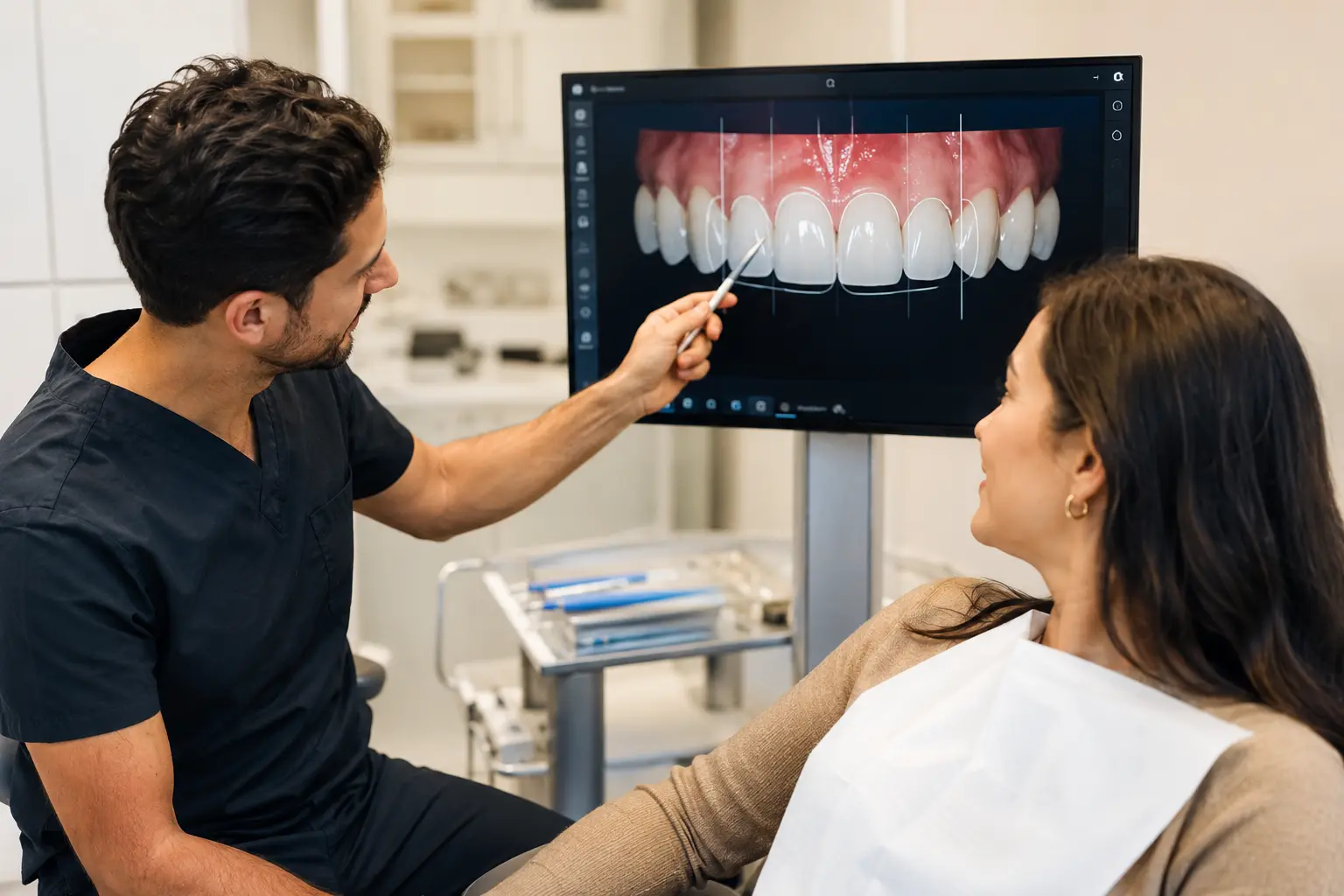
You’ve spent years hiding your smile in photos, avoiding candid moments, and feeling like your teeth don’t match the confident woman you are inside, but digital smile design is changing the game by letting you see your transformed smile before a single procedure happens.
The science behind digital smile design
Digital Smile Design represents a fundamental shift in how dental professionals approach cosmetic dentistry. Rather than relying on intuition or traditional sketches, this technology uses advanced imaging software to capture precise measurements of your facial structure, bone density, lip position, and tooth alignment. The software analyzes the golden ratio and facial proportions that research has shown contribute to perceived beauty and harmony. For example, a woman in her 50s might discover that her ideal smile requires not just whitening but also subtle adjustments to tooth length and gum display to complement her changing facial features. The technology maps out angles, distances, and relationships between your eyes, nose, mouth, and chin, creating a mathematical blueprint for your transformation. This isn’t guesswork or one-size-fits-all dentistry. Instead, it’s personalized biomechanics that accounts for your unique facial anatomy, skin tone, and natural features to design a smile that looks authentically yours rather than generic or overdone.
Benefits of digital smile design for women
Women often approach smile transformation with legitimate concerns about whether the results will look natural or feel like someone else’s smile. Digital Smile Design addresses this anxiety head-on by providing a preview that feels real and tangible. Imagine sitting in the consultation chair and seeing not just a description but an actual digital image of what your smile could look like. This visual proof reduces the fear of the unknown that many women feel when considering cosmetic procedures. Beyond the emotional reassurance, this approach empowers you to make informed decisions about your own body. You’re not passively accepting a dentist’s recommendation but actively collaborating in the design process. Women report feeling more confident in their choice when they’ve seen the outcome beforehand and had input into the design. Additionally, this technology helps identify potential issues before they become problems. If a proposed design doesn’t harmonize with your facial features or personal style, you’ll know it before any irreversible work begins, saving time, money, and emotional energy.
How digital smile design works
The process unfolds in stages, each building on the previous one to create your customized smile blueprint. First comes the consultation, where you meet with a dental professional who listens carefully to what bothers you about your current smile and what you envision for your future one. This isn’t a rushed appointment. A thorough consultation might involve discussing specific concerns like a gap between teeth, discoloration, or asymmetry, and exploring your lifestyle, profession, and personal aesthetic preferences. Some women want a bold, bright smile for professional confidence, while others prefer subtle, natural-looking enhancements. Next, digital imaging captures high-resolution photographs and sometimes 3D scans of your teeth and facial structure from multiple angles. Advanced software then analyzes these images, measuring tooth proportions, gum contours, and how your smile integrates with your overall facial geometry. Finally, the design phase brings it all together. The dental professional uses specialized software to create a digital model showing your ideal smile, adjusting tooth shape, size, shade, and position until the design aligns with your goals and facial harmony. You see this design, provide feedback, and refinements are made until you’re genuinely excited about the outcome.
- Initial consultation to discuss your smile goals and preferences
- Digital imaging and 3D scanning of teeth and facial features
- Software analysis of facial proportions and smile harmony
- Creation of customized digital smile design model
- Review and refinement of design based on your feedback
🔬 Science-backed benefits in 2 minuteschoose where to begin:
Enhancing confidence through technology
Confidence isn’t superficial. Research shows that women who feel good about their smile smile more often, engage more in social situations, and report higher overall life satisfaction. Digital Smile Design bridges the gap between your internal confidence and external presentation. By visualizing the transformation before it happens, you’re not just seeing teeth. You’re seeing yourself stepping into a version of your life where you’re not thinking about hiding your smile during important moments. Consider a woman in her 40s who’s always been self-conscious about a gap between her front teeth. Digital Smile Design shows her exactly how closing that gap will change her appearance, how it will integrate with her aging face, and whether the change aligns with her personal identity. This isn’t about conforming to someone else’s standard of beauty. It’s about aligning your external appearance with how you feel internally. The technology removes the guesswork that often leads to regret or disappointment. When you’ve seen the outcome and approved it, you move forward with genuine confidence rather than hope or uncertainty.
Precision and perfection in smile design
Every millimeter matters when designing a smile that looks natural and harmonious. Digital Smile Design allows dental professionals to adjust tooth shape, size, shade, and position with precision that traditional methods simply cannot match. The software calculates the ideal tooth-to-face ratio, ensuring your teeth don’t look disproportionately large or small relative to your facial features. Symmetry is analyzed and adjusted, though perfect symmetry is actually avoided because human faces are naturally asymmetrical and perfect symmetry can look artificial. The shade of your teeth is considered not in isolation but in relation to your skin tone, hair color, and eye color. A shade that looks brilliant white on one woman might look harsh or artificial on another. The software helps identify the shade that enhances your natural coloring and complements your overall appearance. Gum display is also carefully planned. Some women naturally show more gum when smiling, and the design accounts for this, ensuring the final result looks proportional and balanced. This level of precision means fewer surprises, fewer adjustments after the fact, and a final result that genuinely harmonizes with your unique facial aesthetics rather than looking like a generic cosmetic dentistry outcome.
Empowering women to embrace their smile journey
The traditional dental model often positioned patients as passive recipients of professional expertise. Digital Smile Design flips this dynamic by making you an active partner in your transformation. You’re not being told what your smile should look like. Instead, you’re collaborating with a skilled professional to design a smile that reflects your values, preferences, and vision for yourself. This collaborative approach builds trust because you understand the reasoning behind each decision. When the dentist explains why a certain tooth shape complements your face or why a particular shade enhances your natural coloring, you’re learning, not just accepting. This education continues throughout the process, so you’re never confused about what’s happening or why. Women report feeling more satisfied with their results when they’ve been involved in the design process because the outcome reflects their input and preferences. Additionally, this approach acknowledges that you know yourself better than anyone else. Your dentist brings technical expertise, but you bring knowledge of your lifestyle, your professional environment, and your personal aesthetic. Together, you create a smile that’s not just technically perfect but genuinely right for you.
Digital Smile Design represents a significant evolution in cosmetic dentistry, combining advanced technology with collaborative patient involvement to create personalized smile transformations. By providing visual previews, precise measurements, and a partnership approach, this technology empowers women to make informed decisions about their smiles with confidence and clarity. The process accounts for individual facial anatomy, personal preferences, and aesthetic goals, ensuring results that feel authentic and harmonious rather than generic. For women considering smile enhancement, Digital Smile Design offers both the reassurance of seeing outcomes beforehand and the empowerment of actively shaping their transformation journey.
Is Digital Smile Design suitable for all dental procedures?
Digital Smile Design can be applied to a wide range of cosmetic and restorative dental procedures, from teeth whitening and bonding to veneers, crowns, and orthodontics. However, the technology is most valuable for procedures where aesthetics play a significant role. Your dental professional can assess whether Digital Smile Design is appropriate for your specific situation and treatment goals.
How long does the Digital Smile Design process take?
The timeline varies depending on the complexity of your case and the extent of transformation you’re seeking. The initial consultation and design phase typically span one to three appointments, with each appointment lasting 30 to 90 minutes. After the design is finalized and approved, the implementation phase depends on your chosen procedures. Some treatments like bonding or whitening can be completed in one or two visits, while others like veneers or orthodontics may take weeks or months.
Others also read:
Disclaimer: This article is for informational purposes only and is not a substitute for professional medical advice. Always consult a healthcare professional for personal guidance.
This article has been prepared and reviewed by the GlobalHealthBeacon editorial team and is based on current medical research and published scientific literature available in 2026. It provides structured, evidence-based information to support informed health decisions.
