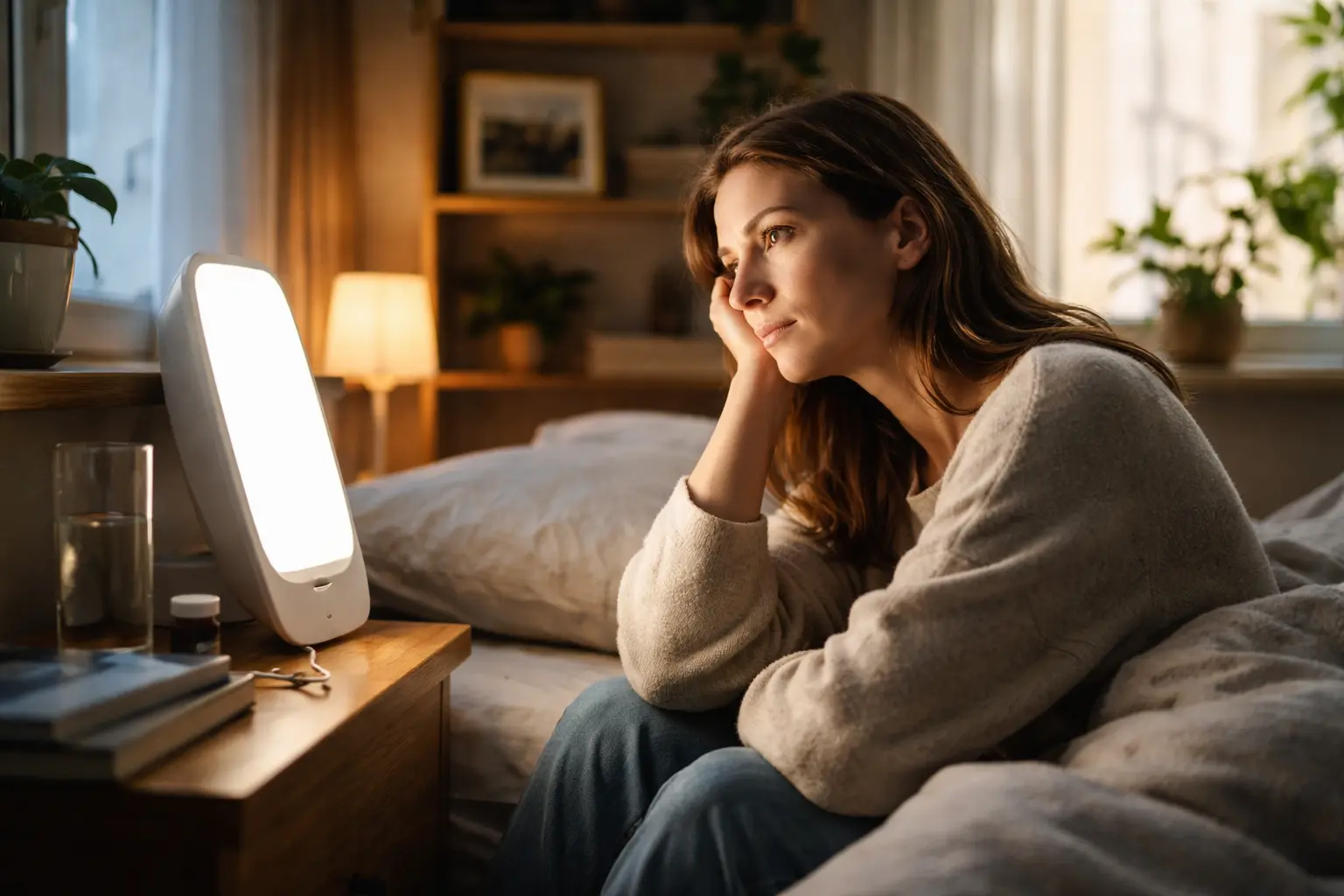
You wake up feeling heavy, unmotivated, and the world outside your window looks gray even when the sun is shining, so does a daylight lamp work against depression, or is it just another wellness trend that won’t actually change anything for you?
Biological rhythms and depression
Your body operates on an internal clock that most people don’t even think about. This circadian rhythm controls when you feel alert, when you get hungry, when your body temperature drops, and crucially, when you produce hormones that regulate mood. Think of it like a conductor orchestrating your entire biological symphony. When you’re exposed to natural light in the morning, your brain receives a signal that says ‘wake up, it’s time to be active.’ This triggers the release of cortisol, which energizes you, and later in the day, melatonin production ramps up to prepare you for sleep. But here’s where depression enters the picture: when your circadian rhythm gets disrupted, whether from irregular sleep schedules, working night shifts, or simply spending too much time indoors, this delicate balance collapses. Your body starts producing serotonin and dopamine at the wrong times, your sleep becomes fragmented, and your mood plummets. Research shows that people with depression often have significantly disrupted circadian rhythms. Daylight lamps work by essentially resetting this internal clock, mimicking the light exposure your ancestors got naturally from the sun.
How daylight lamps work
A daylight lamp isn’t just any bright light you’d find in a regular desk lamp. These devices emit light at specific wavelengths and intensities, typically between 2,500 to 10,000 lux, which is measured in units of illumination. To put that in perspective, a typical office light provides around 500 lux, while a sunny day outdoors delivers roughly 10,000 lux or more. When this bright, white light enters your eyes, it travels to a specific region in your brain called the suprachiasmatic nucleus, which is essentially your body’s master clock. This region contains special light-sensitive cells that respond to bright light by signaling your brain to suppress melatonin production and increase serotonin synthesis. Serotonin is the neurotransmitter most directly linked to mood regulation, motivation, and emotional stability. Imagine serotonin as your brain’s natural antidepressant: when levels are adequate, you feel more optimistic, focused, and emotionally resilient. When they’re low, everything feels harder and darker. By using a daylight lamp consistently, you’re essentially telling your brain ‘it’s daytime, produce serotonin now,’ which can help lift the fog that depression creates. Studies on seasonal affective disorder, a form of depression tied to winter darkness, show that light therapy can increase serotonin levels measurably within days of consistent use.
Regulating light exposure
Using a daylight lamp isn’t complicated, but there’s a right way and a wrong way to do it, and the difference matters more than you might think. The most effective approach is to use your lamp in the early morning, ideally within the first hour of waking up, for about 20 to 30 minutes. Why morning? Because your circadian rhythm is most responsive to light exposure early in the day. If you use the lamp in the evening, you risk disrupting your sleep by suppressing melatonin when your body is trying to wind down. Consistency is absolutely critical here. Your brain doesn’t respond well to sporadic light exposure; it needs a predictable pattern to reset your internal clock. Think of it like training for a sport: one workout won’t change anything, but showing up every single day will transform your fitness. The same principle applies to light therapy. Many people make the mistake of using their lamp sporadically, then wondering why they don’t feel better. Another common error is placing the lamp too close or too far away, which reduces its effectiveness. The sweet spot is about 16 to 24 inches from your eyes, positioned slightly above eye level so the light enters your visual field naturally without forcing you to stare directly at the source. Some people also make the mistake of using their lamp while looking directly into it, which can cause eye strain and headaches, defeating the purpose entirely.
- Place the lamp at eye level and at a distance of about 16 to 24 inches from your face, slightly angled downward so light enters your field of vision naturally.
- Avoid looking directly at the light source to prevent eye strain and discomfort; instead, let the light reach your eyes peripherally while you read, eat breakfast, or work.
- Use the lamp consistently at the same time each day, preferably within the first hour of waking, for 20 to 30 minutes to maximize circadian rhythm regulation.
🔬 Science-backed benefits in 2 minuteschoose where to begin:
Benefits of daylight lamps
Research into light therapy has accumulated over decades, and the evidence is compelling, especially for seasonal affective disorder. During winter months when daylight hours shrink dramatically, people with SAD experience significant mood drops, fatigue, and loss of interest in activities. Studies show that light therapy can reduce SAD symptoms by 50 to 80 percent in responsive individuals, often within just one to two weeks of consistent use. But the benefits extend beyond seasonal depression. People with non-seasonal depression also report improvements in mood, energy levels, and motivation when using daylight lamps as part of their treatment plan. What makes light therapy particularly attractive compared to pharmaceutical interventions is that it’s non-invasive, has virtually no serious side effects, and doesn’t require a prescription. You’re not introducing chemicals into your body; you’re simply providing your brain with the environmental signal it evolved to expect. Many young adults appreciate this approach because it feels more natural and controllable than medication, though it’s important to understand that light therapy works best when combined with other treatments like therapy or, when necessary, medication. Some people experience improvements in sleep quality, better focus during the day, and even enhanced mood stability within the first few days of use.
Considerations and limitations
While daylight lamps can be genuinely helpful, they’re not a universal solution, and understanding their limitations is crucial for setting realistic expectations. Not everyone responds equally to light therapy; some people are highly responsive and notice mood improvements within days, while others see minimal changes even with consistent use. This variation depends on factors like your specific type of depression, the severity of your symptoms, your individual circadian rhythm sensitivity, and even your genetics. If you have severe depression, bipolar disorder, or other serious mental health conditions, a daylight lamp alone won’t be sufficient treatment. Additionally, certain eye conditions or medications that increase light sensitivity can make light therapy problematic. Some people experience side effects like headaches, jitteriness, or increased anxiety, particularly if they use the lamp too late in the day or for too long. There’s also the risk of becoming overly reliant on the lamp, thinking it’s a complete solution when professional mental health support might be necessary. This is why consulting a healthcare provider before starting light therapy is genuinely important, not just a formality. A doctor can assess whether light therapy is appropriate for your specific situation and help you integrate it into a comprehensive treatment plan.
Conclusion on daylight lamps and depression
Daylight lamps represent a scientifically grounded, accessible tool for addressing depression by working with your body’s natural biological processes rather than against them. They regulate circadian rhythms, boost serotonin production, and can meaningfully improve mood and energy levels for many people, particularly those with seasonal affective disorder. However, they work best as part of a broader approach to mental health that might include therapy, lifestyle changes, social connection, and sometimes medication. The key is understanding that a daylight lamp is a supporting player in your mental health strategy, not the star of the show. If you’re considering using one, start with realistic expectations, use it consistently and correctly, and work with a healthcare provider to ensure it fits your individual needs. For young adults navigating depression, light therapy offers a tangible, evidence-based action you can take immediately, which itself can be empowering.
Daylight lamps mimic natural sunlight to regulate circadian rhythms and boost serotonin levels, potentially alleviating symptoms of depression. While beneficial for many, it’s important to consult a healthcare provider before use, especially for severe depression.
Are there any side effects of using a daylight lamp for depression?
Daylight lamps are generally safe to use with minimal side effects such as eye strain or headaches, which can be reduced by following usage guidelines.
Can daylight lamps completely cure depression?
Daylight lamps can help alleviate symptoms of depression in many individuals, but they are not a definitive cure and may need to be used in conjunction with other treatments.
Others also read:
Disclaimer: This article is for informational purposes only and is not a substitute for professional medical advice. Always consult a healthcare professional for personal guidance.
This article has been prepared and reviewed by the GlobalHealthBeacon editorial team and is based on current medical research and published scientific literature available in 2026. It provides structured, evidence-based information to support informed health decisions.
← Back to the Main page on: does a daylight lamp work against depression
