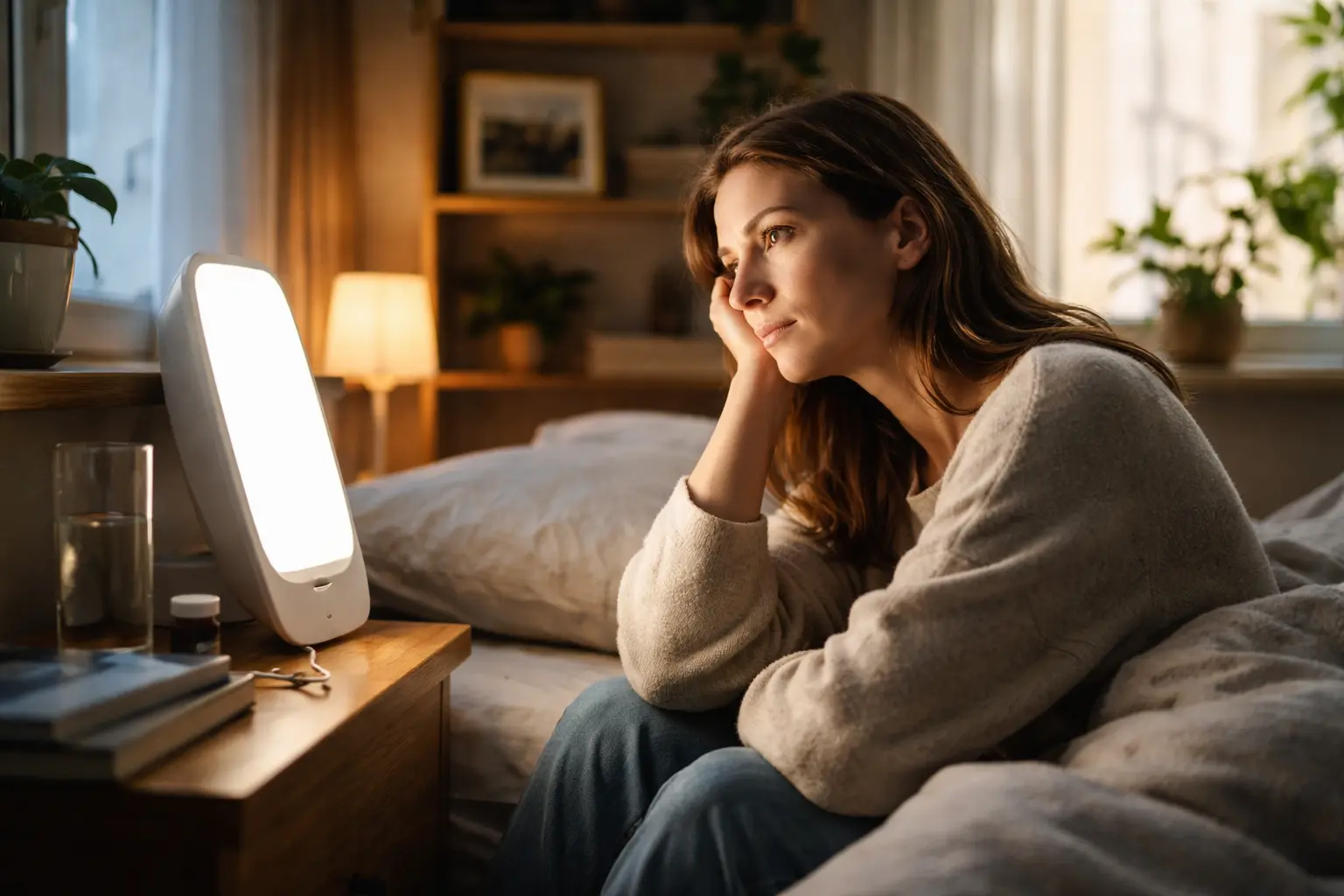
You wake up at noon, scroll through your phone for two hours, and still can’t shake the heaviness that makes getting out of bed feel like climbing a mountain, so you’re wondering does a daylight lamp work against depression or if you’re just chasing another false promise.
Understanding light therapy
Light therapy, also known as phototherapy, involves exposure to bright light that mimics natural sunlight to help regulate your mood and improve depression symptoms. Think of it like this: your brain has an internal clock that relies on light cues to function properly. When you’re stuck indoors during dark months or struggling with irregular sleep patterns, that clock gets confused, throwing off your melatonin production and serotonin levels. A light therapy lamp delivers the intensity and spectrum your body craves, typically around 10,000 lux, which is significantly stronger than regular indoor lighting. This isn’t some mystical solution, but rather a science-backed approach that works by resetting your circadian rhythms and boosting the neurotransmitters responsible for mood regulation. Many young adults find that consistent exposure helps their body remember what natural daylight feels like.
- Increased energy levels
- Improved mood and focus
- Enhanced sleep patterns
Light therapy for seasonal affective disorder (SAD)
Seasonal Affective Disorder hits differently when you’re young and trying to maintain your social life and work responsibilities. SAD typically creeps in during fall and winter when daylight hours shrink, leaving you feeling drained, unmotivated, and disconnected from everything that usually brings you joy. Imagine scrolling through your friends’ stories while you’re bundled under blankets at 4 PM, feeling like you’re missing out on life. Light therapy addresses this directly by providing the light exposure your body desperately needs during these darker months. Research shows that sitting in front of a daylight lamp for 20 to 30 minutes each morning can significantly reduce SAD symptoms within days or weeks. The lamp essentially tells your brain that it’s daytime, kickstarting your energy production and mood regulation. For young adults, this means you can actually enjoy winter instead of just surviving it.
💬 Ready to feel better in 2 minutes?choose where to begin:
Setting up your light therapy routine
Getting results from light therapy depends almost entirely on consistency and proper setup. Start by positioning your lamp at eye level, about 16 to 24 inches away from your face, angled slightly downward so the light hits your eyes without causing glare or discomfort. The best time is within the first hour after waking up, ideally between 6 and 9 AM, because this is when your body is most responsive to light cues. Commit to 20 to 30 minutes daily, and yes, this means actually sitting there instead of just having the lamp on while you scroll. Common mistakes include using the lamp too late in the day, which can interfere with sleep, or expecting results after just a few days. Your body needs time to recalibrate, typically one to three weeks of consistent use before you notice meaningful changes. Think of it like building a habit: the routine itself becomes part of the treatment.
Real results from young adults
Real young adults are experiencing genuine shifts in how they feel and function. One student shared that after two weeks of morning light therapy, she stopped hitting snooze five times and actually felt awake during her 8 AM classes. Another mentioned that the heavy fog that made decision-making impossible started lifting, allowing him to focus on work projects and reconnect with friends. These aren’t miraculous transformations, but rather steady improvements in energy, motivation, and emotional resilience. Young adults report sleeping better at night, waking with more purpose, and feeling less like they’re fighting their own brain. The key is that they stuck with it even when results weren’t immediate, understanding that light therapy works gradually by resetting biological systems that took months or years to become dysregulated. Many describe it as finally having a tool that actually addresses the root cause instead of just masking symptoms.
Light therapy offers young adults struggling with depression a practical, science-backed approach to regulating mood, boosting energy, and improving sleep quality. By understanding how light impacts your circadian rhythms and establishing a consistent morning routine with a specialized daylight lamp, you can experience the same transformative results that many of your peers are already seeing. Consistency and patience are essential, but for those willing to commit, light therapy can become a game-changing part of managing depression.
How long does it take to see results from light therapy?
Individual responses vary, but many young adults notice improvements in mood and energy within three to seven days of consistent morning use. More significant changes typically emerge within two to four weeks. The timeline depends on factors like the severity of your symptoms, how consistently you use the lamp, and your individual biology.
Can I use a regular lamp instead of a daylight lamp for light therapy?
Regular lamps don’t have the intensity or specific light spectrum needed for effective light therapy. A specialized daylight lamp delivers around 10,000 lux at the proper distance, while regular bulbs produce only 500 lux or less. Using the wrong lamp is like trying to tan under a desk light, it just won’t work.
Others also read:
Disclaimer: This article is for informational purposes only and is not a substitute for professional medical advice. Always consult a healthcare professional for personal guidance.
This article presents an experience-based perspective and has been reviewed by the GlobalHealthBeacon editorial team in 2026. It provides structured, evidence-based information to support informed health decisions.
← Back to the main does a daylight lamp work against depression page
