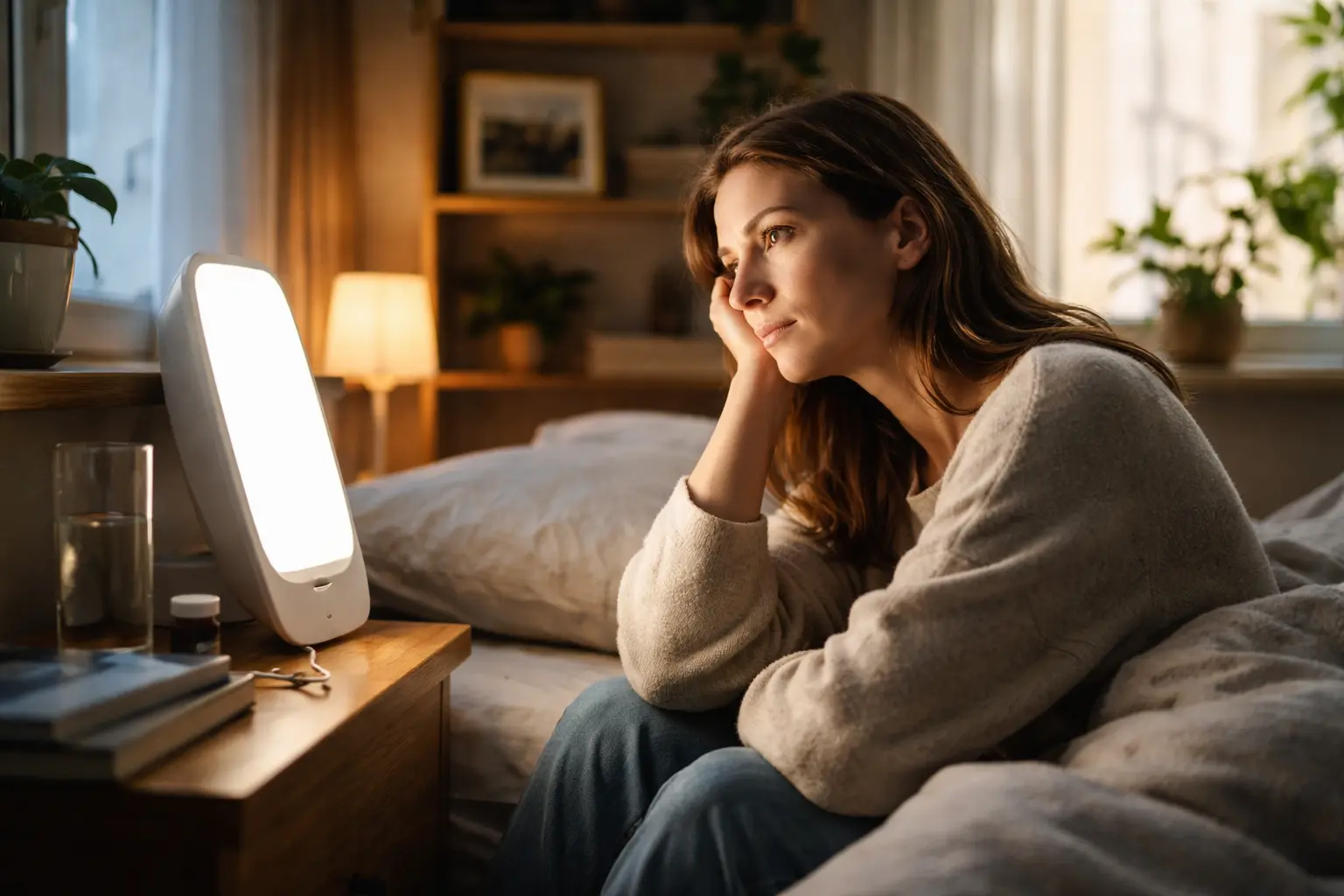
You wake up exhausted even after eight hours of sleep, the winter darkness feels suffocating, and your mood has been stuck in a gray fog for weeks – so does a daylight lamp work against depression, or is it just another wellness gimmick that won’t actually help you feel better?
How do daylight lamps combat depression?
Daylight lamps work by mimicking natural sunlight, which your body desperately needs but often doesn’t get, especially during winter months or if you work indoors. When light enters your eyes, it signals your brain to regulate your circadian rhythm, the internal clock that controls sleep, energy, and mood. This is where the real magic happens. Your brain responds by increasing serotonin production, the neurotransmitter responsible for feelings of wellbeing and motivation. Think of it this way: a woman who works a 9-to-5 desk job might spend her entire day under fluorescent lights, never seeing natural sunlight. By using a daylight lamp for 30 minutes each morning, she’s essentially telling her body it’s time to wake up and feel alive. Studies show this can reduce seasonal affective disorder symptoms and improve overall mood within weeks. The lamp doesn’t cure depression, but it addresses one of the root causes: lack of proper light exposure.
- Regulates circadian rhythm and sleep-wake cycles
- Increases serotonin levels naturally
- Improves mood, energy, and mental clarity
Choosing the right light therapy lamp
Not all light therapy lamps are created equal, and choosing the wrong one means wasting money on something that won’t actually help. The key specifications to look for are brightness measured in lux, color temperature, and size. Aim for at least 10,000 lux brightness, which is the standard recommended by most health professionals for effective light therapy. Color temperature should fall between 5,000 and 6,500 Kelvin, which mimics natural daylight rather than warm yellow light. Consider your lifestyle too. If you travel frequently, a compact lamp might be better than a large desk model. A woman with a busy morning routine might prefer a smaller, portable lamp she can use while checking emails. Conversely, if you have a dedicated workspace, a larger lamp that covers more area could be more effective. Check reviews from other women to see real-world experiences with specific models. Look for lamps with adjustable brightness settings so you can start lower and gradually increase intensity if needed.
📘 Fix your day in under 2 minuteschoose where to begin:
Using your daylight lamp effectively
Simply owning a light therapy lamp won’t help if you don’t use it correctly. Consistency is everything. The best approach is to use your lamp every morning for about 30 minutes, ideally within the first hour of waking up. This timing aligns with your natural circadian rhythm and prevents the lamp from interfering with your sleep later. Position the lamp at eye level or slightly above, angled down toward your face. Sit approximately 16 to 24 inches away, close enough to receive adequate light but far enough to avoid eye strain. Many women make the mistake of placing the lamp too far away or at an angle where the light doesn’t reach their eyes effectively. During your 30 minutes, you can read, eat breakfast, or work on your laptop, so it fits naturally into your morning routine. If you’re new to light therapy, start with 20 minutes and gradually increase to 30 minutes as your eyes adjust. Avoid using the lamp after 3 p.m., as it can interfere with melatonin production and make falling asleep more difficult.
Potential side effects and precautions
Light therapy is generally safe for most people, but it’s not risk-free. Some women experience mild side effects like headaches, eye strain, jitteriness, or mild agitation, especially when starting out. These symptoms often diminish within a few days as your body adjusts. If side effects persist, reduce your usage time to 15 or 20 minutes instead of 30. Certain conditions require extra caution. Women with bipolar disorder should consult their doctor first, as light therapy can sometimes trigger manic episodes. If you take medications that increase light sensitivity, such as certain antibiotics or anti-inflammatory drugs, discuss light therapy with your healthcare provider. Those with eye conditions like macular degeneration or retinal disease should also get professional guidance. Don’t assume that more light is better. Using the lamp for longer than recommended or at excessive brightness won’t speed up results and may actually cause discomfort. Think of it like sun exposure: a little is beneficial, but too much causes damage.
Seek professional guidance if needed
Light therapy is a helpful tool, but it’s not a replacement for professional mental health treatment. If you’re experiencing severe depression, suicidal thoughts, or symptoms that worsen despite using a light therapy lamp, reach out to a mental health professional immediately. A therapist or psychiatrist can assess whether light therapy is appropriate for your specific situation and whether you need additional treatment like therapy or medication. Many women find that combining light therapy with other approaches like cognitive behavioral therapy, regular exercise, or medication creates the most effective treatment plan. Don’t let the simplicity of a light therapy lamp fool you into thinking it’s a standalone cure. Depression is complex, and what works for one person might not work for another. A professional can help you determine if your depression is seasonal affective disorder, which responds well to light therapy, or if other factors are at play. Starting light therapy doesn’t mean you’re giving up on professional help. Instead, it means you’re taking an active role in your wellness while also getting the expert support you deserve.
Daylight lamps effectively support mood by regulating circadian rhythms and boosting serotonin, making them particularly valuable for seasonal depression and winter blues. When selecting a lamp, prioritize at least 10,000 lux brightness and 5,000-6,500K color temperature for optimal results. Consistent 30-minute morning use, proper positioning at eye level 16-24 inches away, and avoiding afternoon sessions maximize benefits. While generally safe, some women experience mild side effects that typically resolve quickly. Light therapy works best as part of a comprehensive approach that includes professional mental health support when needed, especially for severe depression.
Are daylight lamps safe to use for everyone?
Light therapy is generally safe, but certain conditions require caution. Women with bipolar disorder, eye conditions like macular degeneration, or those taking light-sensitive medications should consult a healthcare provider first. Most people experience no side effects, though some may notice mild headaches or eye strain initially. Starting with shorter sessions of 15-20 minutes and gradually increasing to 30 minutes helps your body adjust. If you have any underlying health conditions or take medications, it’s worth a quick conversation with your doctor before beginning light therapy.
How long does it take to see results from using a daylight lamp?
Many women notice improvements in mood and energy within one to three weeks of consistent daily use. Some experience benefits even sooner, while others may need four to six weeks to feel significant changes. The timeline depends on factors like the severity of your symptoms, consistency of use, and how your individual body responds to light therapy. The key is patience and consistency. Using your lamp sporadically won’t produce results, but committing to daily 30-minute sessions in the morning gives your circadian rhythm and serotonin production the best chance to stabilize and improve your mood.
Others also read:
Disclaimer: This article is for informational purposes only and is not a substitute for professional medical advice. Always consult a healthcare professional for personal guidance.
This guide has been prepared and reviewed by the GlobalHealthBeacon editorial team and reflects current medical research as of 2026. It provides structured, evidence-based information to support informed health decisions.
← Go to the does a daylight lamp work against depression main guide
