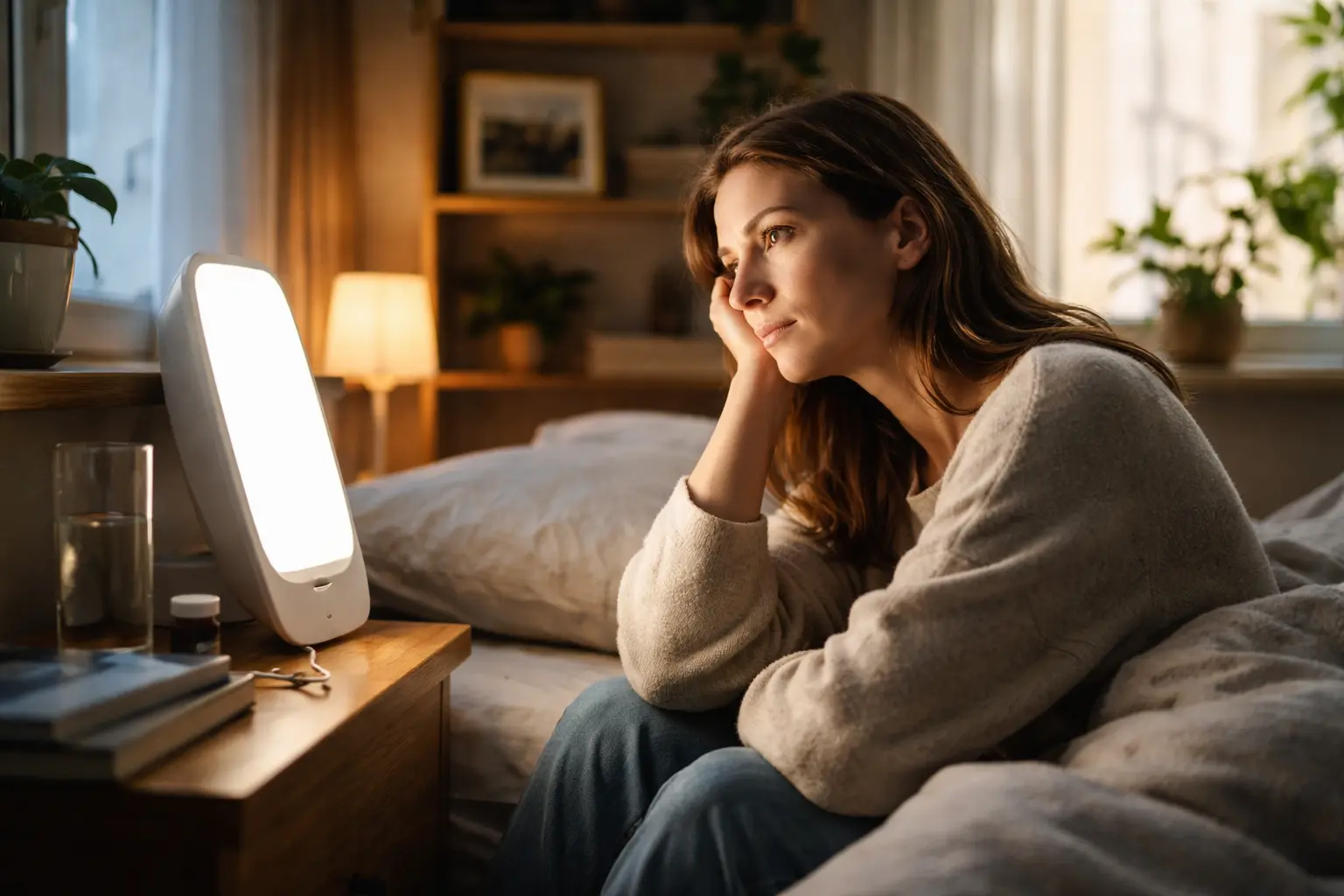
You wake up at noon, feel like you’re moving through fog, and can’t shake the heaviness that settles over everything, so you start wondering does a daylight lamp work against depression or if you’re just grasping at straws.
Understanding daylight lamps for depression
Daylight lamps work by mimicking the natural light spectrum your body expects to see during daylight hours. When you’re stuck indoors or dealing with seasonal changes, your brain doesn’t receive the light signals it needs to regulate circadian rhythms properly. These lamps emit light at specific wavelengths, typically in the blue spectrum, which directly influences your pineal gland and suppresses melatonin production during the day. This matters because when melatonin stays elevated when it shouldn’t, you feel sluggish and unmotivated. Beyond melatonin, exposure to bright light triggers serotonin release, the neurotransmitter that directly affects mood regulation. Think of it this way: your body is essentially a light-dependent system, and when that input is missing, everything downstream suffers. Young adults especially benefit because your circadian rhythm is still adjusting to independent schedules, late nights, and irregular sleep patterns that depression often amplifies.
- Provides natural light exposure indoors without UV damage
- Affects melatonin and serotonin levels within 20-30 minutes of use
- May improve sleep patterns and reduce sleep onset time
Benefits of using daylight lamps
The benefits extend beyond just feeling less sad. Users report clearer thinking, better focus during work or study sessions, and a noticeable shift in energy that starts within days of consistent use. Imagine struggling to get through your morning classes or work meetings because everything feels heavy and pointless. A daylight lamp positioned at your desk can shift that experience significantly. You’ll likely notice your afternoon energy crash becomes less severe, your motivation to tackle tasks improves, and that fog that clouds your thinking lifts slightly. For young adults managing depression alongside school or work responsibilities, this practical boost matters. The lamp works as a non-invasive complement to therapy or medication, not a replacement, but as an additional tool in your mental health toolkit. Many users appreciate that they can control the timing and intensity, making it adaptable to their specific schedule and sensitivity levels. Some find it particularly helpful during winter months or when their routine becomes erratic.
📘 Fix your day in under 2 minuteschoose where to begin:
Choosing the right daylight lamp
Start by looking for lamps with a color temperature between 5000K and 6500K, which mimics midday sunlight most effectively. The brightness should be measured in lux, and most therapeutic lamps range from 5000 to 10000 lux. For young adults, consider your living situation: if you share a dorm or apartment, a smaller, portable lamp might work better than a large light box. Think about where you’ll actually use it. Will it sit on your desk while you work? On your nightstand? Near your morning coffee spot? The best lamp is the one you’ll actually use consistently. Size matters too. A compact lamp like the Carex Day-Light takes up minimal space, while larger models provide broader light coverage but require dedicated space. Check the warranty and customer reviews specifically from young adults who mention their depression or seasonal mood changes. Look for adjustable brightness settings so you can start lower if you’re sensitive to light and gradually increase intensity. Some lamps offer timer functions, which help you maintain consistent daily usage without overthinking it.
Using a daylight lamp properly
Timing and positioning are crucial for effectiveness. Place your lamp at roughly eye level, about 16-24 inches from your face, angled slightly downward so light enters your eyes without causing glare or discomfort. The morning is ideal because it resets your circadian rhythm earliest in the day. If you use it at night, you risk disrupting sleep, which defeats the purpose. Start with 20-30 minutes daily, ideally between 6am and 9am, though any consistent morning window works. Think of it like taking a medication at the same time each day. Your body responds to consistency more than intensity. Some young adults find it helpful to use their lamp while eating breakfast, checking emails, or scrolling through their phone so it becomes automatic rather than another task to remember. If you experience eye strain or mild headaches initially, reduce the duration to 15 minutes and gradually increase. This adjustment period is normal. Track your mood and energy for at least two weeks before deciding if it’s working for you, since the effects build gradually rather than appearing overnight.
Top daylight lamps for young adults
The Verilux HappyLight is a popular choice because it offers 10000 lux output, a compact design that fits dorm rooms, and a reasonable price point around 50-70 dollars. The Carex Day-Light is smaller and more portable, making it ideal if you move frequently or travel between home and school. It delivers 10000 lux in a lightweight package. The Circadian Optics Lumine is budget-friendly under 40 dollars and works well for young adults testing whether light therapy helps before investing more. For those wanting a sleeker design that blends into modern spaces, the Philips EnergyUp is pricier but offers app connectivity and adjustable color temperature. Each lamp has trade-offs: brightness versus size, price versus features, portability versus durability. Read reviews from other young adults specifically mentioning depression or mood improvement rather than just general brightness ratings. Consider starting with a mid-range option like the Carex or Circadian Optics to see if light therapy works for you before committing to premium models.
Daylight lamps provide a practical, evidence-supported tool for managing depression symptoms by regulating your circadian rhythm and boosting serotonin naturally. The key is selecting a lamp that fits your lifestyle and using it consistently each morning. Combined with other treatments like therapy or medication, a daylight lamp can meaningfully improve your energy, focus, and overall mood within weeks of regular use.
Can a daylight lamp replace medication for depression?
No. Daylight lamps are not a substitute for prescribed medications or therapy. They work best as a complementary tool alongside professional treatment. If you’re considering stopping medication, talk to your doctor first. Light therapy can reduce symptoms but shouldn’t be your only intervention for clinical depression.
Are there any side effects of using a daylight lamp?
Daylight lamps are generally safe with minimal side effects. Some users experience mild eye strain, headaches, or jitteriness if the lamp is too bright or used too long initially. Start with 15-20 minutes and increase gradually. Avoid using lamps after 3pm as they can interfere with sleep. If you have bipolar disorder, consult your doctor before starting light therapy.
Others also read:
Disclaimer: This article is for informational purposes only and is not a substitute for professional medical advice. Always consult a healthcare professional for personal guidance.
This guide has been prepared and reviewed by the GlobalHealthBeacon editorial team and reflects current medical research as of 2026. It provides structured, evidence-based information to support informed health decisions.
← Go to the does a daylight lamp work against depression main guide
