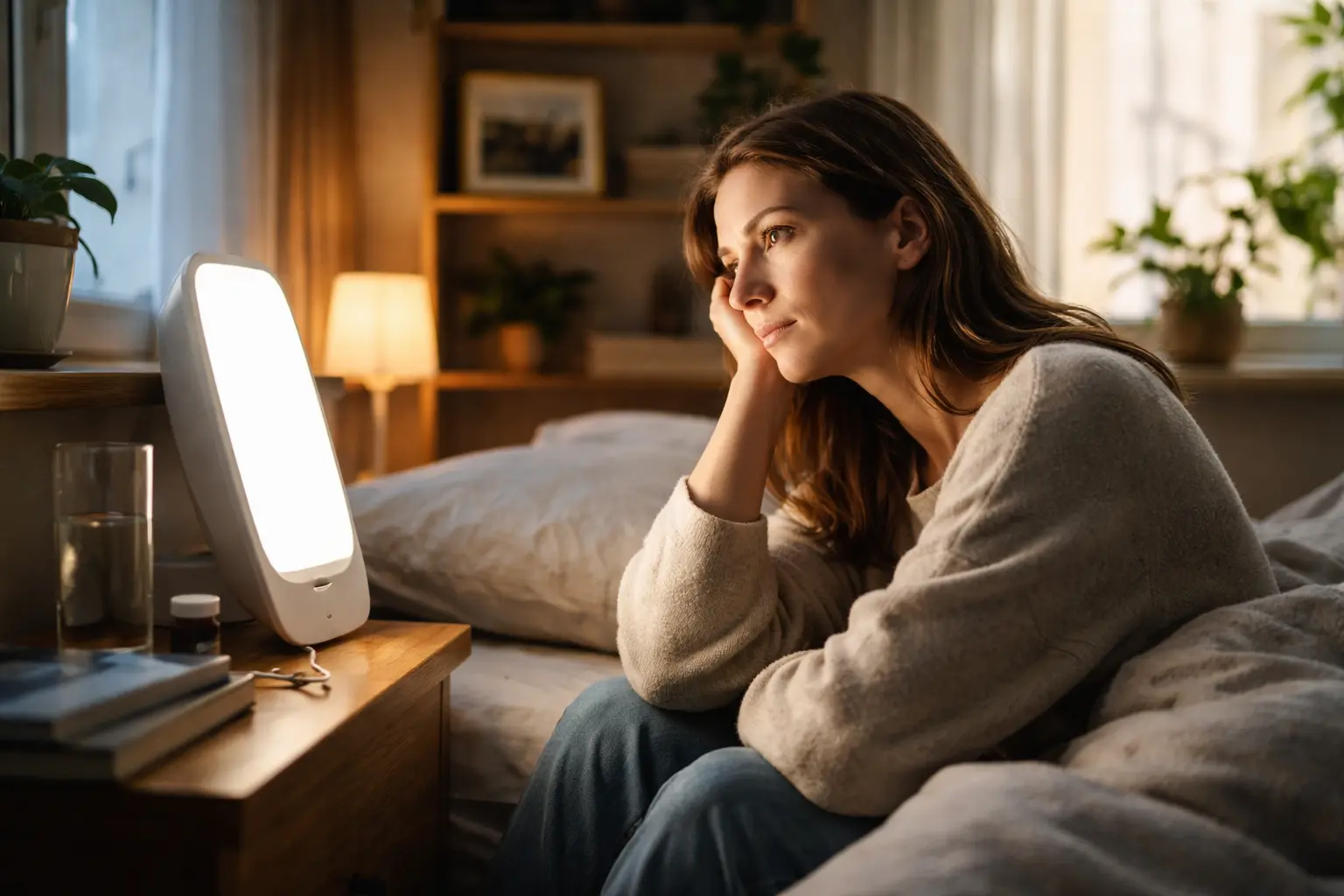
You wake up at 6 AM but the world still feels dark, heavy, and pointless, and you’re wondering if does a daylight lamp work against depression or if you’re just grasping at straws while your mood spirals deeper into that familiar fog.
Understanding depression and light therapy
Depression affects millions of women worldwide, manifesting as persistent sadness, fatigue, and a loss of interest in activities that once brought joy. For many women, depression doesn’t announce itself loudly. Instead, it creeps in gradually, making mornings feel harder and afternoons feel endless. Light therapy represents one approach to addressing mood regulation by using devices that mimic natural sunlight. The science behind this is rooted in how our bodies respond to light exposure. Our eyes contain specialized cells called intrinsically photosensitive retinal ganglion cells that detect light and send signals directly to the brain’s suprachiasmatic nucleus, the master clock controlling our circadian rhythms. When depression takes hold, these natural rhythms often become disrupted, creating a vicious cycle of poor sleep and worsening mood. Understanding this connection helps explain why light therapy has gained attention as a potential complementary approach for managing depressive symptoms.
How daylight lamps influence brain chemistry
When light enters your eyes, it triggers a cascade of biological responses that extend far beyond simple vision. Bright light exposure stimulates the production of serotonin, a neurotransmitter often called the mood regulator because of its role in emotional well-being and motivation. For women experiencing depression, serotonin levels are frequently lower than optimal, contributing to that persistent heaviness and lack of drive. Daylight lamps work by delivering light intensity typically ranging from 2,500 to 10,000 lux, which is significantly brighter than standard indoor lighting. This exposure helps reset your circadian rhythm, the internal 24-hour clock that governs sleep-wake cycles, hormone release, and mood fluctuations. When your circadian rhythm is synchronized, your body produces melatonin at appropriate times, supporting deeper sleep and more stable mood throughout the day. Many women report that using a daylight lamp in the morning creates a noticeable shift in their energy and mental clarity by midday, though individual responses vary considerably.
Benefits of daylight lamps for depression
Research has identified several potential benefits of light therapy, particularly for seasonal affective disorder, a condition where depressive symptoms intensify during darker months. Women are diagnosed with SAD at roughly three times the rate of men, making this distinction especially relevant. Beyond seasonal patterns, some studies suggest that regular light therapy use can improve overall mood, increase daytime alertness, and enhance motivation for daily activities. The non-invasive nature of light therapy appeals to many women seeking alternatives or complements to medication or therapy. Unlike pharmaceutical interventions, daylight lamps carry minimal side effects for most users and don’t interact with other treatments. Some women incorporate light therapy into their morning routine, using it while reading, working, or having breakfast, making it practical for busy schedules. Others find that consistent use helps stabilize their mood throughout winter months or during particularly stressful life periods. The key distinction is that light therapy works best as part of a comprehensive approach rather than as a standalone solution.
- Position your daylight lamp at eye level, approximately 16 to 24 inches away from your face, ensuring the light reaches your eyes without causing glare or discomfort.
- Use your lamp during morning hours, ideally within 30 to 60 minutes of waking, to maximize its effect on your circadian rhythm and serotonin production.
- Maintain consistent daily use for at least three to seven days before expecting noticeable changes, as your body requires time to respond to the light stimulus.
- Track your mood, energy levels, and sleep quality in a journal or notes app to identify patterns and determine whether light therapy is genuinely helping your specific situation.
- Adjust the duration gradually, starting with 20 to 30 minutes and potentially extending to 45 to 60 minutes based on your tolerance and response.
🔬 Science-backed benefits in 2 minuteschoose where to begin:
Potential limitations of light therapy
While daylight lamps show promise for many women, they’re not universally effective, and understanding their limitations is crucial for setting realistic expectations. The intensity of light matters significantly; lamps delivering insufficient lux won’t trigger the neurochemical changes needed for mood improvement. Individual variation in light sensitivity means that what works powerfully for one woman may produce minimal effects for another. Additionally, light therapy works best for depression with seasonal patterns or mild to moderate symptoms. Women with severe depression, bipolar disorder, or other complex mental health conditions may find that light therapy alone is insufficient and could potentially trigger mood episodes if used without professional oversight. Some women experience side effects like eye strain, headaches, or jitteriness, particularly when starting treatment or using lamps at inappropriate times of day. The underlying cause of depression also influences effectiveness; if depression stems from trauma, relationship issues, or significant life stressors, light therapy addresses only the biological component, leaving psychological and situational factors unaddressed.
Managing expectations and seeking professional advice
Approaching light therapy with realistic expectations protects you from disappointment and ensures you’re using it appropriately within your overall mental health strategy. Think of daylight lamps as one tool in a larger toolkit that might include therapy, medication, lifestyle changes, and social support. Before starting light therapy, consulting with your healthcare provider or mental health professional is genuinely important, especially if you take medications that increase light sensitivity or have eye conditions. A professional can help determine whether light therapy is appropriate for your specific situation and guide you on optimal timing and duration. Some women benefit most from combining light therapy with cognitive behavioral therapy, which addresses thought patterns and behaviors contributing to depression. Others find that light therapy enhances the effectiveness of medication by supporting better sleep and circadian rhythm stability. The conversation with your provider also ensures you’re not missing underlying conditions like thyroid dysfunction or vitamin deficiencies that can mimic or worsen depressive symptoms. This collaborative approach transforms light therapy from a random experiment into a deliberate, informed component of your care.
Conclusion on daylight lamps and depression
Daylight lamps represent a scientifically grounded, accessible option for women exploring ways to manage depressive symptoms, particularly those with seasonal patterns or milder presentations of depression. The biological mechanisms are real: light exposure genuinely influences serotonin production, circadian rhythm regulation, and sleep quality. However, positioning light therapy as a cure-all misses the complexity of depression, which typically requires multifaceted treatment. For many women, light therapy becomes most valuable when integrated into a comprehensive plan that includes professional mental health support, lifestyle adjustments, and when appropriate, medication. The evidence suggests that consistency matters more than intensity; using a lamp regularly, even at moderate settings, often produces better results than sporadic use of high-intensity devices. Your experience with light therapy is uniquely yours, shaped by your biology, your specific depressive symptoms, your life circumstances, and your overall health picture. Rather than viewing light therapy as a yes-or-no solution, consider it as one evidence-based strategy worth exploring thoughtfully with professional guidance.
Light therapy using daylight lamps can positively influence mood regulation and support symptom management for some women with depression, particularly those experiencing seasonal patterns. Effectiveness depends on consistent use, appropriate light intensity, individual biological response, and integration with professional mental health care. Daylight lamps are not a replacement for established treatments but can serve as a valuable complementary tool when used thoughtfully and under appropriate guidance.
Can daylight lamps replace other treatments for depression?
No, daylight lamps should not replace established treatments like therapy or medication for depression. They work best as a complementary tool used alongside professional mental health care. Your healthcare provider can help determine how light therapy fits into your overall treatment plan.
Are there any risks associated with using a daylight lamp?
Light therapy is generally considered safe for most people, though some women experience eye strain, headaches, or mild jitteriness, especially when starting treatment. Certain eye conditions or medications that increase light sensitivity may require caution. Always consult with your healthcare professional before beginning light therapy, particularly if you have bipolar disorder or take photosensitizing medications.
Others also read:
Disclaimer: This article is for informational purposes only and is not a substitute for professional medical advice. Always consult a healthcare professional for personal guidance.
This article has been prepared and reviewed by the GlobalHealthBeacon editorial team and is based on current medical research and published scientific literature available in 2026. It provides structured, evidence-based information to support informed health decisions.
← Back to the Main page on: does a daylight lamp work against depression
