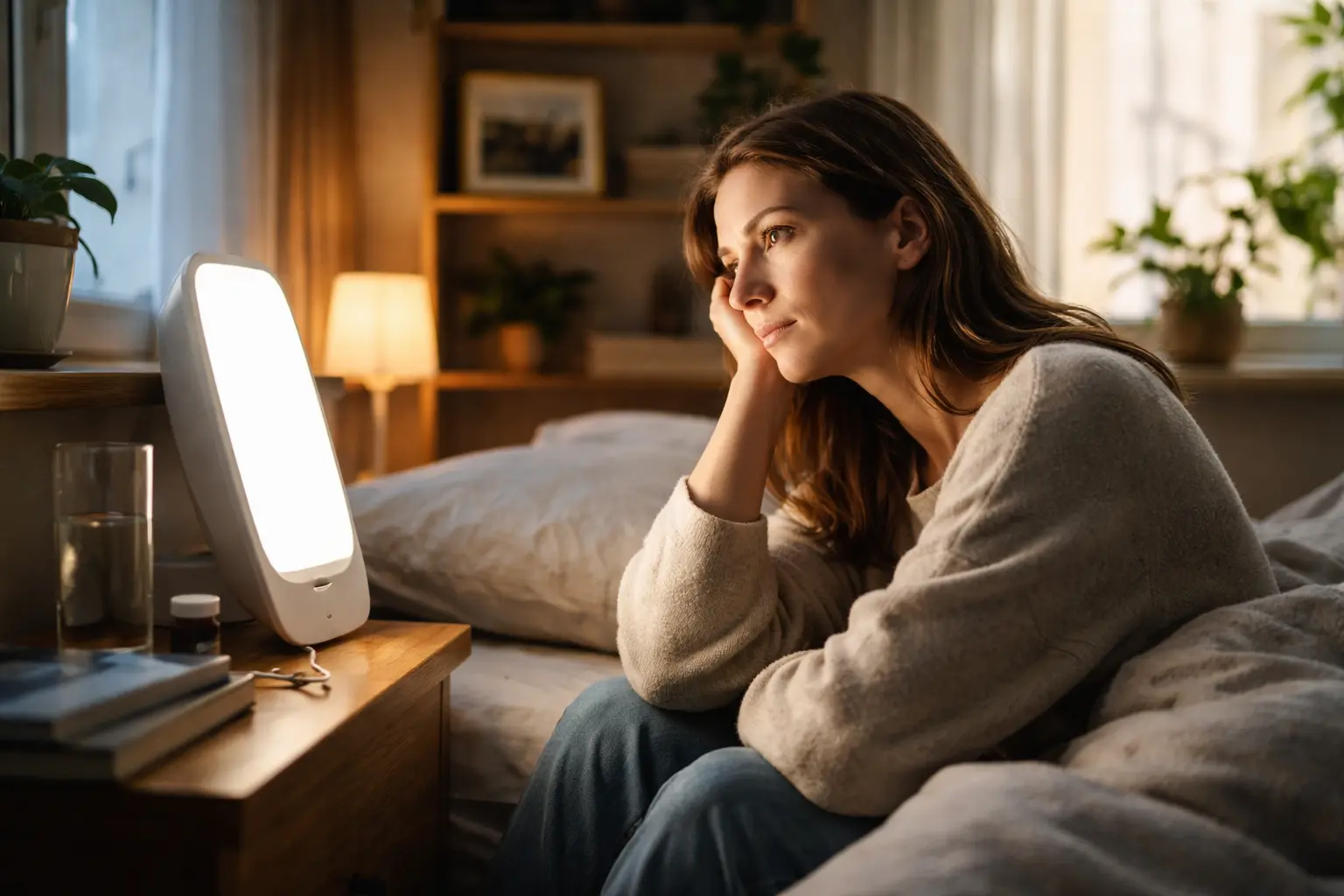
You wake up at 2 PM on a Saturday, the blinds still drawn, and realize you’ve lost another week to that heavy fog in your chest – so does a daylight lamp work against depression, or is it just another wellness trend that won’t actually touch what you’re feeling?
How does light therapy work for depression?
Light therapy operates on a surprisingly straightforward biological principle: exposure to bright light, typically 10,000 lux or higher, influences your brain’s production of serotonin and melatonin while resetting your circadian rhythm. When you sit in front of a light therapy box for 20 to 30 minutes each morning, photons enter your eyes and trigger a cascade of neurochemical changes. Your suprachiasmatic nucleus, a tiny region in your hypothalamus that controls your body’s internal clock, receives this signal and adjusts your sleep-wake cycle accordingly. Think of it like recalibrating your body’s operating system. For someone experiencing seasonal affective disorder or depression linked to circadian disruption, this recalibration can feel transformative. The mechanism isn’t mystical or vague; it’s rooted in how your brain evolved to respond to natural daylight. When your circadian rhythm is out of sync, your mood regulation suffers. Light therapy essentially tells your brain it’s time to wake up, be alert, and produce the neurochemicals that support stable mood.
Benefits of light therapy for depression
Research consistently shows that light therapy delivers measurable improvements, especially for seasonal affective disorder where symptoms spike during darker months. Young adults dealing with winter depression often report feeling noticeably more energized and motivated within the first week of consistent use. Beyond SAD, studies indicate light therapy can support mood in non-seasonal depression when combined with other treatments. The appeal for many is straightforward: it’s non-invasive, requires no medication, and carries minimal side effects compared to antidepressants. Imagine starting your morning by sitting with a light box while checking your phone or eating breakfast, rather than swallowing a pill and waiting weeks to feel different. Some people describe the shift as subtle but undeniable, like someone gradually turning up the brightness on your internal world. Light therapy also tends to work faster than medication, with some individuals noticing shifts in mood and energy within days. For young adults skeptical of pharmaceutical interventions or seeking complementary approaches, light therapy offers a tangible, science-backed option that feels active and controllable.
Effectiveness of light therapy
Light therapy’s effectiveness hinges on three critical factors: timing, consistency, and individual biology. Morning exposure, ideally between 6 and 9 AM, aligns with your body’s natural light sensitivity and produces the strongest circadian effects. Skipping sessions or using the light at random times significantly weakens results, which is why many people fail to see benefits. Your genetics also matter; some brains respond dramatically to light therapy within days, while others require weeks or show modest improvements. A 25-year-old with seasonal depression might experience a complete mood lift after one week, while their friend sees gradual progress over a month. Dosage matters too: 10,000 lux for 20 to 30 minutes typically outperforms lower intensities. The research is clear that consistency beats intensity, so a daily 20-minute session beats sporadic hour-long sessions. Before starting, consulting a healthcare provider ensures you’re using the right device, positioning it correctly, and monitoring for any interactions with medications or underlying conditions that might affect your response.
- Choose a light therapy device with at least 10,000 lux output and position it 16 to 24 inches from your face at a slight downward angle to avoid glare directly in your eyes.
- Set a consistent morning time, ideally between 6 and 9 AM, and use the light for 20 to 30 minutes daily, treating it like a non-negotiable part of your routine.
- Track your mood, energy, and sleep quality in a simple journal or app for at least two weeks to establish a baseline and notice patterns as you progress.
- Discuss your light therapy plan with a healthcare provider, especially if you take medications, have bipolar disorder, or experience eye conditions that might require adjustments.
🔬 Science-backed benefits in 2 minuteschoose where to begin:
Side effects and considerations
Light therapy is generally well-tolerated, but it’s not consequence-free for everyone. Some users report mild eye strain, headaches, or jitteriness, particularly during the first few days as their circadian rhythm adjusts. These side effects usually fade quickly, but if they persist, reducing session duration from 30 to 20 minutes or moving the light slightly further away often helps. A smaller subset experiences mild nausea or feels overstimulated, especially if they use the light too late in the day, which can interfere with sleep. People with bipolar disorder need extra caution; light therapy can occasionally trigger hypomanic episodes, so medical supervision is essential. Positioning matters too: if the light shines directly into your eyes rather than at a downward angle, eye strain becomes more likely. Using a low-quality device with inadequate filters increases this risk. The takeaway is straightforward: light therapy is safe when used correctly, but cutting corners on device quality or ignoring timing guidelines can create unnecessary discomfort. Start conservatively, monitor how you feel, and adjust based on your response.
Long-term management with light therapy
Light therapy works best as part of a broader mental health strategy rather than a standalone fix. Young adults who combine light therapy with therapy, regular exercise, and social connection tend to see the most sustained improvements. Think of it as one tool in your toolkit, not the entire toolkit. Some people use light therapy seasonally, ramping up during darker months and tapering off in summer. Others maintain year-round use because their depression isn’t tied to seasons. The key is treating it like brushing your teeth: a daily habit that prevents problems rather than a temporary intervention. Over months and years, consistent light therapy can help stabilize your baseline mood and reduce the intensity of depressive episodes. Many users report that after establishing the habit, missing a few days feels noticeably different, which reinforces the routine. Long-term benefits also include improved sleep quality, better daytime alertness, and a sense of agency over your mental health. The practice becomes less about fighting depression and more about maintaining the conditions your brain needs to function optimally.
Research and future directions
The science of light therapy continues to evolve, with researchers exploring how different light wavelengths, intensities, and timing protocols might optimize outcomes for various populations. Current studies are investigating whether blue light specifically offers advantages over full-spectrum light, and whether combination approaches pairing light therapy with cognitive behavioral therapy accelerate results. Emerging research also examines light therapy’s potential for non-seasonal depression, bipolar disorder maintenance, and even cognitive function in older adults. Understanding the precise neurochemical mechanisms behind light therapy’s effects could lead to personalized protocols tailored to individual genetics and circadian biology. Some researchers are exploring wearable light devices and smartphone-integrated light therapy to improve accessibility and adherence. The trajectory suggests that light therapy will become increasingly refined and integrated into mainstream mental health care, moving beyond its current niche in seasonal affective disorder treatment. For young adults, this means more evidence-based options and potentially better tools for managing mood without relying solely on medication.
Light therapy harnesses the power of bright light exposure to regulate your circadian rhythm and support mood stability, offering a non-invasive, evidence-backed approach to managing depression. Success requires consistent morning use, the right device, and realistic expectations about timing and individual variation. Combined with therapy, exercise, and professional guidance, light therapy can become a sustainable part of your long-term mental health strategy.
Is light therapy a suitable treatment for all types of depression?
Light therapy shows the strongest evidence for seasonal affective disorder and circadian-rhythm-linked depression. Its effectiveness for other depression types varies by individual and typically works best as a complementary tool alongside therapy or medication rather than a standalone treatment. A healthcare provider can assess whether light therapy fits your specific situation.
Are there specific times of the day when light therapy is more effective?
Morning exposure between 6 and 9 AM produces the strongest effects because your brain is most sensitive to light’s circadian influence during this window. Using light therapy later in the day or evening can interfere with sleep quality and reduce overall effectiveness, so consistency with morning timing is crucial for optimal results.
Others also read:
Disclaimer: This article is for informational purposes only and is not a substitute for professional medical advice. Always consult a healthcare professional for personal guidance.
This article has been prepared and reviewed by the GlobalHealthBeacon editorial team and is based on current medical research and published scientific literature available in 2026. It provides structured, evidence-based information to support informed health decisions.
← Back to the Main page on: does a daylight lamp work against depression
