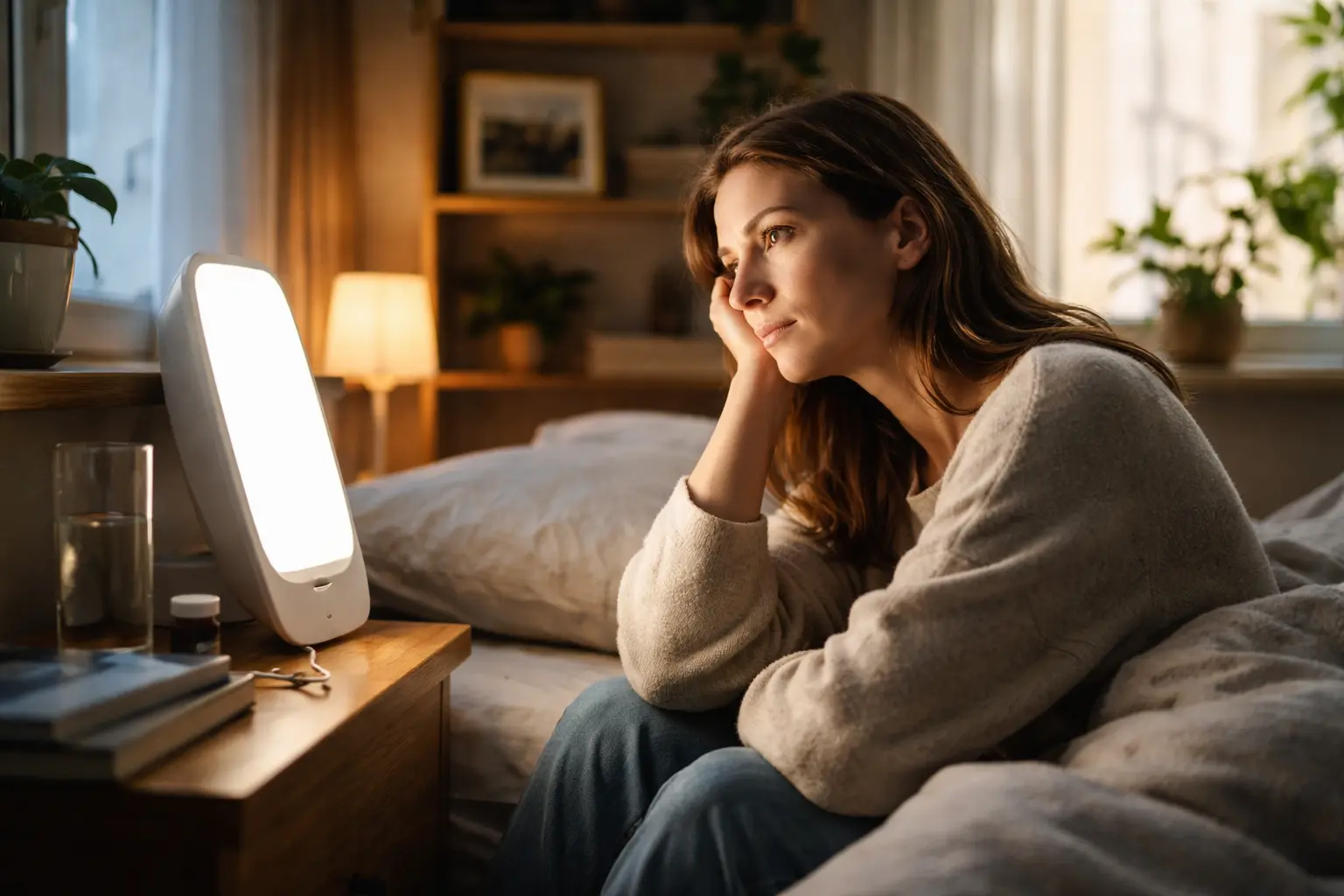
You wake up at 7 AM but the world outside your window is still pitch black, and by the time you leave work it’s dark again, leaving you wondering if a daylight lamp actually works against depression or if you’re just chasing another wellness trend that won’t stick.
Understanding daylight lamps
Daylight lamps, also called light therapy lamps, are basically portable suns for your desk or nightstand. They emit bright light that mimics natural sunlight, and here’s what makes them different from regular lamps: they’re specifically engineered to produce the right wavelengths and intensity to trigger your brain’s natural responses. Think of it like this: when you sit in front of one for 20-30 minutes, your brain receives a signal that it’s daytime, which tells your body to pump the brakes on melatonin production and start ramping up alertness. For young adults juggling classes, work, or irregular schedules, these lamps can be game-changers. They help reset your internal clock when it’s been thrown off by late nights, early mornings, or seasonal darkness. The mechanism is straightforward but powerful: bright light exposure stimulates your circadian rhythm, which controls sleep patterns, energy levels, and mood regulation throughout the day.
- Improve sleep quality by resetting your internal clock
- Boost energy levels and productivity throughout the day
- Enhance mood and alleviate symptoms of seasonal affective disorder
The science behind daylight lamps
The science here isn’t complicated, but it’s genuinely compelling. When bright light enters your eyes, it travels to a part of your brain called the suprachiasmatic nucleus, which is basically your body’s master clock. This triggers the release of serotonin, the neurotransmitter that regulates mood, and simultaneously suppresses melatonin, the hormone that makes you sleepy. For young adults dealing with depression or seasonal affective disorder, this biological shift can be significant. Research shows that consistent light exposure can increase serotonin levels just like morning sunlight would, but without needing to wait for spring or force yourself outside on a freezing winter morning. What’s particularly valuable is that light therapy offers a non-invasive option that doesn’t require prescriptions or side effects. Many young adults find that combining a daylight lamp with other strategies creates a more complete approach to managing their mood and energy. It’s not a cure-all, but the neurochemical foundation is solid and well-documented.
💬 Ready to feel better in 2 minutes?choose where to begin:
Incorporating daylight lamps into your routine
The real test of whether a daylight lamp works comes down to how you actually use it. Here’s the practical side: position your lamp at eye level, about 16-24 inches away from your face, and aim for 20-30 minutes in the morning, ideally within the first hour after waking up. Why morning? Because that’s when your body is most responsive to light signals and most in need of that circadian reset. A common mistake young adults make is using the lamp sporadically or at random times, then wondering why they don’t feel different. Consistency matters more than intensity. Try placing the lamp next to your breakfast spot, your study desk, or your morning coffee ritual so it becomes automatic rather than another task to remember. Some people find that using it while checking emails or scrolling through their phone makes the time feel less like a chore. The key is anchoring it to something you already do daily, so it becomes part of your routine rather than an extra burden.
Results and reflections
When young adults actually commit to using a daylight lamp, the feedback is often surprisingly positive. People report feeling more alert within days, sleeping better within weeks, and noticing a genuine shift in their overall mood after consistent use for a month or two. One common pattern: those who use it in the morning notice the biggest difference, while evening use sometimes backfires by making it harder to fall asleep. The timeline varies, though. Some people feel energized after just a few sessions, while others need three to four weeks before they notice real change. It’s important to remember that individual responses genuinely do vary based on your baseline mood, sleep patterns, genetics, and even how much natural light you normally get. A daylight lamp isn’t a replacement for professional help if you’re dealing with serious depression, but many young adults find it’s a valuable tool that makes other strategies work better. The combination of consistent morning light, better sleep, and increased daytime energy creates a real shift in how you feel and function.
Daylight lamps offer young adults a practical, science-backed way to enhance mood, energy, and sleep quality through light therapy. When used consistently in the morning, these lamps can meaningfully support your mental health by boosting serotonin and resetting your circadian rhythm, making them a valuable addition to your daily routine for managing depression and seasonal mood changes.
Are daylight lamps safe to use?
Yes, daylight lamps are safe when used as directed. It is important to follow the manufacturer’s instructions and avoid prolonged exposure to prevent eye strain.
How long does it take to see results from using a daylight lamp?
Individual responses may vary, but many people notice improvements in mood and energy levels within a few weeks of consistent use.
Others also read:
Disclaimer: This article is for informational purposes only and is not a substitute for professional medical advice. Always consult a healthcare professional for personal guidance.
This article presents an experience-based perspective and has been reviewed by the GlobalHealthBeacon editorial team in 2026. It provides structured, evidence-based information to support informed health decisions.
← Back to the main does a daylight lamp work against depression page
