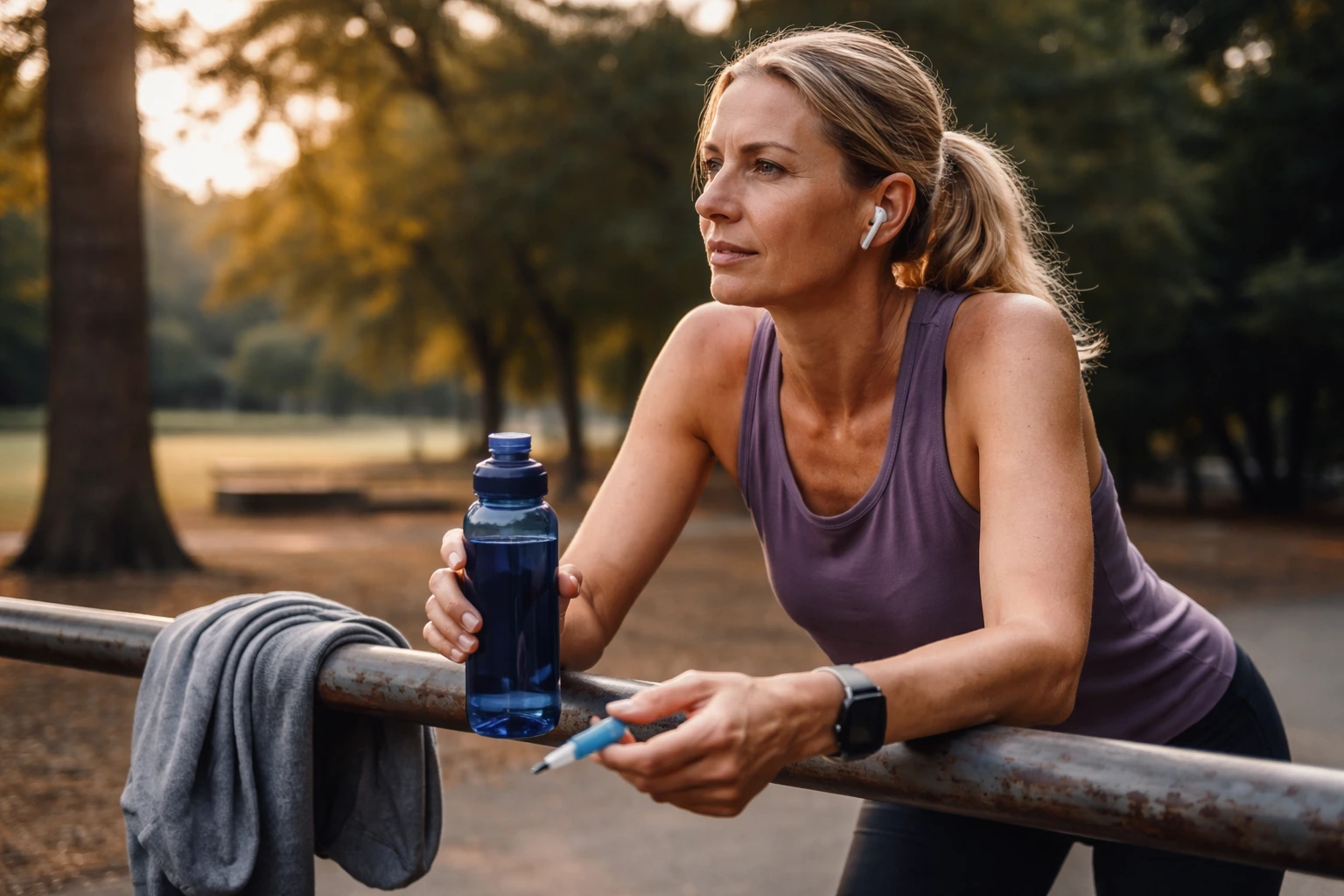
You’re on GLP-1 medication, your energy feels different, and you’re wondering if exercising on glp-1 medication actually changes the game or if you’re just spinning your wheels while your body adjusts to something entirely new.
Understanding GLP-1 medication
GLP-1 medications work by mimicking glucagon-like peptide-1, a hormone your body naturally produces in the gut. When you take these medications, they stimulate your pancreas to release insulin when blood sugar rises, reduce the production of glucagon (which normally raises blood sugar), and slow how quickly food moves through your stomach. Think of it like adding a traffic controller to your digestive system. For women specifically, understanding this mechanism matters because hormonal fluctuations throughout the menstrual cycle can affect how your body responds to these medications. Some women report feeling the effects more strongly during certain phases of their cycle. The medication doesn’t work in isolation; it’s constantly interacting with your body’s own systems, your diet, your stress levels, and yes, your physical activity. This is why so many women find that exercise becomes a crucial partner to their medication rather than just a nice-to-have addition.
GLP-1 and exercise interaction
When you exercise, something remarkable happens in your gut: your body naturally increases GLP-1 secretion. This isn’t a coincidence. Physical activity triggers your intestinal cells to release more of this hormone, which then enhances how your body handles glucose and improves insulin sensitivity. Imagine your medication as the foundation, and exercise as the amplifier. A woman who walks for 30 minutes after a meal may experience a more pronounced dip in blood sugar than if she simply took her medication without moving. Research shows that aerobic exercise, strength training, and even moderate-intensity activities like brisk walking all contribute to this effect. The timing matters too. Some women find that exercising within a few hours of taking their GLP-1 injection creates a synergistic effect, where the medication’s benefits are enhanced by the body’s natural hormonal response to movement. This interaction explains why many women on GLP-1 report feeling more energized and experiencing better glucose stability when they combine consistent exercise with their medication regimen.
Benefits of exercising on GLP-1 medication
Combining exercise with GLP-1 medication creates multiple layers of benefit that extend far beyond simple weight loss. Enhanced glucose control happens because exercise increases your muscles’ ability to absorb glucose without requiring as much insulin, while your medication simultaneously improves your pancreas’s insulin response. A woman might notice her blood sugar readings are more stable throughout the day, with fewer dramatic spikes after meals. Weight management becomes more sustainable because exercise preserves muscle mass while the medication helps reduce appetite and cravings, creating a more balanced approach than medication alone. Cardiovascular health improves through multiple pathways: exercise strengthens your heart and improves circulation, while GLP-1 medications have been shown to reduce cardiovascular risk factors like blood pressure and inflammation. Beyond these measurable benefits, many women report improved energy levels, better sleep quality, and enhanced mood when they combine regular movement with their medication. The psychological benefit of feeling more in control of your health cannot be overstated. Rather than feeling passive about medication, you become an active participant in your health journey.
- Incorporate at least 150 minutes of moderate-intensity aerobic exercise per week, spread across multiple days to allow recovery and prevent burnout.
- Include strength training exercises at least two days per week, focusing on major muscle groups to maximize glucose uptake and metabolic benefits.
- Consult with your healthcare provider to create a personalized exercise plan that accounts for your current fitness level, any existing health conditions, and your specific GLP-1 medication regimen.
🔬 Science-backed benefits in 2 minuteschoose where to begin:
GLP-1 medication and muscle function
Your muscles contain GLP-1 receptors, which means the medication you’re taking directly influences how your muscle cells function and respond to exercise. This discovery has shifted how researchers understand GLP-1 beyond its role in blood sugar management. When you exercise while on GLP-1 medication, your muscles become more efficient at using glucose for energy, and the medication enhances this process by improving nutrient delivery and metabolic efficiency. For women, this is particularly important because maintaining muscle mass becomes increasingly crucial with age, especially as estrogen levels change. Some women worry that GLP-1 medication might cause muscle loss, but research suggests that combining medication with regular strength training actually protects and builds muscle tissue. A woman doing resistance exercises twice weekly while on GLP-1 medication may experience improved muscle tone and strength gains compared to medication alone. The synergistic effect means your body becomes more responsive to the work you put in at the gym or during home workouts, making each exercise session more impactful for your overall fitness and metabolic health.
Future directions in GLP-1 exercise research
Scientists are actively investigating how long-term exercise combined with GLP-1 medication affects outcomes like cardiovascular health, bone density, and metabolic aging in women specifically. Current studies are exploring whether certain types of exercise produce greater synergistic effects with different GLP-1 medications, and whether timing of exercise relative to medication administration matters. Researchers are also examining how individual factors like age, baseline fitness level, and hormonal status influence the exercise-medication interaction. Some emerging research suggests that women may experience different response patterns compared to men, making female-specific studies increasingly important. Future treatment protocols may include personalized exercise prescriptions tailored to your specific GLP-1 medication and health goals. As this research evolves, the approach to managing type 2 diabetes and metabolic health in women will likely become more nuanced and individualized. The goal is to move beyond one-size-fits-all recommendations toward precision medicine that accounts for your unique biology, lifestyle, and preferences.
Advisory considerations for women
Before starting any exercise program while on GLP-1 medication, consulting your healthcare provider is essential because individual circumstances vary significantly. Your age, current fitness level, how long you’ve been on medication, any other health conditions, and your medication dosage all influence what exercise approach makes sense for you. Some women experience side effects like nausea or fatigue when starting GLP-1 medication, which might mean easing into exercise gradually rather than jumping into intense workouts. Others find their energy increases quickly and can progress faster. Your healthcare provider can help you identify warning signs to watch for, like unusual dizziness, chest discomfort, or excessive fatigue during exercise. Women in perimenopause or menopause may find that their response to exercise and medication shifts due to hormonal changes, requiring adjustments to their routine. Additionally, if you’re taking other medications or managing other health conditions, your provider can ensure your exercise plan doesn’t create any contraindications. Think of this consultation as creating a personalized roadmap rather than following generic guidelines.
Exercise and GLP-1 medication work together in ways that extend far beyond what either can accomplish alone. By understanding how physical activity enhances your medication’s effects on glucose control, weight management, and cardiovascular health, you gain the knowledge to make informed decisions about your health. The research increasingly shows that women who combine consistent exercise with GLP-1 medication experience more stable blood sugar, better long-term weight management, and improved overall health markers. Your individual circumstances matter, which is why working with your healthcare provider to create a personalized approach yields the best results. The synergy between movement and medication represents a powerful opportunity to take an active role in your health journey.
Can exercise alone replace GLP-1 medication for diabetes management?
Exercise can complement the effects of GLP-1 medication and improve your overall health, but it is not a substitute for medication in managing type 2 diabetes. While regular physical activity does enhance your body’s natural GLP-1 production and improves insulin sensitivity, the medication provides additional glucose-lowering effects that exercise alone cannot replicate. Your healthcare provider can help determine the most effective treatment plan for your individual needs, which may include medication, exercise, dietary changes, or a combination of approaches.
Are there specific types of exercise recommended for women on GLP-1 medication?
A combination of aerobic exercise, strength training, and flexibility work is beneficial for women on GLP-1 medication. Aerobic activities like walking, cycling, or swimming enhance your body’s natural GLP-1 response, while strength training preserves and builds muscle mass, which improves glucose uptake. Flexibility exercises support overall mobility and recovery. The best approach is tailored to your current fitness level, preferences, and health status. Your healthcare provider or a fitness professional can help design a personalized exercise plan that optimizes the synergistic effects of exercise and medication while fitting your lifestyle.
Others also read:
Disclaimer: This article is for informational purposes only and is not a substitute for professional medical advice. Always consult a healthcare professional for personal guidance.
This article has been prepared and reviewed by the GlobalHealthBeacon editorial team and is based on current medical research and published scientific literature available in 2026. It provides structured, evidence-based information to support informed health decisions.
