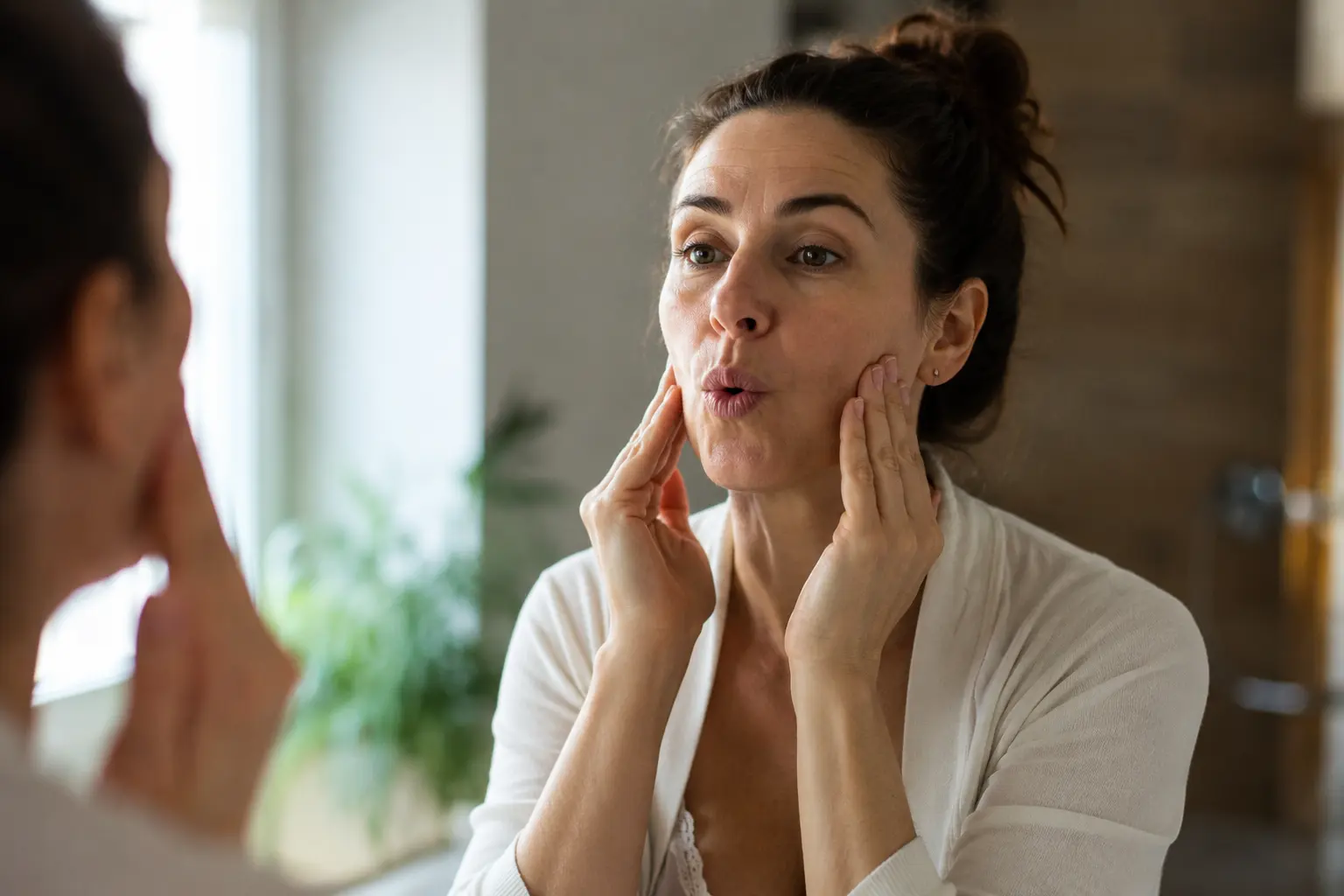
You catch your reflection and notice those fine lines deepening around your eyes, the slight sag along your jawline, and you’re wondering if you really need to drop hundreds on expensive treatments or if face yoga wrinkle prevention could actually be the game-changer you’ve been searching for.
What is face yoga?
Face yoga is essentially a targeted workout routine for your facial muscles, similar to how you’d train your body at the gym but specifically designed for your face and neck. The practice involves deliberate, repetitive movements that engage muscles most people don’t even realize exist. Think of it this way: your face has over 40 muscles, and most of us never intentionally exercise them. Face yoga works by contracting and releasing these muscles to improve tone, increase blood flow, and stimulate collagen production. A typical routine might include exercises like the lion’s breath (where you open your mouth wide and stick out your tongue), cheekbone lifts (using your fingers to push cheeks upward while resisting with facial muscles), or forehead smoothers (pressing your fingers against your forehead while raising your eyebrows). The idea is that consistent practice can help reduce the appearance of wrinkles, tighten sagging skin, and give you that coveted natural glow without needles or expensive procedures.
- Improves circulation for a natural glow
- Enhances collagen production for firmer skin
- Alleviates tension and stress in facial muscles
Getting started with face yoga
Starting a face yoga practice requires minimal setup but maximum consistency. First, find a quiet space where you won’t be interrupted and position yourself in front of a mirror so you can see exactly what your muscles are doing. This visual feedback is crucial because you need to ensure you’re targeting the right areas and not accidentally creating new tension patterns. Begin with just five to ten minutes daily, focusing on three to four basic exercises before expanding your routine. A practical example: start with the cheekbone lift by placing your index fingers on the apples of your cheeks, then smile while pushing your cheeks upward against the resistance of your fingers. Hold for five seconds, release, and repeat ten times. Common mistakes include moving too fast (face yoga requires slow, controlled movements), skipping the mirror (you can’t correct form without seeing yourself), and expecting overnight results. Many young adults make the error of doing face yoga sporadically and then wondering why they don’t see changes. The real magic happens when you commit to showing up daily, even if just for five minutes.
📘 Fix your day in under 2 minuteschoose where to begin:
Benefits of face yoga
Beyond wrinkle reduction, face yoga offers a surprising range of benefits that extend beyond just aesthetics. Regular practitioners often report improved jawline definition as the muscles around the jaw strengthen and tighten, which can help reduce the appearance of a double chin without any invasive procedures. The increased circulation from facial exercises brings more oxygen and nutrients to your skin cells, resulting in a naturally radiant complexion that no highlighter can replicate. You’ll also notice reduced tension in your face and neck, which many people carry stress in without realizing it. Imagine spending eight hours hunched over a laptop, your jaw clenched, your forehead slightly furrowed. Face yoga helps reverse that damage by releasing tension and promoting relaxation. Some practitioners report better sleep quality because they’re less tense overall. The muscle tone improvement is gradual but noticeable, typically appearing within four to eight weeks of consistent practice. Think of it as preventative anti-aging: you’re actively maintaining and strengthening your facial structure rather than waiting for damage to accumulate and then trying to reverse it.
Potential drawbacks
While face yoga is generally safe and non-invasive, it’s not a magic solution and comes with realistic limitations you should understand. If you have underlying conditions like temporomandibular joint disorder (TMJ), Bell’s palsy, or have recently had facial surgery, you absolutely need to consult a healthcare professional before starting. Results vary significantly between individuals based on genetics, age, skin type, current lifestyle, and how consistently you practice. Someone in their twenties might see subtle improvements in skin texture and glow within weeks, while someone in their fifties might need three to four months to notice meaningful changes in fine lines. The biggest drawback is the commitment required: face yoga demands daily practice to maintain results, and if you stop, the benefits gradually diminish. It’s also not a replacement for sunscreen, a solid skincare routine, or healthy lifestyle habits like sleep and hydration. Many young adults expect face yoga alone to transform their skin, then feel disappointed when it doesn’t eliminate deep wrinkles or completely reverse sun damage. The reality is that face yoga works best as part of a comprehensive anti-aging strategy, not as a standalone solution.
In conclusion
Face yoga deserves a spot in your anti-aging toolkit, not as a replacement for other skincare methods but as a complementary practice that addresses what topical products and procedures can’t: active muscle maintenance and natural rejuvenation from within. It’s non-invasive, costs nothing beyond your time, and carries minimal risk for most people. The practice aligns well with a holistic wellness approach, combining physical exercise, mindfulness, and self-care into one routine. For young adults specifically, starting face yoga now means you’re investing in prevention rather than correction, which is always more effective and less expensive. You don’t need to choose between face yoga and your other skincare habits; instead, layer it in. Do your face yoga in the morning while your coffee brews, then follow with your regular skincare routine. Give it a genuine try for at least six to eight weeks of consistent daily practice before deciding if it’s worth your time. The real question isn’t whether face yoga works universally, but whether it works for your specific goals, timeline, and commitment level.
Face yoga involves targeted facial exercises to combat wrinkles and enhance muscle tone naturally. Consistency, patience, and proper technique are key to reaping the benefits of this trending beauty practice.
Is face yoga suitable for all ages?
Yes, face yoga can benefit individuals of all ages by promoting muscle tone and skin health. However, it’s essential to start gently and consult a healthcare provider if you have any concerns.
How long does it take to see results with face yoga?
Results with face yoga may vary depending on individual factors like skin type, age, and consistency. Some may notice improvements in skin tone and texture in as little as a few weeks, while others may take longer.
Others also read:
Disclaimer: This article is for informational purposes only and is not a substitute for professional medical advice. Always consult a healthcare professional for personal guidance.
This guide has been prepared and reviewed by the GlobalHealthBeacon editorial team and reflects current medical research as of 2026. It provides structured, evidence-based information to support informed health decisions.
