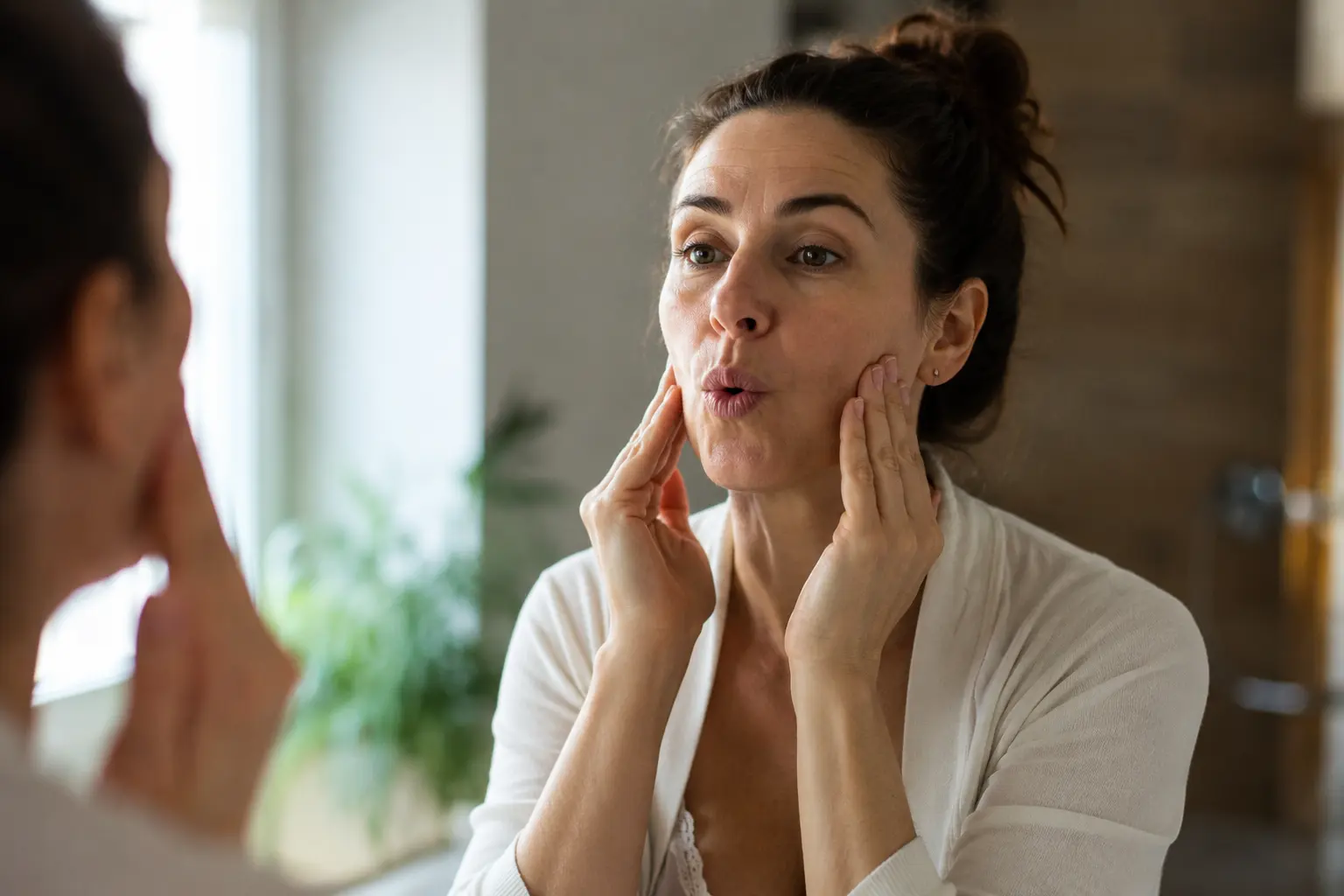
You’re staring at those fine lines creeping across your forehead and wondering if there’s actually something you can do about them without needles or surgery, and face yoga wrinkle prevention keeps popping up as this miracle solution that sounds too good to be true.
The science behind face yoga
Face yoga operates on a straightforward biological principle: facial muscles, like any other muscles in your body, respond to targeted exercise and stimulation. When you perform facial exercises, you’re essentially engaging the underlying musculature that supports your skin’s structure. The theory suggests that by toning these muscles through consistent practice, you create a firmer foundation that can help reduce the appearance of fine lines and wrinkles. Some practitioners claim that facial exercises increase blood flow to the face, which theoretically delivers more oxygen and nutrients to skin cells. Additionally, proponents argue that face yoga may stimulate collagen and elastin production, the proteins responsible for skin elasticity and firmness. However, it’s important to note that while facial muscles do exist and can be exercised, the extent to which this directly translates to wrinkle reduction remains an area of ongoing scientific investigation. The evidence is mixed, with some small studies showing modest improvements in facial muscle tone and skin appearance, while larger, more rigorous studies are still needed to establish definitive claims.
Comparing face yoga to traditional methods
When evaluating wrinkle prevention approaches, it helps to understand how face yoga fits into the broader landscape of anti-aging options. Traditional invasive procedures like Botox injections work by temporarily paralyzing facial muscles to smooth out wrinkles, while dermal fillers physically plump the skin to reduce line visibility. Surgical facelifts physically tighten facial skin and tissues. Face yoga, by contrast, is entirely non-invasive and carries no risk of injection-related complications, allergic reactions, or surgical side effects. This makes it an accessible option for women who prefer to avoid medical procedures or who may have contraindications to such treatments. The trade-off is that face yoga requires consistent, long-term commitment and produces results that are typically more subtle than invasive alternatives. Many women appreciate that face yoga can be practiced anywhere, anytime, without appointments or recovery periods. It also costs nothing beyond your own time and effort, making it an economically attractive option for those exploring natural approaches to aging.
How to practice face yoga for wrinkle prevention
Starting a face yoga practice begins with understanding that your facial muscles need preparation just like any other part of your body. Begin with gentle warm-ups to relax tension and increase blood flow, such as light facial massage or simple stretching movements. Once warmed up, focus on specific exercises targeting areas where wrinkles commonly develop: the forehead, around the eyes (crow’s feet), and around the mouth (smile lines and marionette lines). For example, a forehead exercise might involve placing your fingers above your eyebrows and gently lifting while resisting with your forehead muscles. Eye area exercises often involve controlled eye movements or gentle pressure techniques around the orbital bone. Consistency matters significantly more than intensity. Most practitioners recommend dedicating 10 to 15 minutes daily to see potential results, though some suggest that even 5 minutes of focused practice can be beneficial. Many women find it helpful to integrate face yoga into an existing routine, such as practicing while showering, during morning skincare, or before bed. Keeping a simple log of your practice can help maintain motivation and allow you to track any changes you notice over weeks and months.
- Begin with gentle stretches to prepare your facial muscles, such as light massage around the jawline and temples to increase circulation and reduce tension.
- Focus on exercises that target forehead lines, crow’s feet, and smile lines using controlled muscle engagement and gentle resistance techniques.
- Practice face yoga techniques daily to maintain muscle tone, ideally for 10 to 15 minutes, and track any changes in skin appearance over time.
🔬 Science-backed benefits in 2 minuteschoose where to begin:
Understanding the role of blood circulation
Blood circulation plays a fundamental role in skin health and appearance. When blood flows efficiently to facial tissues, it delivers oxygen and essential nutrients like vitamins and amino acids that support skin cell function and repair. Face yoga exercises, by engaging facial muscles, theoretically increase local blood flow to the face and neck area. This improved circulation may enhance skin vitality, giving the complexion a more radiant and youthful appearance. Better blood flow can also support the skin’s natural detoxification process, helping to remove metabolic waste products from cells. Additionally, increased circulation may promote the delivery of growth factors and other signaling molecules that support collagen production and skin renewal. However, it’s worth noting that the relationship between facial exercise and long-term collagen production remains incompletely understood. While temporary improvements in skin appearance and radiance from increased blood flow are plausible and potentially observable, the sustained impact on wrinkle depth and skin elasticity requires more rigorous scientific documentation.
Measurable benefits of face yoga
Research into face yoga’s effectiveness has produced mixed but somewhat encouraging results. Several small-scale studies have reported improvements in facial muscle tone and modest reductions in the appearance of fine lines among regular practitioners. One notable study published in JAMA Dermatology found that women who performed facial exercises for 30 minutes daily showed improvements in facial fullness and cheek prominence over a 20-week period. Participants also reported subjective improvements in skin appearance and confidence. However, these studies typically involve small sample sizes and lack the rigorous controls of larger clinical trials. Individual results vary considerably based on factors like age, genetics, skin type, overall health, sun exposure history, and lifestyle habits. A woman in her 40s with good skin elasticity might see more noticeable results than someone in her 70s with significantly sun-damaged skin. Additionally, the benefits of face yoga appear to be most noticeable when combined with other skin-supporting practices like sun protection, hydration, and a nutrient-rich diet. It’s also important to recognize that while some women report visible improvements, others notice minimal changes despite consistent practice.
Final thoughts on face yoga for wrinkle prevention
Face yoga represents a legitimate, evidence-informed approach to supporting facial muscle tone and potentially reducing the appearance of wrinkles, though it’s not a miracle cure. The scientific evidence suggests that facial exercises can contribute to improved muscle tone and possibly modest improvements in skin appearance, particularly when practiced consistently over months. What makes face yoga appealing to many women is its accessibility, safety profile, and alignment with a holistic approach to aging. It requires no special equipment, carries no medical risks, and can be practiced at any age or fitness level. However, realistic expectations are crucial. Face yoga works best as part of a comprehensive skincare strategy that includes sun protection, adequate hydration, a balanced diet rich in antioxidants, quality sleep, and stress management. For women seeking dramatic wrinkle reduction, face yoga alone may be insufficient, and combining it with other evidence-based approaches like retinoids, vitamin C serums, or professional treatments might yield better results. Ultimately, the decision to practice face yoga should be based on your personal preferences, lifestyle, and realistic expectations about what consistent practice might achieve.
Face yoga offers a natural, non-invasive approach to supporting facial muscle tone and potentially reducing the appearance of wrinkles through consistent practice. While scientific evidence suggests modest benefits, particularly when combined with comprehensive skincare practices, results vary among individuals based on age, genetics, and overall skin health. The accessibility and safety of face yoga make it an attractive option for women exploring natural anti-aging strategies.
Can face yoga eliminate wrinkles entirely?
No, face yoga cannot eliminate wrinkles entirely. While regular practice may help reduce the appearance of fine lines and improve facial muscle tone, it works gradually and produces subtle results. Deeper wrinkles caused by sun damage, genetics, or significant collagen loss typically require more intensive interventions. Face yoga is best viewed as a preventative and supportive measure rather than a complete wrinkle solution.
Are there any age restrictions for practicing face yoga?
Face yoga exercises can be practiced by individuals of all ages, from young adults interested in prevention to older women seeking to support skin appearance. However, if you have specific skin conditions like severe acne, rosacea, or recent facial surgery, consulting a dermatologist or skincare professional before starting is advisable. They can help you modify exercises to suit your individual needs and ensure safety.
Others also read:
Disclaimer: This article is for informational purposes only and is not a substitute for professional medical advice. Always consult a healthcare professional for personal guidance.
This article has been prepared and reviewed by the GlobalHealthBeacon editorial team and is based on current medical research and published scientific literature available in 2026. It provides structured, evidence-based information to support informed health decisions.
