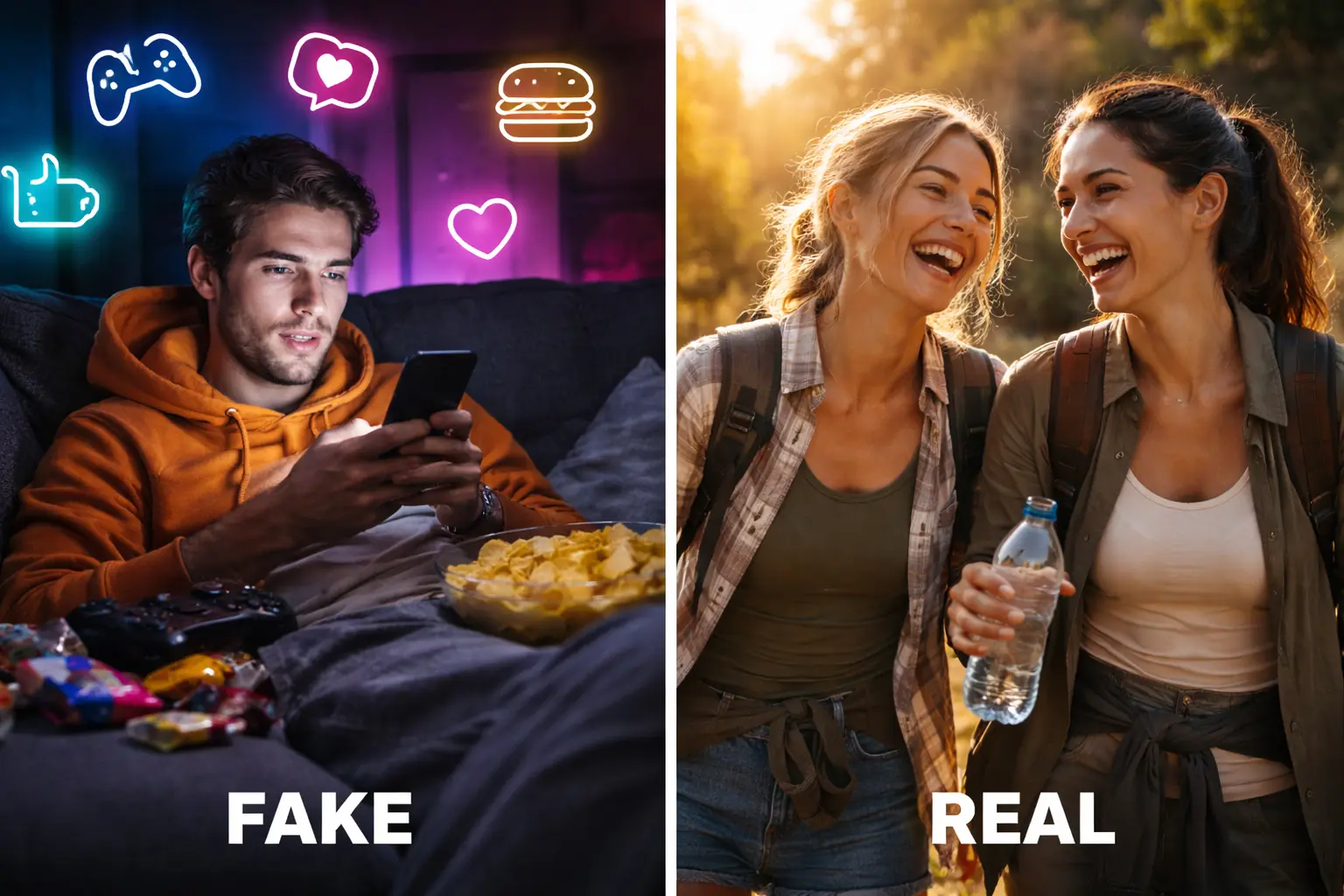
You’re scrolling endlessly through your phone at 11 PM, binge-watching another series you don’t really care about, feeling that hollow rush followed by crushing emptiness, and wondering why nothing feels genuinely satisfying anymore – that’s what happens when you’re chasing fake versus real dopamine, and it’s stealing your peace.
Understanding fake dopamine
Picture this: you’re sitting in your favorite chair, remote in hand, and you tell yourself you’ll watch just one episode. Three hours later, your eyes are tired, your back aches, but you keep going because that quick hit of pleasure keeps coming. That’s fake dopamine at work. It’s the rush you get from scrolling social media, the momentary thrill of online shopping, or the instant gratification of binge-watching. But here’s the thing – it never lasts. You finish that show and feel emptier than before. You buy something online and the excitement fades within hours. These artificial sources create a vicious cycle where you need more and more to feel the same fleeting satisfaction. Unlike genuine fulfillment, fake dopamine leaves you chasing your tail, always seeking the next quick fix to fill that growing void inside.
- Fake dopamine results from artificial sources and short-term rewards.
- It gives temporary satisfaction but lacks the depth of true fulfillment.
- Engaging in activities solely for the dopamine hit can lead to addictive behaviors.
Embracing real dopamine
Real dopamine is different. It’s the warm satisfaction you feel after finishing a challenging puzzle, the pride that comes from helping a grandchild with homework, or the deep contentment after a morning walk in fresh air. This kind of dopamine builds slowly, but it sticks around. When you accomplish something meaningful, your brain releases dopamine in a way that actually reinforces positive behavior and leaves you feeling genuinely proud. Think about the last time you learned something new or completed a project you cared about – that lingering sense of achievement is real dopamine. It motivates you toward meaningful goals and grounds you in reality. Seniors who tap into real dopamine sources report feeling more energized, more purposeful, and more connected to their lives. It’s not about chasing a high; it’s about building a life that feels worth living.
💬 Ready to feel better in 2 minutes?choose where to begin:
Breaking the fake dopamine cycle
Breaking free from fake dopamine doesn’t mean quitting cold turkey or feeling deprived. It’s about gradually redirecting your energy toward activities that feed your soul instead of just your screen time. Start small: replace one evening of TV with a hobby you loved years ago. Maybe it’s woodworking, painting, gardening, or reading. Join a walking group in your neighborhood. Take that online course you’ve been thinking about. Volunteer at a local food bank or animal shelter. Each of these activities builds real dopamine in your system while creating genuine connections and purpose. The key is consistency. Your brain will resist at first because fake dopamine is easier and faster. But within weeks, you’ll notice a shift. You’ll sleep better, feel less irritable, and experience deeper satisfaction from your days. Quality truly does replace quantity when you make this switch.
A new chapter: the senior who chose real happiness
Meet Robert, a 68-year-old who spent his retirement scrolling, streaming, and feeling increasingly disconnected. One day he decided enough was enough. He started volunteering at a local animal shelter three mornings a week, reconnected with his passion for woodworking in his garage, and began cooking meals from scratch instead of ordering takeout. He joined a gardening club and spent weekends tending to his vegetables. Within three months, Robert’s entire outlook shifted. He had genuine friendships with people he saw regularly. He felt proud of the things he created. His family noticed he was more present and engaged. The fake dopamine habits didn’t disappear overnight, but they became less appealing as real dopamine filled his days with actual meaning. Robert discovered that the contentment he’d been chasing through screens had been waiting for him all along in real-world connections and purposeful activities.
Exploring the contrast between fake and real dopamine reveals the importance of seeking genuine joy over fleeting satisfaction. By embracing activities that nurture authentic happiness, seniors can experience a profound shift in their overall well-being, leading to a more fulfilling and purposeful life.
Can fake dopamine impact mental health?
Engaging consistently in activities that solely trigger fake dopamine responses may contribute to increased stress, anxiety, and risk of developing addictive behaviors.
How can seniors differentiate between fake and real dopamine sources?
Seniors can discern between the two by reflecting on the lasting effects of their activities. Fake dopamine will provide temporary relief or pleasure, while real dopamine will bring about a sense of achievement, fulfillment, and long-term satisfaction.
Others also read:
Disclaimer: This article is for informational purposes only and is not a substitute for professional medical advice. Always consult a healthcare professional for personal guidance.
This article presents an experience-based perspective and has been reviewed by the GlobalHealthBeacon editorial team in 2026. It provides structured, evidence-based information to support informed health decisions.
