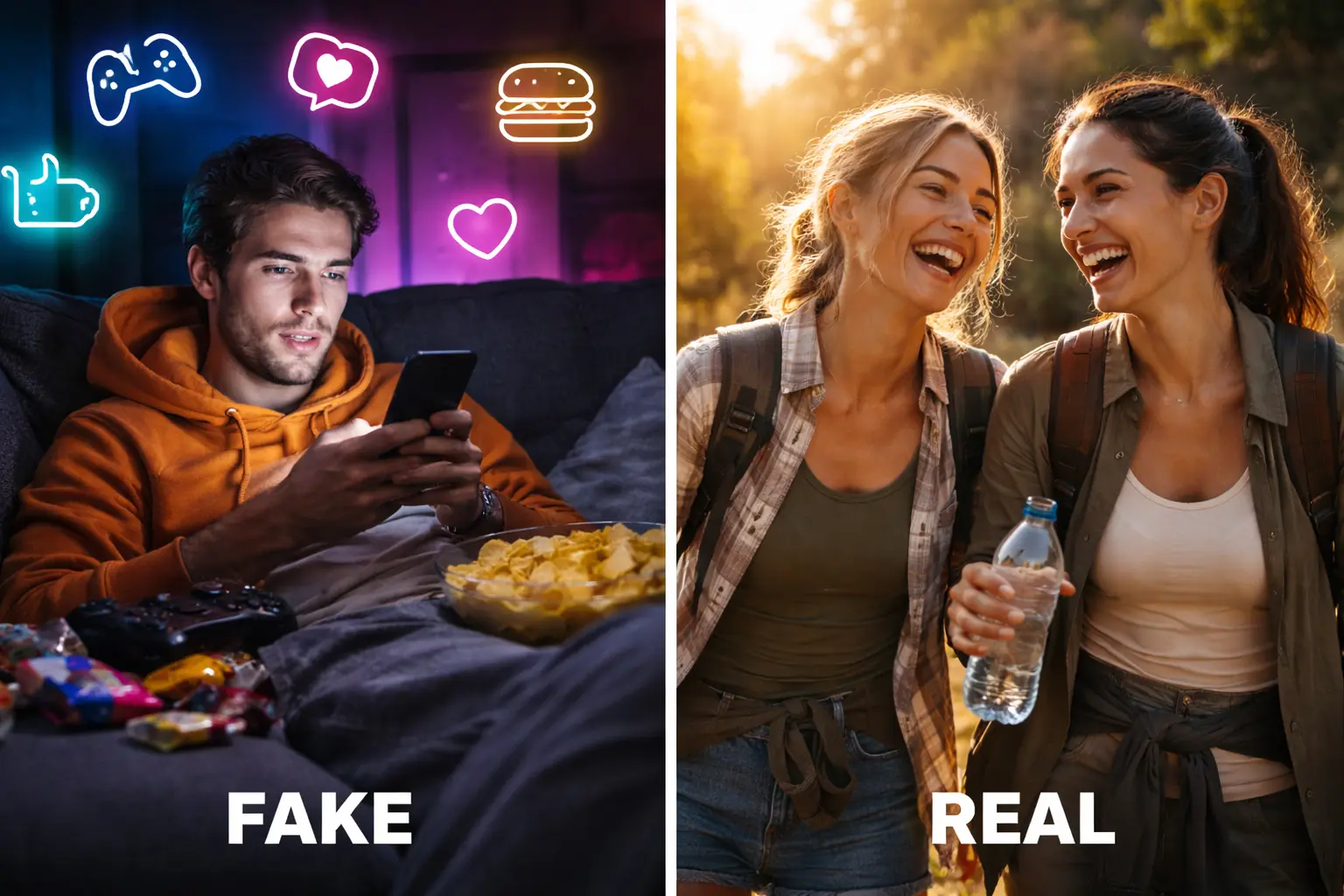
You’re scrolling through Instagram at midnight again, your chest tight with that familiar emptiness, realizing you’ve just spent two hours chasing a high that leaves you feeling more hollow than before, and you’re finally asking yourself if this endless cycle of fake versus real dopamine is actually stealing your joy.
Understanding fake dopamine
I remember the exact moment I realized I was addicted to the wrong kind of pleasure. It was a Tuesday afternoon, and I’d just bought my third pair of shoes that week. The rush lasted maybe twenty minutes. By evening, I was scrolling through shopping apps again, that hollow feeling creeping back in. Fake dopamine works like this: your brain gets a quick hit from social media likes, online shopping, or binge-watching, but it’s a borrowed high that evaporates almost instantly. What makes it so insidious is that it feels real in the moment. Your heart races, you feel that flutter of excitement, but there’s no substance behind it. The pleasure is artificial, engineered by algorithms designed to keep you hooked. Unlike real satisfaction, fake dopamine leaves you chasing the next hit, always needing more to feel the same fleeting rush.
- Artificial rush of pleasure that fades within minutes
- Short-lived gratification followed by deeper emptiness
- Heightened desire for more, creating a cycle of dependency
Recognizing real dopamine
Real dopamine feels different. It’s quieter, steadier, and it actually builds over time. When I finally finished writing that article I’d been avoiding for months, the satisfaction wasn’t a spike; it was a warm, sustained sense of accomplishment that lasted for days. Real dopamine comes from genuine achievement, from pushing through something difficult and coming out the other side. It’s released when you accomplish a goal you set for yourself, when you have a meaningful conversation with someone you love, or when you create something with your own hands. The key difference is that real dopamine doesn’t leave you craving more of the same empty hit. Instead, it motivates you toward bigger challenges and deeper fulfillment. It’s tied to your values and your growth as a person, not to external validation or temporary stimulation.
💬 Ready to feel better in 2 minutes?choose where to begin:
Breaking free from the cycle
Breaking free isn’t about going cold turkey on everything pleasurable. It’s about being honest with yourself about what’s actually feeding your soul and what’s just numbing the pain. Start by noticing your triggers. For me, it was stress at work that sent me straight to my phone. When I felt overwhelmed, I’d scroll for hours instead of actually addressing the problem. Once I recognized that pattern, I could interrupt it. When the urge hits, I pause and ask: am I reaching for this because I genuinely want it, or because I’m avoiding something? Then I replace the habit with something that actually nourishes me. Instead of scrolling, I go for a walk. Instead of shopping, I call a friend. These alternatives might not give you that instant rush, but they build real resilience and real joy. The first week is hard. The second week gets easier. By week three, you’ll notice something remarkable: you feel calmer, clearer, and genuinely happier.
Embracing authentic joy
Authentic joy isn’t something you find; it’s something you build, brick by brick, through small choices repeated over time. It comes from knowing yourself deeply enough to understand what actually matters to you, separate from what society or algorithms tell you should matter. For me, it was realizing that I’m happiest when I’m creating, learning, and connecting with people who truly see me. That realization changed everything. I started saying no to things that drained me and yes to things that lit me up, even when they were harder or less immediately gratifying. Real joy is rooted in genuine connections where you can be fully yourself, in personal growth that challenges you to become who you want to be, and in experiences that you can actually feel in your body and remember vividly years later. When you stop chasing fake dopamine, you have space to notice these deeper sources of happiness that were always there, waiting for you to pay attention.
Understanding the difference between fake and real dopamine is crucial for achieving lasting fulfillment. By recognizing the impact of artificial sources of pleasure and embracing genuine joy, you can break free from unhealthy cycles and cultivate a more satisfying life.
How can I differentiate between fake and real dopamine?
Fake dopamine is often linked to temporary gratification from activities like excessive social media use or shopping, while real dopamine is associated with genuine accomplishments and fulfilling experiences.
What are some strategies to increase natural dopamine levels?
Engaging in meaningful activities, setting achievable goals, and prioritizing genuine connections can help increase natural dopamine levels and promote lasting fulfillment.
Others also read:
Disclaimer: This article is for informational purposes only and is not a substitute for professional medical advice. Always consult a healthcare professional for personal guidance.
This article presents an experience-based perspective and has been reviewed by the GlobalHealthBeacon editorial team in 2026. It provides structured, evidence-based information to support informed health decisions.
