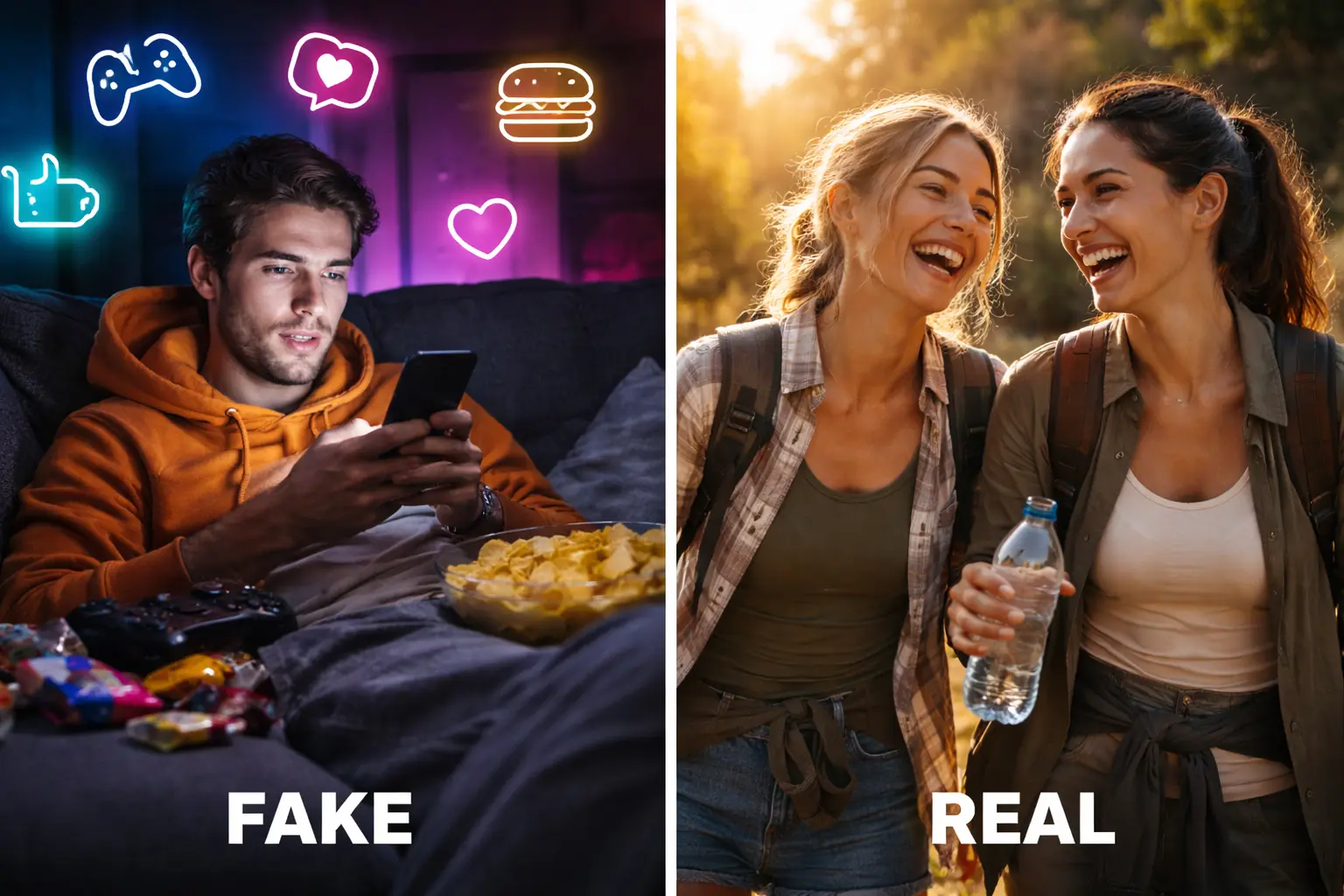
You’re scrolling through your phone at 2 AM, your heart racing after a notification, feeling that hollow rush fade into exhaustion, and you’re wondering why nothing feels genuinely satisfying anymore – that’s the fake versus real dopamine trap, and it’s time to understand what’s actually happening in your brain.
The distinction: fake vs real dopamine
Your brain produces dopamine naturally as a chemical messenger that drives motivation, pleasure, and reward. But here’s where it gets tricky: not all dopamine hits are created equal. Fake dopamine comes from artificial stimuli like social media notifications, shopping sprees, or substance use, and it floods your system quickly but leaves you crashing just as fast. Real dopamine, by contrast, is released gradually when you accomplish something meaningful, finish a workout, or have a genuine conversation with someone you care about. Think of fake dopamine as a sugar rush that leaves you depleted, while real dopamine is like sustained energy from whole foods. When you chase fake dopamine repeatedly, your brain actually recalibrates its sensitivity, meaning you need stronger and stronger hits to feel the same effect. This is why scrolling becomes compulsive, shopping feels urgent, or substances lose their appeal. Real dopamine builds resilience and satisfaction over time, creating a stable foundation for your mood and motivation.
- Fake dopamine is typically associated with artificial rewards like social media likes or substance abuse.
- Real dopamine is released when you accomplish a goal, engage in a rewarding activity, or experience genuine connections.
- Fake dopamine can create a cycle of craving and seeking instant gratification, while real dopamine fosters a sense of accomplishment and fulfillment.
- Artificially stimulating dopamine release can disrupt your brain’s natural reward system, leading to dependency and negative consequences.
- Engaging in activities that promote genuine dopamine release, such as exercise, hobbies, or spending quality time with loved ones, can enhance your overall well-being.
Recognizing fake dopamine triggers
Fake dopamine triggers are everywhere, and they’re designed to be irresistible. Social media platforms use algorithms specifically engineered to keep you engaged through variable rewards, the same mechanism that makes slot machines addictive. Shopping apps send you notifications about sales that create artificial urgency. Even streaming services use autoplay to keep you watching just one more episode. Common triggers include checking your phone first thing in the morning, doom-scrolling during stressful moments, impulse online shopping when you’re bored, binge-watching entire seasons in one sitting, and seeking validation through likes and comments. Pay attention to when you reach for these behaviors: Are you stressed, lonely, or tired? These emotional states make you vulnerable to fake dopamine seeking. Notice the pattern too – do you feel energized after these activities or more drained? Real dopamine leaves you feeling accomplished; fake dopamine leaves you feeling empty. Start tracking your triggers in a journal for one week. Write down what you were doing, how you felt before, and how you felt after. This awareness is your first defense.
📘 Fix your day in under 2 minuteschoose where to begin:
Cultivating real dopamine boosters
Real dopamine boosters require effort upfront, but the payoff is sustainable satisfaction that actually improves your life. Exercise is one of the most powerful real dopamine generators available to you. A 30-minute walk, a yoga class, or even dancing to your favorite song triggers genuine dopamine release plus endorphins, creating a natural mood lift that lasts hours. Setting and achieving small goals works too: finishing a project at work, learning a new skill, organizing a closet, or cooking a meal from scratch all activate your reward system. Meaningful relationships are another major source. Quality time with friends, having a deep conversation, or helping someone in need creates real dopamine that strengthens your sense of connection and purpose. Creative activities like painting, writing, playing music, or crafting engage your brain in ways that feel intrinsically rewarding. Mindfulness practices like meditation or journaling help you notice and appreciate small moments of genuine pleasure. The key is consistency. Start with one activity you actually enjoy, not something you think you should do. Do it regularly, even when motivation is low, because real dopamine builds through repetition and commitment, not through chasing the next high.
Balancing fake and real dopamine
Complete elimination of fake dopamine isn’t realistic in modern life, and that’s okay. The goal is balance and intentionality. Start by setting specific boundaries around your biggest triggers. If social media is your weak point, delete the apps from your phone and access them only on your computer during designated times, like 15 minutes after lunch. If shopping is your escape, unsubscribe from marketing emails and remove saved payment methods from shopping sites. These friction points slow you down enough to interrupt the automatic behavior. Replace, don’t just restrict. When you feel the urge to scroll, do something real dopamine-generating instead: call a friend, take a walk, or work on a hobby. This rewires your brain’s response to boredom or stress. Be honest about what you can and cannot control. You can’t avoid all artificial stimuli, but you can choose how much power you give them. Notice when you’re using fake dopamine as emotional avoidance. If you’re shopping to escape sadness or scrolling to avoid anxiety, address the underlying emotion instead. Talk to someone, move your body, or sit with the feeling. This is where real healing happens.
Sustaining real dopamine production
Long-term real dopamine production requires building a life structure that naturally supports it. This means prioritizing sleep, because dopamine receptors are less responsive when you’re tired, making fake dopamine more appealing. It means moving your body regularly, not just for the dopamine hit but because exercise improves overall brain function. It means nurturing relationships intentionally, scheduling time with people who matter, and being present when you’re with them. Build in regular wins by breaking larger goals into smaller milestones. Instead of waiting months to feel accomplished, create weekly achievements you can celebrate. This keeps your dopamine system engaged and motivated. Reduce stress through practices that work for you: meditation, journaling, time in nature, or therapy. Chronic stress depletes dopamine and makes you vulnerable to seeking fake dopamine as a coping mechanism. Finally, practice gratitude. Noticing what’s already good in your life activates real dopamine and shifts your brain away from the constant seeking mode that fake dopamine creates. This isn’t about toxic positivity; it’s about training your attention toward what genuinely matters. Real dopamine sustainability is built on consistency, self-awareness, and a commitment to living in alignment with your values.
Understanding the distinction between fake and real dopamine is crucial for cultivating a healthy relationship with pleasure and reward. By recognizing fake dopamine triggers, cultivating real dopamine boosters, and finding a balance between the two, you can enhance your overall well-being and happiness.
Can fake dopamine have long-term effects on my mental health?
Excessive exposure to fake dopamine triggers can disrupt your brain’s reward system and lead to addiction, dependency, and negative mental health outcomes. It is essential to be mindful of activities that artificially stimulate dopamine release to protect your psychological well-being.
How can I differentiate between fake and real dopamine experiences?
Fake dopamine often provides short-lived and superficial pleasure, while real dopamine offers sustainable feelings of accomplishment, satisfaction, and fulfillment. By paying attention to the sources and duration of your dopamine responses, you can distinguish between artificial and genuine rewards.
Others also read:
Disclaimer: This article is for informational purposes only and is not a substitute for professional medical advice. Always consult a healthcare professional for personal guidance.
This guide has been prepared and reviewed by the GlobalHealthBeacon editorial team and reflects current medical research as of 2026. It provides structured, evidence-based information to support informed health decisions.
