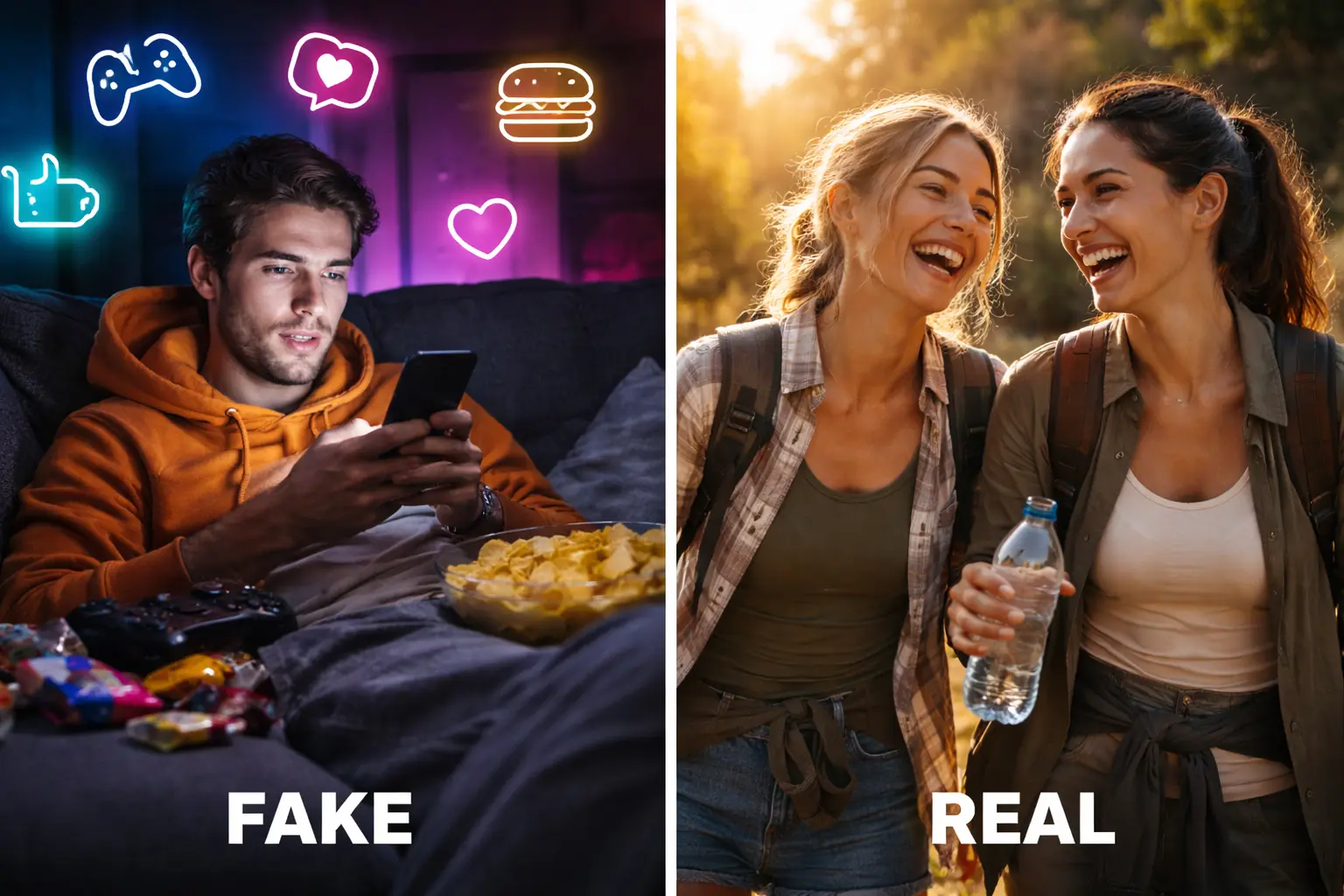
You’re scrolling endlessly, eating another bag of chips, refreshing your phone for the hundredth time today, and wondering why nothing feels actually good anymore – that’s the fake versus real dopamine trap, and you’re not alone in it.
Understanding the real deal with dopamine
Real dopamine is the neurotransmitter your brain produces when you accomplish something meaningful, move your body, create something, or connect deeply with another person. It’s not the quick hit you get from a like on social media or the temporary rush from binge-watching a series. Real dopamine operates on a different timeline. When you finish a workout, your brain releases dopamine that sustains your motivation for hours. When you learn a new skill or complete a project, that dopamine boost reinforces the behavior and makes you want to repeat it. Think of it like this: a young adult who starts running three times a week might feel unmotivated the first week, but by week three, their brain has adapted and they’re chasing that post-run clarity. That’s real dopamine working. It builds slowly, strengthens your neural pathways, and creates lasting changes in how you feel and function. The key difference is sustainability. Real dopamine habits compound over time, making you feel genuinely better about yourself and your life.
- Real dopamine is produced naturally in the brain through meaningful activities and achievements.
- Building real dopamine involves consistent healthy habits like exercise, learning, and social connection.
- Authentic dopamine boosts are sustainable and beneficial for overall health and long-term motivation.
- Enhance your well-being by incorporating real dopamine practices into your routine and tracking your progress.
Avoiding the trap of fake dopamine hits
Fake dopamine is everywhere, and it’s designed to be irresistible. Social media platforms engineer their apps to trigger dopamine spikes with notifications, likes, and algorithmic feeds that never end. Junk food companies formulate snacks to hit your reward centers instantly. Video games and streaming services use variable reward schedules to keep you hooked. The problem is that fake dopamine comes and goes in seconds. You get the notification, feel a brief rush, and then the crash comes. That crash is critical because it’s what drives you back to the behavior. A young adult might spend two hours scrolling, get a handful of likes, feel momentarily good, then feel empty and anxious within minutes. This cycle repeats, and over time, your brain becomes desensitized. You need more of the fake dopamine to feel the same effect. Meanwhile, your ability to enjoy real dopamine activities diminishes because they don’t provide that instant gratification. The trap deepens when you start using fake dopamine to escape uncomfortable feelings. Instead of processing stress or boredom, you reach for your phone. Understanding this pattern is the first step to breaking free from it.
📘 Fix your day in under 2 minuteschoose where to begin:
Building resilience with real dopamine practices
Resilience isn’t something you’re born with; it’s something you build through repeated exposure to challenge and recovery. Real dopamine activities are the foundation of this process. When you exercise, your body experiences mild stress, and your brain releases dopamine as a reward for pushing through. When you sit with uncomfortable emotions instead of numbing them, you develop emotional resilience. When you pursue a hobby or skill that’s difficult at first, you build confidence through small wins. Consider a young adult who decides to learn guitar. The first week is frustrating. Their fingers hurt, the chords sound terrible, and they want to quit. But if they stick with it, something shifts around week three or four. They play their first recognizable song. That dopamine hit is real, and it’s tied to effort and growth. That same person becomes more resilient in other areas of life because they’ve proven to themselves that discomfort leads to progress. Mindfulness and meditation also build real dopamine pathways by helping you notice and appreciate small moments. Social connections amplify this effect. When you share your struggles and victories with others, you strengthen your dopamine response to authentic connection. These practices create a feedback loop where resilience builds on itself.
Creating a balanced dopamine lifestyle
Balance doesn’t mean eliminating all pleasure or never using social media again. It means being intentional about where your dopamine comes from and in what proportions. A sustainable dopamine lifestyle for young adults looks like this: 70 percent of your dopamine comes from real sources like movement, learning, relationships, and creative work. 20 percent comes from moderate, controlled use of pleasurable activities like social media, entertainment, or treats. 10 percent is reserved for rest and doing nothing, which is actually crucial for dopamine regulation. Your brain needs downtime to reset its reward sensitivity. Without it, everything feels boring and you chase harder for stimulation. A practical example: you might exercise four times a week, spend 30 minutes on a hobby you love, have a weekly dinner with friends, and limit social media to 30 minutes daily. You watch one episode of a show you enjoy, not five. You have dessert twice a week, not every day. This isn’t deprivation; it’s optimization. When you practice this balance consistently, your baseline mood improves, your motivation increases, and you actually enjoy the small pleasures more because they’re not constant background noise.
Sustaining real dopamine habits long-term
The difference between someone who changes their dopamine habits for two weeks and someone who sustains it for years comes down to one thing: systems, not willpower. Willpower is finite and unreliable. Systems are automatic. Start by identifying one real dopamine habit you want to build. Not five. One. Maybe it’s a 20-minute morning walk or a weekly creative project. Make it so easy that you can’t fail. A young adult might put their walking shoes by the door and commit to walking around the block, not training for a marathon. Once that habit sticks, usually after 4 to 8 weeks, add another. Track your progress visually. A simple calendar where you mark off each day you complete your habit creates a powerful feedback loop. You’re building real dopamine through the act of seeing your progress accumulate. Celebrate small wins. Finished a week of consistent exercise? Tell a friend. Completed a creative project? Share it. These celebrations trigger dopamine and reinforce the behavior. Expect setbacks. You’ll miss days. You’ll have weeks where motivation dips. That’s normal. The key is returning to the habit without shame or drama. The people who sustain real dopamine habits aren’t more disciplined; they’re just more patient with themselves and more committed to the process than the outcome.
Real dopamine, derived from sustainable habits like exercise, learning, creativity, and genuine connection, offers long-term benefits for mood, motivation, and resilience. Fake dopamine from social media, junk food, and excessive screen time provides fleeting pleasure followed by crashes and dependency. The path forward involves recognizing fake dopamine triggers, building real dopamine practices intentionally, and creating balance in your lifestyle. Sustaining these habits requires systems and consistency rather than willpower. Young adults who commit to this shift report improved mental health, better focus, and a genuine sense of well-being that no notification can replicate.
Can fake dopamine triggers harm my mental health?
Yes, fake dopamine hits can lead to addictive behaviors, mood swings, anxiety, and dependency, potentially impacting your mental health negatively over time. Chronic use of fake dopamine sources can also reduce your brain’s ability to experience pleasure from real activities, making everything feel boring or unsatisfying. It’s crucial to recognize these triggers and shift towards real dopamine habits for long-term well-being and emotional stability.
How can I differentiate between fake and real dopamine activities?
Fake dopamine activities provide instant gratification but lack sustainable benefits and often leave you feeling empty or anxious afterward. Real dopamine habits promote lasting joy, genuine accomplishment, and overall health. Ask yourself: Does this activity align with my values? Do I feel better hours after finishing it? Am I building something or just consuming? Look for activities that require effort, create progress, or deepen your connections with others. Those are real dopamine sources.
Others also read:
Disclaimer: This article is for informational purposes only and is not a substitute for professional medical advice. Always consult a healthcare professional for personal guidance.
This guide has been prepared and reviewed by the GlobalHealthBeacon editorial team and reflects current medical research as of 2026. It provides structured, evidence-based information to support informed health decisions.
