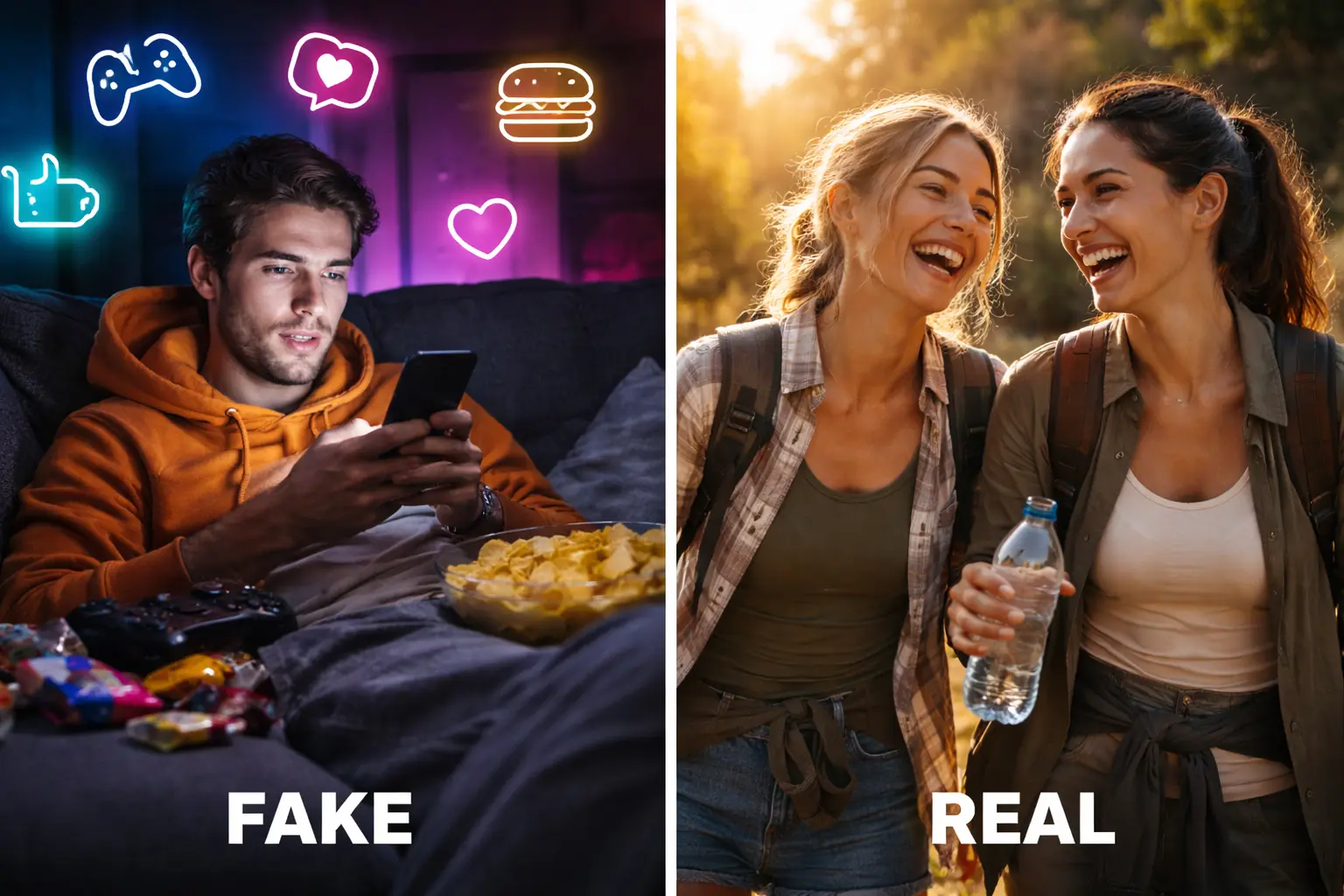
You’re scrolling endlessly, gaming for hours, or chasing that next hit of validation online, and something feels off – like you’re chasing a ghost that keeps disappearing the moment you catch it, and that’s because you’re caught between fake versus real dopamine, and your brain knows the difference even if you don’t.
The battle of dopamine: fake vs. real
Your brain doesn’t distinguish between dopamine molecules based on their source, but it absolutely registers the difference in how they arrive and what they do. Fake dopamine comes from external triggers that flood your system rapidly and intensely. Think of scrolling social media and getting a notification, or the rush from a video game achievement, or the immediate gratification from substances. Real dopamine, by contrast, builds gradually through effort and completion. When you finish a workout, accomplish a goal at work, or have a meaningful conversation with someone you care about, your brain releases dopamine in a measured, sustained way. The key difference isn’t chemical but contextual. Fake dopamine creates a spike and crash pattern that leaves you feeling empty afterward, while real dopamine reinforces the behaviors that led to it, creating a feedback loop that motivates future action. Young adults often find themselves caught between these two forces without realizing why they feel perpetually unsatisfied despite constant stimulation.
Understanding the mechanisms
The brain’s reward system operates like a finely tuned instrument, and fake dopamine is like someone cranking the volume to maximum. When you experience artificial dopamine triggers, your brain’s reward pathways become overstimulated, and your system adapts by reducing sensitivity. This is called tolerance. Imagine your dopamine receptors as volume knobs that gradually turn down to compensate for the constant noise. Real dopamine works differently because it arrives through effort and anticipation. Your brain releases it not just at the moment of reward but also during the process of working toward something meaningful. A young adult training for a marathon experiences dopamine during the runs, the progress tracking, and finally crossing the finish line. This multi-stage release creates stronger neural pathways and lasting motivation. Real dopamine also connects to other neurotransmitters like serotonin and norepinephrine, creating a more balanced neurochemical state. Fake dopamine often comes alone, creating an imbalanced spike that your brain struggles to process healthily.
The impact of fake dopamine
Prolonged exposure to fake dopamine sources creates measurable changes in how your brain functions. First, dependency develops because your brain learns to expect these intense spikes and begins craving them. A young adult who spends hours on social media might feel genuine anxiety when separated from their phone, not because of the device itself but because their dopamine system has been trained to expect regular hits. Second, the crash that follows each spike can trigger anxiety, depression, or restlessness. Your brain chemistry swings from overstimulated to understimulated, and that valley feels uncomfortable. Third, your ability to find pleasure in everyday activities diminishes because nothing natural can compete with the artificial intensity. Food tastes less satisfying, conversations feel boring, and hobbies lose their appeal. Fourth, decision-making and impulse control suffer because the prefrontal cortex, which handles these functions, becomes less responsive when dopamine pathways are dysregulated. Young adults might find themselves making choices they regret or struggling to stick to goals because their brain’s reward system has been hijacked by artificial stimuli.
- Recognize patterns of behavior that trigger fake dopamine release by tracking when you feel the urge to reach for your phone, gaming device, or other stimuli, and notice what emotional state precedes the urge.
- Seek professional help if struggling with addiction or dependency by talking to a therapist or counselor who specializes in behavioral addictions and dopamine dysregulation.
- Focus on cultivating real dopamine through healthy habits and activities by identifying activities that require effort but create genuine satisfaction, such as learning a skill, exercising regularly, or building meaningful relationships.
🔬 Science-backed benefits in 2 minuteschoose where to begin:
The benefits of real dopamine
Real dopamine creates a fundamentally different experience in your brain and body. When you achieve something through effort, your dopamine release comes with a sense of agency and control. You know you earned it. This creates confidence and motivation to pursue similar challenges. A young adult who completes a difficult project at work experiences not just dopamine but also a boost in self-efficacy, the belief that they can handle challenges. Real dopamine also strengthens neural connections related to planning, delayed gratification, and goal-setting. Over time, your brain becomes better at resisting immediate temptations in favor of larger rewards. Real dopamine sources also tend to be sustainable. Exercise, creative pursuits, learning, and relationships don’t create tolerance the way artificial stimuli do. You can run a marathon and feel the same dopamine rush years later. Real dopamine also connects to meaning and purpose, which young adults increasingly report as central to their well-being. When dopamine comes from activities aligned with your values, it creates lasting satisfaction rather than temporary pleasure.
Balancing dopamine levels
Balance doesn’t mean eliminating all artificial dopamine sources but rather understanding your relationship with them and intentionally choosing real dopamine sources more often. Start by auditing your current dopamine diet. How much time do you spend on activities that give you immediate gratification versus those that require effort but create deeper satisfaction? A practical approach is the substitution strategy. When you feel the urge to reach for a fake dopamine source, pause and ask if you can redirect that energy toward something real. Craving the dopamine hit from social media? Go for a walk instead. Wanting to game for hours? Work on a project you care about. This isn’t about willpower alone but about understanding that your brain is seeking dopamine, and you’re simply choosing a healthier source. Young adults also benefit from building friction around fake dopamine sources. Delete apps, use website blockers, or keep your phone in another room during work or study. Simultaneously, make real dopamine sources easier to access. Keep your running shoes by the door, schedule social time with friends, or set up your creative space so it’s inviting. The goal is to gradually retrain your dopamine system to find satisfaction in activities that actually serve your long-term well-being.
The path forward
Understanding the science behind fake versus real dopamine gives you a superpower that most people don’t have. You can now recognize when you’re being pulled toward artificial stimulation and make conscious choices instead. This isn’t about judgment or shame if you’ve been caught in cycles of fake dopamine. Your brain is doing what it’s designed to do, responding to stimuli. The difference is that now you understand the mechanism. Moving forward means treating your dopamine system with respect. Real dopamine sources require patience and effort, which feels harder at first because you’re not used to it. But young adults who make this shift consistently report feeling more motivated, more satisfied, and more in control of their lives. They sleep better, focus better, and experience fewer mood swings. The path isn’t about perfection but about gradually increasing the proportion of real dopamine in your life. Each time you choose effort over instant gratification, you’re rewiring your brain slightly. Over weeks and months, those small choices compound into a fundamentally different relationship with pleasure, motivation, and well-being.
The distinction between fake and real dopamine isn’t just semantic but neurobiological. Fake dopamine floods your system rapidly, creates tolerance, and leaves you chasing an ever-elusive high. Real dopamine builds through effort, reinforces meaningful behaviors, and creates lasting satisfaction. Young adults navigating a world designed to trigger artificial dopamine have a choice. By understanding how these systems work and intentionally cultivating real dopamine sources through exercise, meaningful relationships, creative pursuits, and goal achievement, you can reclaim your brain’s reward system. The science is clear: real dopamine creates a better life.
Can fake dopamine be harmful in the long run?
Yes, prolonged exposure to fake dopamine sources can lead to tolerance, dependency, and addiction-like patterns. Your brain adapts by reducing sensitivity to dopamine, meaning you need increasingly intense stimulation to feel satisfied. This can also contribute to anxiety, depression, and difficulty finding pleasure in everyday activities. Additionally, constant fake dopamine spikes can impair decision-making and impulse control because the prefrontal cortex becomes less responsive.
How can one increase real dopamine levels?
Engaging in activities that require effort and create genuine accomplishment naturally boosts real dopamine. Exercise is one of the most reliable methods because it combines physical exertion with measurable progress. Learning new skills, pursuing hobbies you care about, building meaningful relationships, and working toward personal goals all trigger real dopamine release. The key is choosing activities aligned with your values and allowing time for the dopamine system to respond. Consistency matters more than intensity.
Others also read:
Disclaimer: This article is for informational purposes only and is not a substitute for professional medical advice. Always consult a healthcare professional for personal guidance.
This article has been prepared and reviewed by the GlobalHealthBeacon editorial team and is based on current medical research and published scientific literature available in 2026. It provides structured, evidence-based information to support informed health decisions.
