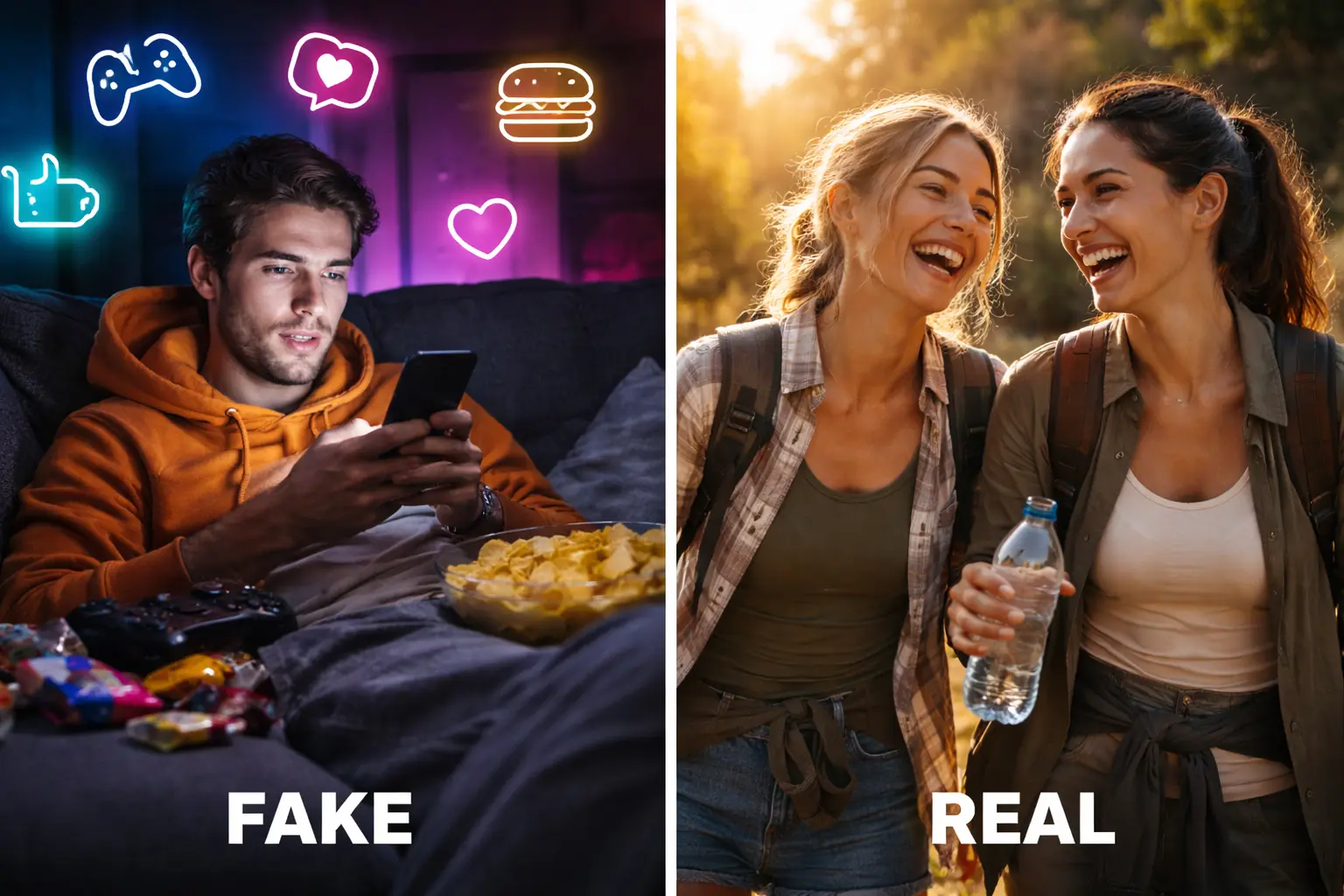
I was trapped in a cycle of chasing empty highs, scrolling endlessly, binge-watching shows at 3 AM, and seeking validation through likes, only to crash harder each time, and it wasn’t until I understood the difference between fake versus real dopamine that I realized I’d been poisoning my own potential.
The deceptive appeal of fake dopamine
Fake dopamine hit different back then. I remember the rush of opening TikTok, the instant gratification of a notification ping, the dopamine spike from junk food. It felt like I was living, but I was actually just existing in a loop. Every quick win left me emptier than before. I’d scroll for hours, thinking I was relaxing, but I was really just numbing myself. The pattern became clear: I’d feel bored or anxious, reach for my phone, get a quick hit of pleasure, then crash into shame and restlessness within minutes. This wasn’t happiness. It was a trap disguised as fun. The more I chased these artificial rewards, the less my brain could feel genuine satisfaction from real accomplishments. My dopamine receptors were basically screaming for bigger and bigger hits, and nothing felt rewarding anymore.
- Quick highs followed by crushing lows
- Artificial sense of reward without real accomplishment
- Escape from discomfort rather than facing reality
Awakening to real dopamine’s power
Real dopamine showed up differently. It wasn’t flashy or instant. When I finally finished a project I’d been avoiding for weeks, or had a genuine conversation with a friend where we actually listened to each other, something shifted inside me. The satisfaction was deeper, slower, but it lasted. I started noticing that real dopamine came from effort, from showing up even when I didn’t feel like it, from pushing through discomfort. Going to the gym felt terrible at first, but after a few weeks, that earned feeling of strength was incomparable to any quick scroll. Real dopamine taught me that the journey mattered more than the destination. Small wins started stacking: finishing a chapter of a book, having a meaningful chat, cooking a meal from scratch. Each one felt like a legitimate achievement because it required something from me. My brain wasn’t looking for the next quick fix anymore; it was hungry for real progress.
💬 Ready to feel better in 2 minutes?choose where to begin:
Breaking free from the fake dopamine cycle
The first week was brutal. I quit cold turkey, ditched my phone for hours at a time, avoided my usual comfort apps. The anxiety hit hard. I felt restless, bored, even a bit depressed. My brain was screaming for that familiar hit, and I had to sit with the discomfort instead of running from it. Days three through five were the worst. I wanted to relapse so badly. But I pushed through by replacing the habits: when I wanted to scroll, I went for a walk. When I craved the validation, I journaled instead. By day ten, the cravings softened. By day twenty, I noticed I could focus on a single task for longer than five minutes. The emotional rollercoaster gradually flattened out. I wasn’t fighting my brain anymore; I was rewiring it. Each day without the fake dopamine hits made real rewards feel more accessible. The clarity came slowly, but it came. I felt lighter, more present, and genuinely curious about my own life again.
Embracing the authenticity of real connection
Real dopamine opened doors to real connection. I started having conversations that actually mattered. Instead of texting five people shallow updates, I called one friend and we talked for an hour. Instead of liking fifty posts mindlessly, I showed up for people who mattered. My relationships deepened because I was actually present. I noticed my anxiety around social situations dropped because I wasn’t performing for an invisible audience anymore. I joined a hobby group, something I’d never done before, and found genuine community. These weren’t curated moments for social media; they were messy, real, sometimes awkward, but incredibly fulfilling. My well-being improved not because I was chasing happiness, but because I was building a life worth living. Real dopamine came from contribution, from being useful, from making someone laugh in person. The richness of authentic experiences filled the void that fake dopamine used to occupy.
By ditching fake dopamine for 30 days, I rediscovered the beauty of real rewards and genuine connections. The journey was challenging, but the transformation was profound. Embracing authentic experiences brought fulfillment and richness to my life.
How does fake dopamine affect our mental health?
Fake dopamine creates a cycle of dependency and instant gratification, leading to a decrease in natural dopamine production. Over time, this can contribute to mood disorders and an inability to experience true joy.
Are there any natural ways to boost real dopamine levels?
Engaging in regular exercise, practicing mindfulness, setting achievable goals, and seeking out positive social interactions are all effective ways to naturally increase dopamine levels in the brain.
Others also read:
Disclaimer: This article is for informational purposes only and is not a substitute for professional medical advice. Always consult a healthcare professional for personal guidance.
This article presents an experience-based perspective and has been reviewed by the GlobalHealthBeacon editorial team in 2026. It provides structured, evidence-based information to support informed health decisions.
