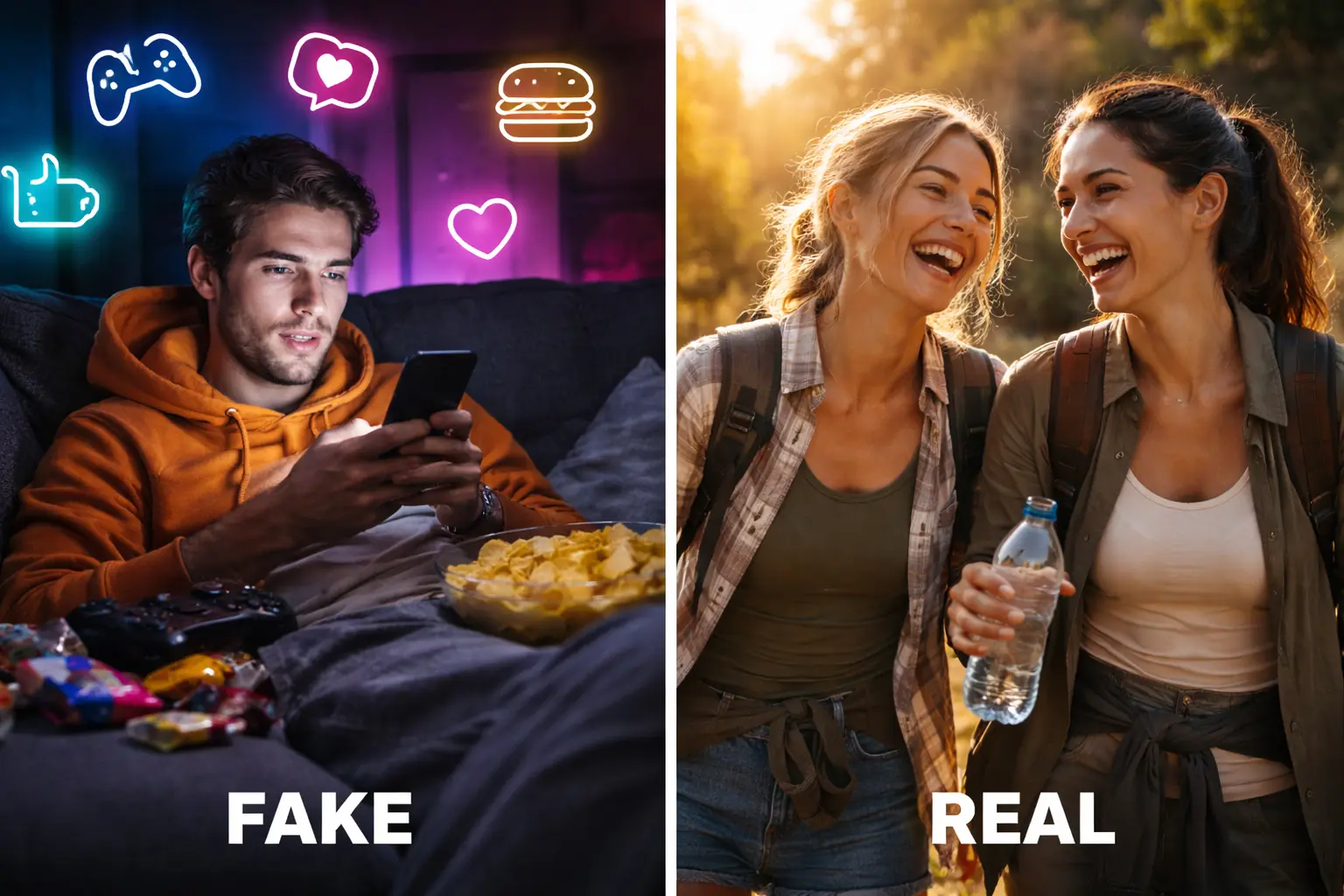
You feel stuck, unmotivated, reaching for that afternoon snack or scrolling endlessly just to feel something, and you know deep down it’s not actually making you happier, which is exactly why understanding fake versus real dopamine could be the shift that changes everything for your senior years.
Understanding dopamine: real vs. fake
Dopamine is far more than just a feel-good chemical. It’s the neurotransmitter that drives your motivation to get out of bed, pursue hobbies you love, and connect with people who matter. When you exercise, spend time with grandchildren, or accomplish a meaningful task, your brain releases dopamine in a way that builds resilience and sustains your mood for hours. Real dopamine comes from effort and genuine accomplishment. Now consider the alternative. A piece of cake, a binge-watching session, or scrolling through social media delivers dopamine too, but it’s a borrowed high that crashes quickly, leaving you needing more to feel the same effect. For seniors especially, this distinction matters because your brain’s dopamine sensitivity changes with age. What worked to motivate you at 40 may not work at 70. The fake dopamine sources create dependency and can contribute to weight gain, poor sleep, and cognitive decline. Real dopamine sources, by contrast, strengthen your neural pathways, improve memory, and create a foundation of genuine well-being that lasts.
- The source of dopamine impacts its longevity and overall impact on health.
- Fake dopamine sources can result in temporary pleasure but may lead to long-term health issues.
- Real dopamine activities promote overall well-being and emotional stability in seniors.
Healthy dopamine-boosting activities
The most effective dopamine strategies for seniors involve three pillars: movement, purpose, and connection. Start with physical activity. A 30-minute walk three times a week isn’t just exercise, it’s a dopamine factory. Your body releases endorphins and dopamine simultaneously, creating a natural high that improves mood and sleep quality. Consider adding resistance training twice weekly to boost dopamine even further and protect muscle mass. Next, engage in hobbies that require focus and skill. Whether it’s gardening, painting, learning an instrument, or woodworking, activities that challenge your mind while producing tangible results trigger sustained dopamine release. A senior who spends two hours in the garden watching plants grow experiences real dopamine from nurturing life and seeing progress. Finally, prioritize social connection. A weekly lunch with friends, joining a book club, or volunteering at a local organization creates dopamine through meaningful interaction. One study found that seniors who volunteer regularly report higher life satisfaction and better cognitive function than those who don’t. The key is consistency. Your brain needs these activities to become routine, not occasional treats.
📘 Fix your day in under 2 minuteschoose where to begin:
Avoiding fake dopamine traps
Fake dopamine traps are everywhere, and they’re designed to be compelling. Processed foods high in sugar and salt trigger dopamine spikes followed by crashes that leave you craving more within hours. A senior who reaches for cookies at 3 p.m. every day is caught in a cycle where blood sugar swings affect mood, energy, and decision-making. Excessive screen time, whether television or social media, creates a similar pattern. The constant novelty keeps your dopamine system engaged but in a shallow way that prevents deeper satisfaction. Worse, it crowds out time for real dopamine activities. Substance use, including alcohol and prescription medication misuse, is a serious concern for seniors. Alcohol might feel like it relaxes you, but it hijacks your dopamine system and can lead to dependency, cognitive decline, and dangerous health interactions. The trap isn’t that these things feel good in the moment. It’s that they feel good in a way that trains your brain to seek them out repeatedly, making it harder to find satisfaction in genuine accomplishments. Awareness is your first defense. Notice when you’re reaching for these sources and ask yourself what you’re actually seeking: comfort, distraction, energy, or connection. Once you identify the real need, you can address it with a real dopamine source instead.
Balancing real and fake dopamine sources
Complete abstinence from all pleasures isn’t realistic or necessary. The goal isn’t perfection, it’s proportion. Think of your dopamine budget like a financial budget. You have limited resources, and you want to invest them wisely. A slice of birthday cake at a family celebration is fine. What matters is that 90 percent of your dopamine sources come from real activities that build your life, not diminish it. This balance looks different for each person. One senior might find that having a small treat after a morning walk feels rewarding and motivating. Another might discover that treating themselves to a favorite show after completing a creative project creates a healthy pairing of real and fake dopamine. The mistake most people make is using fake dopamine as a substitute for real dopamine when life feels hard. If you’re lonely, scrolling won’t fix it, but calling a friend will. If you’re bored, sugar won’t help, but learning something new will. When you feel the urge to reach for a fake dopamine source, pause and ask: Am I avoiding something? What would the real dopamine version of this look like? Sometimes the answer is a brief indulgence paired with a real activity. Sometimes it’s choosing the real thing entirely. Over time, as real dopamine activities become your default, fake sources naturally matter less.
Incorporating real dopamine strategies daily
Building a sustainable routine starts small and grows gradually. Your first week, commit to one real dopamine activity: a 20-minute walk, a phone call to a friend, or 30 minutes on a hobby you’ve neglected. Notice how you feel afterward. Most seniors report better sleep, clearer thinking, and improved mood within days. Week two, add a second activity. By week four, you’ve woven multiple dopamine sources into your week. A realistic daily routine might look like this: morning walk or gentle exercise, mid-morning creative time (painting, writing, gardening), afternoon social connection (phone call, visit, or group activity), and evening reflection or skill-building. This isn’t rigid. Some days you’ll do more, some less. The point is consistency and intention. Track your mood and energy levels as you implement these changes. You’ll likely notice patterns. Perhaps you feel best on days when you’ve moved your body and connected with someone. Use that insight to prioritize those activities. Also, be patient with yourself. Your brain has been trained by years of habits. Real dopamine takes slightly longer to feel rewarding than fake dopamine, but it lasts longer and builds over time. Within two to three months of consistent real dopamine activities, most seniors report significant improvements in motivation, mood stability, and overall life satisfaction.
Engaging in real dopamine activities like exercise, hobbies, and social interactions can significantly benefit seniors by promoting sustainable well-being and emotional stability. Prioritizing these strategies over fake dopamine sources leads to a healthier overall lifestyle in the aging population.
Are fake dopamine sources harmful to seniors?
Yes, fake dopamine sources like processed foods and excessive screen time can be detrimental to the health and well-being of seniors, leading to short-lived pleasure and potential long-term health issues.
What are some examples of real dopamine-boosting activities for seniors?
Engaging in physical exercises, pursuing hobbies, and participating in social interactions are excellent examples of real dopamine-boosting activities that can benefit seniors’ mood, motivation, and overall health.
Others also read:
Disclaimer: This article is for informational purposes only and is not a substitute for professional medical advice. Always consult a healthcare professional for personal guidance.
This guide has been prepared and reviewed by the GlobalHealthBeacon editorial team and reflects current medical research as of 2026. It provides structured, evidence-based information to support informed health decisions.
