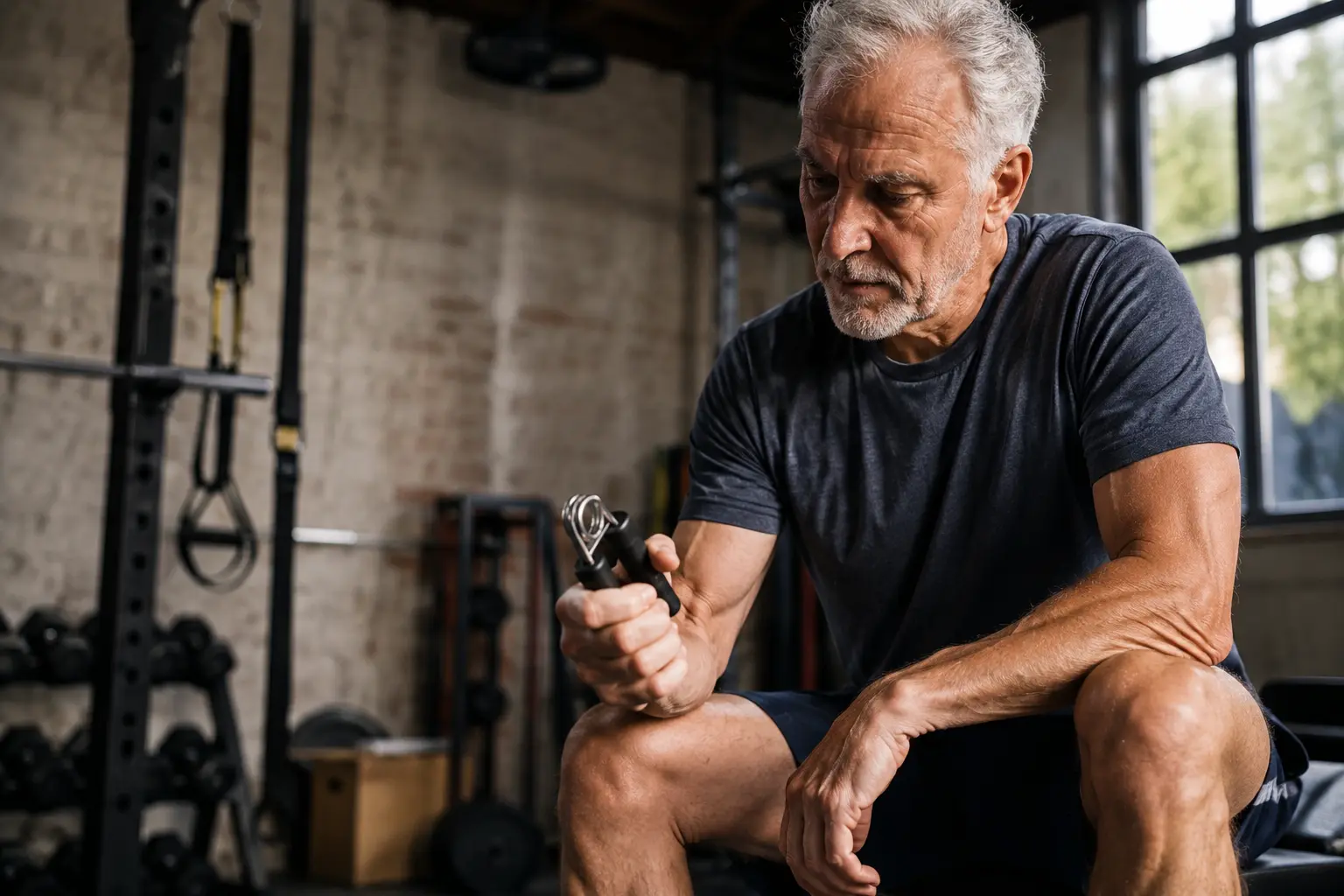
Your hands are getting weaker, and you’re wondering if it actually matters for how long you’ll live, because grip strength and longevity are connected in ways most people never talk about.
The science behind grip strength
Grip strength functions as a window into your overall muscular health and systemic vitality. When you squeeze a dynamometer or grip someone’s hand firmly, you’re not just using your fingers and forearms. That single measurement reflects the coordinated effort of muscles throughout your upper body, the efficiency of your nervous system, and even the health of your mitochondria at the cellular level. Research spanning decades has consistently shown that women with lower grip strength face elevated risks of mortality, cardiovascular disease, and age-related decline. Think of grip strength as a biological marker, similar to blood pressure or cholesterol, but one that’s often overlooked. A woman in her sixties who can barely open a jar or hold a grocery bag without strain may be signaling underlying muscle loss that extends far beyond her hands. This phenomenon, called sarcopenia, begins subtly and accelerates with inactivity, hormonal shifts, and inadequate nutrition.
The impact on longevity
The connection between grip strength and how long you live isn’t coincidental. Strong hands indicate robust muscles throughout your body, which support cardiovascular function, metabolic health, and the ability to maintain independence as you age. Women with higher grip strength demonstrate better blood vessel flexibility, lower inflammation markers, and more stable blood sugar levels. These factors compound over years and decades. Consider a woman who maintained consistent strength training in her forties and fifties. By her seventies, her grip strength remains firm, her heart works more efficiently, her bones are denser, and her risk of falls and fractures drops dramatically. Conversely, a woman who became sedentary after menopause may experience rapid muscle decline, reduced cardiovascular capacity, and increased vulnerability to chronic diseases. The research is clear: every unit of grip strength gained or maintained translates into measurable improvements in health outcomes and life expectancy.
Factors influencing grip strength in women
Multiple interconnected factors shape your grip strength throughout life. Physical activity, particularly resistance training, directly builds and preserves muscle fibers in your hands, forearms, and shoulders. Without regular challenge, muscles atrophy at a rate of roughly 3 to 8 percent per decade after age 30, accelerating after 60. Nutrition plays an equally critical role. Adequate protein intake provides amino acids your body needs to repair and build muscle tissue. A woman consuming insufficient protein may struggle to maintain muscle mass even if she exercises regularly. Hormonal changes, especially during perimenopause and menopause, create a perfect storm for grip strength decline. Estrogen supports muscle protein synthesis and reduces inflammation. As estrogen levels drop, many women experience accelerated muscle loss, joint stiffness, and reduced exercise tolerance. Additionally, factors like sleep quality, stress levels, and chronic inflammation influence your body’s ability to maintain muscular strength. A woman managing high stress and poor sleep may find her grip weakening despite regular workouts.
- Engage in resistance training at least twice weekly, focusing on compound movements like rows, chest presses, and farmer carries that challenge your grip and upper body simultaneously.
- Consume 1.2 to 1.6 grams of protein per kilogram of body weight daily, distributed across meals to optimize muscle protein synthesis throughout the day.
- Consult with a healthcare provider about hormonal changes, particularly during menopause, to understand how they affect your muscle health and explore options that support strength maintenance.
🔬 Science-backed benefits in 2 minuteschoose where to begin:
Measuring grip strength
A hand dynamometer is a simple, inexpensive device that quantifies the force you generate when gripping. You squeeze the handle with maximum effort, and the device records the measurement in kilograms or pounds. Healthcare providers often use grip strength as a screening tool during wellness visits, especially for older women. Baseline measurements matter because they establish your personal reference point. A woman who measures her grip strength at 65 today can track whether she maintains, improves, or declines over the next five years. This information becomes invaluable for motivating lifestyle changes or alerting you to potential health issues. Some research suggests that a decline of more than 5 kilograms in grip strength over a year warrants investigation into underlying causes like thyroid dysfunction, vitamin deficiencies, or progressive muscle disease. Monitoring grip strength over time transforms an abstract concept into concrete data you can act upon.
Improving grip strength
Building stronger hands requires both targeted exercises and whole-body strength work. Hand-specific exercises like squeezing therapy putty, using hand grippers, or performing dead hangs from a pull-up bar directly challenge your grip muscles. However, these alone won’t maximize your results. Full-body resistance training amplifies grip strength because compound movements recruit stabilizer muscles throughout your arms, shoulders, and back. A woman performing barbell rows, kettlebell swings, or farmer carries develops grip strength as a byproduct of moving heavier loads. Progressive overload matters too. Your muscles adapt to demands, so gradually increasing weight, reps, or difficulty ensures continued improvement. Many women find that combining two to three weekly sessions of compound strength training with two to three sessions of grip-specific work produces noticeable gains within eight to twelve weeks. Consistency trumps intensity. A woman who trains moderately three times weekly will outpace someone who trains intensely once monthly.
Seeking professional guidance
If you’re concerned about declining grip strength, muscle loss, or overall health trajectory, consulting a healthcare provider or certified strength coach offers personalized insights. A provider can rule out underlying conditions like thyroid dysfunction, vitamin B12 deficiency, or autoimmune disease that might impair muscle function. A strength coach can assess your movement patterns, identify imbalances, and design a program tailored to your age, fitness level, and goals. Many women benefit from an initial assessment that measures baseline grip strength, evaluates movement quality, and establishes realistic targets. This professional guidance removes guesswork and accelerates progress. Whether you’re 45 and wanting to prevent future decline or 75 and rebuilding strength after illness, expert support transforms vague intentions into actionable plans with measurable milestones.
Grip strength serves as a powerful indicator of overall health and longevity in women, with stronger grip correlating with better cardiovascular function, reduced mortality risk, and enhanced independence throughout aging. Physical activity, adequate protein nutrition, and hormonal awareness directly influence grip strength, while regular measurement and progressive resistance training enable meaningful improvements that support long-term health outcomes.
Can grip strength predict longevity in women?
Yes, longitudinal studies consistently demonstrate that higher grip strength in women correlates with lower mortality risk, reduced incidence of chronic disease, and longer life expectancy. Grip strength functions as a reliable biomarker of overall muscular health and systemic vitality.
How can women improve their grip strength?
Women can enhance grip strength through consistent resistance training two to three times weekly, consuming adequate protein to support muscle maintenance, incorporating grip-specific exercises like dead hangs or hand grippers, and consulting healthcare providers about hormonal factors that influence muscle health.
Others also read:
Disclaimer: This article is for informational purposes only and is not a substitute for professional medical advice. Always consult a healthcare professional for personal guidance.
This article has been prepared and reviewed by the GlobalHealthBeacon editorial team and is based on current medical research and published scientific literature available in 2026. It provides structured, evidence-based information to support informed health decisions.
