Your hands are getting weaker, you notice it when opening jars or carrying groceries, and you’re wondering if this grip strength and longevity connection everyone talks about actually matters for your future.
Understanding grip strength
Grip strength is fundamentally a measure of how much force your hand and forearm muscles can exert when squeezing. But it’s far more than just a party trick or a way to open stubborn pickle jars. Think of it as a window into your overall muscular health. When researchers test grip strength using a dynamometer, they’re essentially measuring the functional capacity of multiple muscle groups working in coordination. For women specifically, grip strength naturally tends to be lower than men due to differences in muscle mass distribution, but this doesn’t diminish its importance as a health marker. A woman in her 50s with strong grip strength demonstrates that her muscles are resilient, her nervous system is firing efficiently, and her body has maintained the capacity to perform daily tasks independently. This simple measurement reflects decades of lifestyle choices, nutritional status, and physical activity patterns.
The science behind longevity
Longevity isn’t determined by a single factor, and scientists have long understood this complexity. Your genes load the gun, but your lifestyle pulls the trigger. Research into aging has identified several key pathways that influence how long we live and how well we live. Muscle strength plays a surprisingly central role in this equation. When your muscles remain strong throughout life, they continue to support your metabolic rate, help regulate blood sugar, protect your bones, and maintain your cardiovascular system’s efficiency. Women face particular challenges as estrogen declines during menopause, which accelerates muscle loss if not actively countered. Studies tracking thousands of women over decades have consistently found that those maintaining higher grip strength experience fewer falls, hospitalizations, and age-related diseases. The mechanism is elegant: strong muscles require constant metabolic activity, which keeps your entire system engaged and resilient against the wear and tear of aging.
The relationship between grip strength and longevity
The connection between grip strength and how long you live isn’t coincidental, it’s causal in many ways. Large-scale studies following women for 10, 20, even 30 years have documented a striking pattern. Women with grip strength in the highest quartile for their age group consistently outlive those in the lowest quartile by years. But here’s what makes this fascinating: grip strength predicts not just whether you’ll live longer, but whether you’ll live independently and actively. A woman with strong grip strength at 60 is statistically more likely to still be gardening, traveling, and playing with grandchildren at 80. The research shows that grip strength correlates with lower rates of heart disease, stroke, type 2 diabetes, and certain cancers. This isn’t because grip strength directly prevents disease, but because it’s a marker of overall systemic health. Your grip reflects your muscle quality, your metabolic health, your bone density, and your nervous system function all at once. When you strengthen your grip, you’re essentially strengthening your entire biological foundation.
- Engage in resistance training two to three times weekly, focusing on compound movements like rows, chest presses, and farmer carries that build functional strength throughout your body.
- Maintain consistent protein intake of 1.2 to 1.6 grams per kilogram of body weight daily to support muscle repair and growth, especially important for women over 50.
- Incorporate cardiovascular exercise for 150 minutes weekly to enhance heart health, improve circulation to muscles, and support the metabolic processes that keep you strong and resilient.
🔬 Science-backed benefits in 2 minuteschoose where to begin:
Factors influencing grip strength
Your grip strength isn’t fixed, it’s dynamic and influenced by multiple overlapping factors. Age is the most obvious: grip strength typically peaks in your 30s and 40s, then gradually declines unless actively maintained. For women, menopause creates a particular inflection point where muscle loss accelerates due to hormonal shifts. But age isn’t destiny. Muscle mass, which you can absolutely control through training, is perhaps the strongest predictor of grip strength. A woman who strength trains regularly can maintain or even improve grip strength well into her 80s. Physical activity levels matter tremendously, but so does nutrition, sleep quality, and even stress management. Women with chronic stress show measurably lower grip strength, likely due to cortisol’s effects on muscle protein synthesis. Medical conditions like arthritis, thyroid dysfunction, or vitamin D deficiency can suppress grip strength. Even your dominant hand versus non-dominant hand shows significant differences, typically 10 percent stronger on your dominant side.
Practical tips for improving grip strength
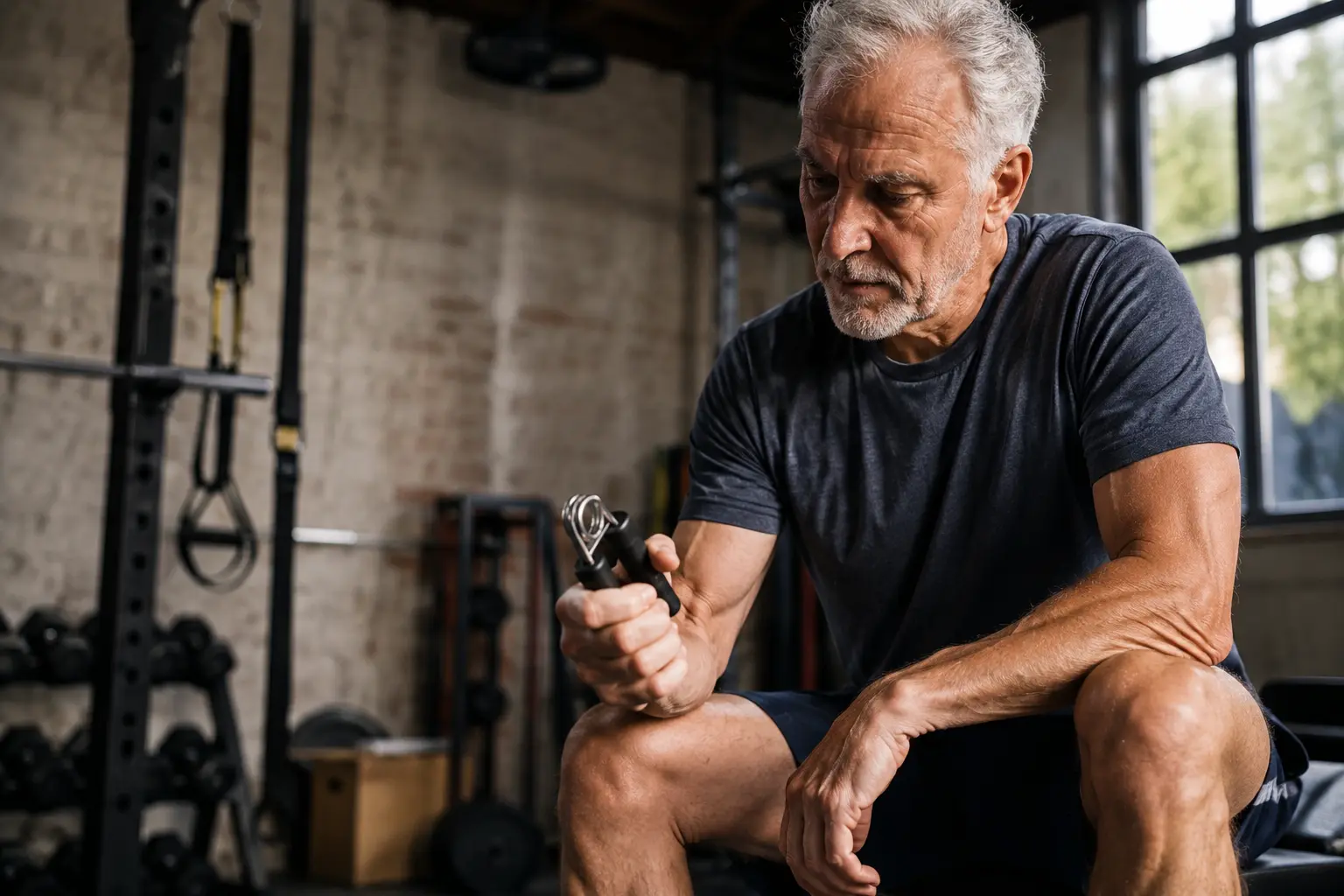
Building grip strength doesn’t require expensive equipment or hours in a gym. Start with dead hangs: simply hang from a pull-up bar for as long as comfortable, building duration over weeks. Farmer carries, where you hold heavy dumbbells at your sides and walk, are deceptively effective and functional. Resistance bands provide affordable, portable training options. Squeeze a band or towel for 10 seconds, rest, repeat for three sets daily. Hand grippers specifically designed for grip training offer progressive resistance as you build strength. But don’t neglect the bigger picture: rowing movements, pull-ups or assisted pull-ups, and even rock climbing engage your grip in functional contexts. A woman in her 60s who started grip training reported opening jars without assistance within eight weeks, a small victory that reflected genuine strength gains. The key is consistency over intensity. Three focused minutes daily beats sporadic intense sessions. Track your progress with a hand dynamometer every few weeks to see measurable improvements, which provides motivation to continue.
The bottom line
Grip strength is one of the most underrated health metrics available to you, yet it’s free to measure and straightforward to improve. The research is unambiguous: women with stronger grip strength live longer, healthier, more independent lives. This isn’t about vanity or impressing anyone, it’s about maintaining the physical capacity to do what matters to you as you age. The beautiful part is that you’re not locked into your current grip strength. Whether you’re 40 or 80, improvements are possible with consistent effort. The investment is modest, the returns are substantial. By prioritizing strength training, adequate protein, and regular physical activity, you’re not just improving a number on a dynamometer, you’re building resilience into your entire biological system. Your future self will thank you for the strength you build today.
Research demonstrates a robust correlation between grip strength and longevity in women, with higher grip strength associated with reduced disease risk, greater independence, and extended lifespan. Grip strength serves as a biomarker reflecting overall muscle health, metabolic function, and systemic resilience. Women can improve grip strength through consistent resistance training, adequate protein intake, cardiovascular exercise, and targeted grip-specific exercises, with benefits achievable at any age.
Can grip strength really predict longevity?
Yes, extensive longitudinal research following thousands of women over decades consistently shows that grip strength is a significant predictor of lifespan and health outcomes. Women with higher grip strength experience lower rates of chronic disease, fewer falls and injuries, greater independence in daily activities, and measurably longer lifespans compared to those with weaker grip strength. This relationship holds true even after accounting for age and other health factors.
What are some practical ways to increase grip strength?
Effective methods include dead hangs from a pull-up bar, farmer carries with dumbbells, resistance band squeezes, hand gripper tools, rowing exercises, and pull-ups or assisted pull-ups. Consistency matters more than intensity, so aim for three to five minutes of grip-focused training daily. Combine these with adequate protein intake, strength training two to three times weekly, and cardiovascular exercise. Most women notice measurable improvements within four to eight weeks of consistent practice.
Others also read:
Disclaimer: This article is for informational purposes only and is not a substitute for professional medical advice. Always consult a healthcare professional for personal guidance.
This article has been prepared and reviewed by the GlobalHealthBeacon editorial team and is based on current medical research and published scientific literature available in 2026. It provides structured, evidence-based information to support informed health decisions.
