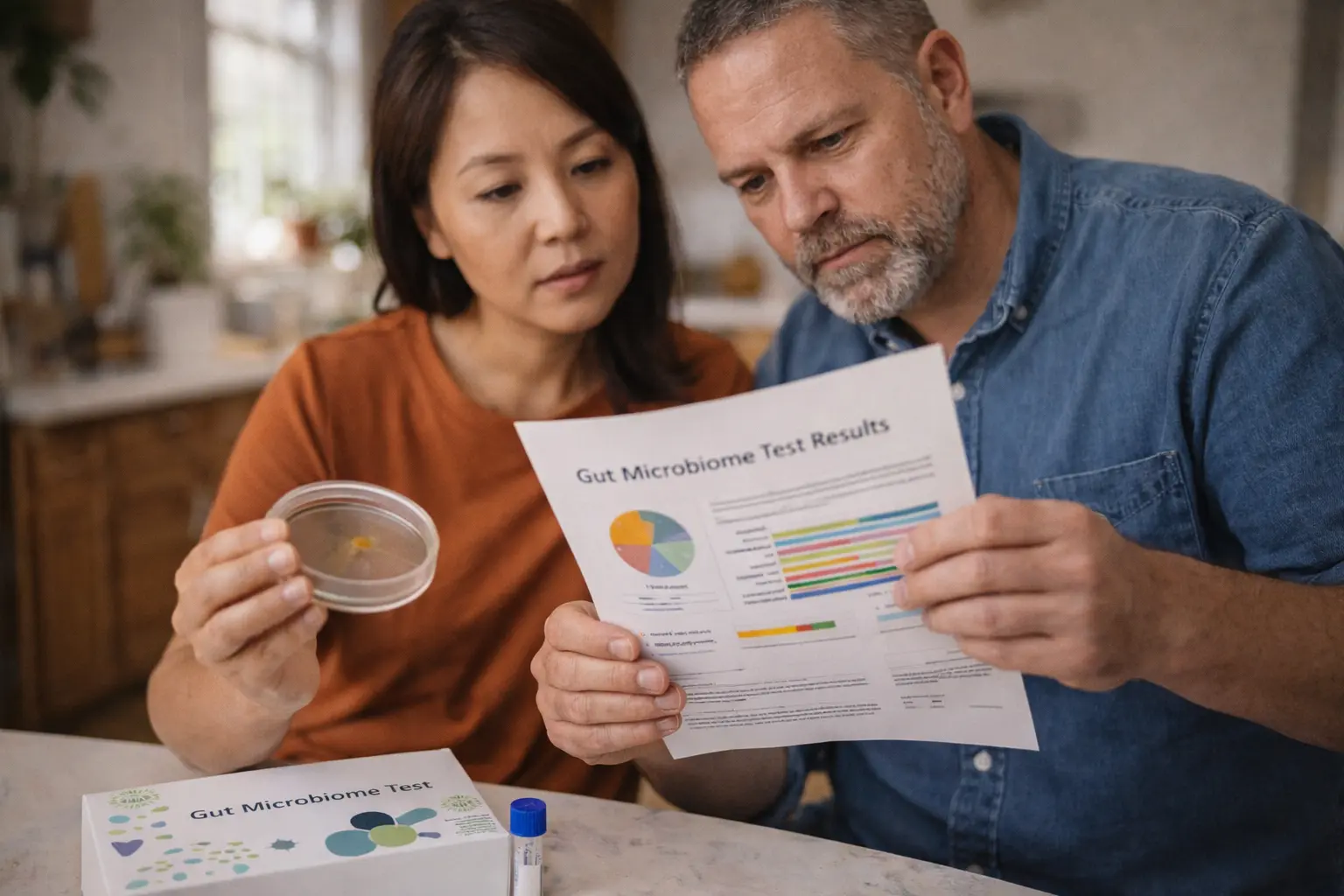
You’re bloated, exhausted, your skin won’t clear up, and you’ve heard gut microbiome test accuracy might hold the answers, but you have no idea if these tests actually work or if you’re just throwing money at another wellness trend.
Understanding gut microbiome
Your gut is home to roughly 37 trillion microorganisms, a living ecosystem that influences everything from how you digest food to how your immune system responds to threats. These microbes, collectively called the microbiome, include bacteria, fungi, viruses, and other organisms that have evolved alongside humans for millennia. Think of your gut as a bustling city where trillions of residents work together to break down nutrients, produce vitamins like K and B12, and create compounds that communicate with your brain and immune system. When this microbial community is balanced, digestion flows smoothly and your body’s defense mechanisms work efficiently. However, factors like antibiotics, stress, diet changes, and certain medications can disrupt this delicate balance, leading to dysbiosis, a state where harmful microbes outnumber beneficial ones. Understanding what lives in your gut and how these organisms interact is the foundation for making sense of microbiome testing and what the results might mean for your health.
Importance of test accuracy
An accurate gut microbiome test acts like a detailed map of your internal ecosystem, revealing which bacterial species are present, how diverse your microbial community is, and whether any potentially harmful organisms are thriving. This information matters because research has linked specific microbial imbalances to conditions ranging from irritable bowel syndrome and inflammatory bowel disease to metabolic issues and mood disorders. For women specifically, hormonal fluctuations throughout the menstrual cycle, pregnancy, and menopause can shift the microbiome in measurable ways, making accurate baseline testing particularly valuable. When a test correctly identifies your microbial composition, healthcare providers can spot patterns that might explain persistent symptoms you’ve been experiencing. Accurate results also help distinguish between normal variation in your microbiome and genuine dysbiosis that warrants intervention. Without reliable testing, treatment recommendations become guesswork, potentially leading you down ineffective paths or missing opportunities for meaningful improvements in digestion, energy, and overall wellbeing.
Factors affecting test reliability
Several variables can significantly impact whether your microbiome test results accurately reflect what’s actually happening in your gut. Sample collection method matters enormously, since improper handling, contamination during collection, or delays in processing can skew results dramatically. The specific DNA sequencing technology used by the lab influences which organisms get detected and how accurately their abundance is measured, meaning two different labs might report slightly different findings from the same sample. Timing also plays a role, as your microbiome fluctuates based on what you ate yesterday, your stress levels, menstrual cycle phase, and recent medication use. Some tests measure only bacterial DNA while missing fungi and viruses that could be relevant to your symptoms. Additionally, the reference databases labs use to identify organisms continue to evolve, so a test result from two years ago might be interpreted differently today with updated scientific knowledge. Understanding these limitations helps you interpret results with appropriate skepticism and recognize that a single snapshot test provides incomplete information about your dynamic, constantly changing microbial ecosystem.
- Consult a healthcare provider experienced in microbiome science to discuss whether testing makes sense for your specific symptoms and health goals.
- Follow sample collection instructions with meticulous care, including timing, temperature control, and avoiding contamination, since improper handling can invalidate results.
- Review your test results with a qualified professional who can contextualize findings within your personal health history, diet, medications, and symptoms rather than treating numbers in isolation.
🔬 Science-backed benefits in 2 minuteschoose where to begin:
Current research findings
Recent scientific literature reveals a sobering truth: gut microbiome testing is far more complex than early marketing suggested, and standardization across labs remains a significant challenge. Studies comparing results from the same sample sent to different testing companies have found notable discrepancies in which organisms are detected and their reported abundance levels. Researchers have identified that factors like DNA extraction methods, sequencing depth, and bioinformatic analysis approaches can substantially influence outcomes. However, emerging research also shows that certain microbial patterns do correlate reliably with specific health conditions, particularly when results are interpreted by experienced clinicians who understand the science. Women-focused studies are increasingly revealing that hormonal status, contraceptive use, and reproductive life stage meaningfully shape microbial composition in ways that standard testing might not account for. The scientific consensus is shifting toward recognizing microbiome testing as a useful tool within a broader clinical picture rather than a standalone diagnostic, with researchers emphasizing that functional assessment of what your microbiome is actually doing matters more than simply cataloging which species are present.
Interpreting test results
Receiving your microbiome test results can feel overwhelming, especially when you’re staring at percentages, species names you can’t pronounce, and color-coded diversity scores. The key is understanding that these numbers represent a snapshot of your microbial community at one specific moment, not a permanent diagnosis of your gut health. Diversity scores matter because generally, greater microbial diversity correlates with better health outcomes, though this isn’t universally true for every individual. Specific bacterial ratios, like the Firmicutes to Bacteroidetes ratio, have been studied extensively, but interpreting what these ratios mean for you personally requires clinical expertise and knowledge of your symptoms, diet, and health history. Some labs provide recommendations based on your results, but these should be viewed as starting points for conversation with a healthcare provider rather than definitive prescriptions. Women should pay particular attention to how their results align with their menstrual cycle phase, recent antibiotic use, or dietary changes, since these factors significantly influence microbial composition. The most valuable interpretation comes when a knowledgeable practitioner helps you understand not just what organisms are present, but what functional capabilities your microbiome has and how that relates to your specific health concerns.
Future perspectives
The microbiome field is evolving rapidly, with emerging technologies promising more accurate, comprehensive, and personalized testing in coming years. Metagenomic sequencing is becoming more affordable and sophisticated, allowing labs to detect not just which organisms are present but also their functional genes and metabolic capabilities. Researchers are developing standardized protocols and reference databases that will improve consistency across testing companies, making results more comparable and reliable. Artificial intelligence and machine learning are being applied to microbiome data to identify patterns that humans might miss, potentially predicting health outcomes before symptoms emerge. For women specifically, research is increasingly recognizing that one-size-fits-all microbiome recommendations ignore the profound influence of hormonal cycles, reproductive status, and gender-specific health conditions on microbial composition. Future testing may incorporate real-time monitoring through non-invasive methods, allowing you to track how your microbiome responds to dietary changes, stress management, or other interventions. As the field matures, the goal is moving beyond simply identifying dysbiosis toward understanding your unique microbial ecosystem and how to support it in ways that align with your individual health goals and life circumstances.
Research into gut microbiome test accuracy continues to evolve, emphasizing the importance of understanding the complexities of microbial analysis and interpreting results through a scientific lens.
How reliable are gut microbiome tests?
Gut microbiome tests can provide valuable insights but may vary in accuracy based on factors like sample collection and analytical methods. Consulting healthcare professionals can aid in accurate interpretation.
What should I do with my microbiome test results?
Upon receiving gut microbiome test results, consult with healthcare providers to understand the implications and determine personalized strategies for improving gut health.
Others also read:
Disclaimer: This article is for informational purposes only and is not a substitute for professional medical advice. Always consult a healthcare professional for personal guidance.
This article has been prepared and reviewed by the GlobalHealthBeacon editorial team and is based on current medical research and published scientific literature available in 2026. It provides structured, evidence-based information to support informed health decisions.
