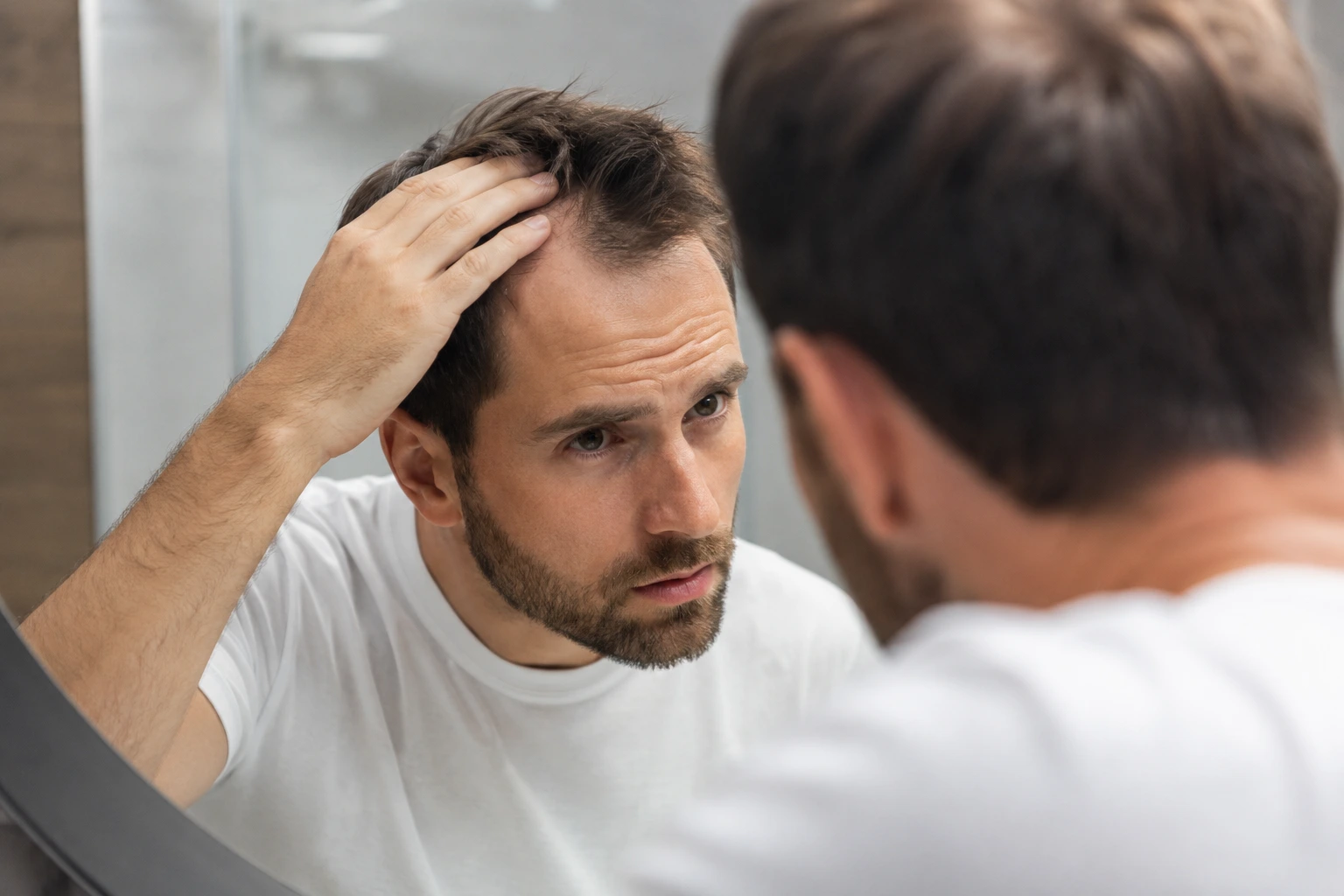
You’re noticing more hair on your pillow, your part looks wider, and that nagging worry won’t go away – these hair thinning early signs are real, they matter, and the good news is you can act on them right now.
Recognize the signs
Hair thinning doesn’t announce itself loudly. It creeps up gradually, which is why many women miss the early signals until the problem feels bigger. Start by paying attention to what’s actually happening on your scalp. Are you finding more strands in your shower drain than usual? Is your part line noticeably wider than it was six months ago? Does your ponytail feel thinner when you wrap it around your finger? These aren’t just cosmetic observations – they’re your body’s way of telling you something needs attention. Some women notice thinning first when styling their hair becomes harder, or when their favorite hairstyle no longer holds volume the way it used to. Keep a simple log for two weeks: count the hairs you lose daily, photograph your part from the same angle and lighting, and note any scalp changes. This baseline helps you track patterns and gives your doctor concrete information if you need professional guidance.
- Monitor your hair shedding on a daily basis
- Observe any changes in your scalp’s appearance
- Take note of any thinning areas or receding hairline
Build healthy habits for hair
Your hair grows from the inside out, which means what you eat, drink, and how you manage stress directly impacts what happens on your head. Start with nutrition: iron, zinc, biotin, and vitamin D aren’t just buzzwords – they’re the building blocks your hair follicles need to stay strong. If you’re vegetarian or vegan, pay extra attention to iron sources like lentils, spinach, and fortified cereals. Hydration matters too; aim for eight glasses of water daily because dehydrated hair becomes brittle and breaks more easily. Stress is a silent hair thief. When you’re under chronic stress, your body shifts hair follicles into a resting phase prematurely, leading to increased shedding weeks or months later. Try one stress-reduction technique that fits your life: a ten-minute morning walk, evening yoga, journaling, or meditation apps. Sleep quality also plays a role – aim for seven to nine hours because that’s when your body repairs and regenerates cells, including hair follicles. Small shifts in these areas compound over time.
📘 Fix your day in under 2 minuteschoose where to begin:
Practice gentle hair care techniques
How you handle your hair daily matters as much as what you put in your body. Think of your hair like delicate fabric that needs careful handling. Switch to a sulfate-free shampoo and conditioner designed for your specific hair type; sulfates strip natural oils that protect your scalp and strands. When washing, use lukewarm water not hot, and massage your scalp gently with fingertips rather than nails. Tight hairstyles like high ponytails, braids, or buns create constant tension on hair roots, causing a condition called traction alopecia where hairs are literally pulled out over time. Alternate between pulled-back styles and loose styles throughout the week. Chemical treatments like coloring, perming, or relaxing weaken hair structure, so space them out and use professional-grade products. Limit heat styling to two or three times weekly, and always use a heat protectant spray first. When your hair is wet, it’s most vulnerable to breakage, so use a wide-tooth comb and avoid vigorous rubbing with towels. Instead, gently squeeze water out and let it air-dry partially before combing.
Seek professional treatment options
If you’ve noticed significant thinning over three to six months despite lifestyle changes, it’s time to see a specialist. A dermatologist or trichologist can identify the underlying cause, whether it’s hormonal shifts, nutritional deficiencies, thyroid issues, or genetic predisposition. They’ll likely ask detailed questions about your medical history, medications, stress levels, and family patterns. Some women discover their hair loss is reversible once the root cause is addressed; others benefit from targeted treatments. Minoxidil (Rogaine) is an over-the-counter topical option that works for some women when applied consistently. Finasteride (Propecia) is prescription-only and works differently. Hair growth supplements containing biotin, saw palmetto, or marine collagen show promise for some people, though results vary widely. Low-level laser therapy and platelet-rich plasma (PRP) treatments are emerging options with growing research support. Your doctor might also recommend iron, vitamin D, or thyroid testing if deficiencies could be contributing. The key is getting a diagnosis first, then choosing a treatment plan tailored to your specific situation rather than guessing.
Embrace your natural beauty
Hair thinning is genuinely common – more women experience it than you probably realize, which means you’re not alone in this. Society places enormous pressure on women’s appearance, and hair loss can feel like a personal failure when it’s actually just biology. Some women find that accepting their thinning hair reduces the anxiety that often makes the problem feel worse. Others take action steps and feel empowered. Both responses are valid. If you choose to explore styling solutions while addressing the underlying issue, consider volumizing products, strategic layering, or temporary solutions like hair fibers or extensions. Talk to people you trust about what you’re experiencing; you might be surprised how many friends or family members have walked this path. Online communities and support groups exist specifically for women dealing with hair loss, and sometimes hearing other people’s stories helps normalize your own experience. Remember that your worth has nothing to do with your hair. Taking care of yourself – whether that means seeing a doctor, adjusting your diet, managing stress, or simply being kind to yourself during this process – is what actually matters.
Addressing hair thinning early signs naturally involves recognizing the symptoms, adopting healthy habits, practicing gentle hair care, seeking professional guidance, and embracing your natural beauty.
Can stress cause hair thinning?
Yes, chronic stress can contribute to hair thinning by disrupting the hair growth cycle. Managing stress through relaxation techniques or therapy can help improve hair health.
Are there any natural remedies for hair thinning?
Some natural remedies like scalp massages, essential oils, and dietary supplements may help improve hair health, but their effectiveness varies for each individual. Consult a healthcare professional before trying any home remedies.
Others also read:
Disclaimer: This article is for informational purposes only and is not a substitute for professional medical advice. Always consult a healthcare professional for personal guidance.
This guide has been prepared and reviewed by the GlobalHealthBeacon editorial team and reflects current medical research as of 2026. It provides structured, evidence-based information to support informed health decisions.
