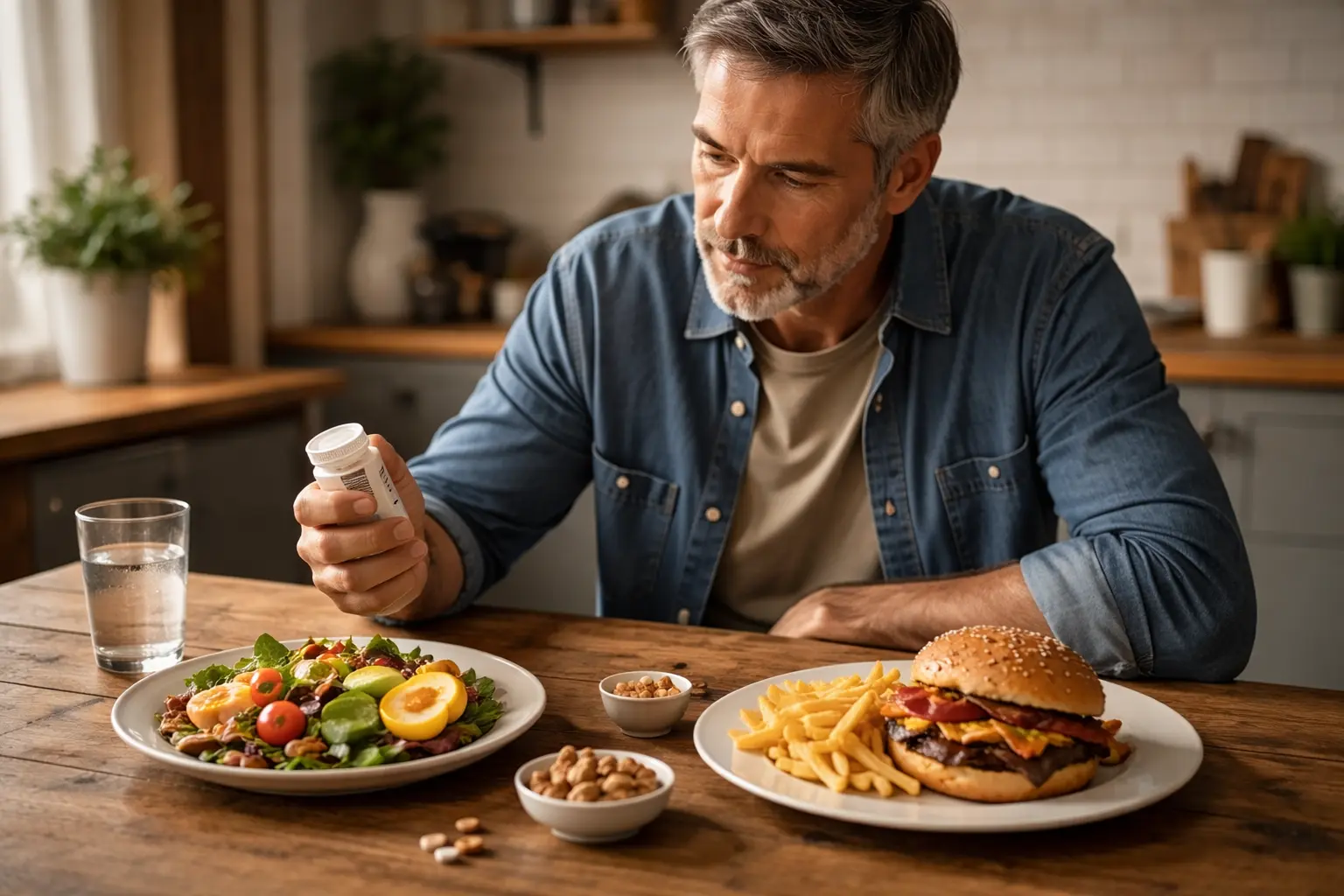
Your doctor just told you your LDL is high and you felt that knot in your stomach, but here’s the thing: understanding hdl versus ldl cholesterol isn’t as complicated as it sounds, and you can actually turn this around starting today.
Understanding cholesterol basics
Cholesterol isn’t the enemy you think it is. Your body needs it to build cells and produce hormones, but the type matters enormously. Think of your bloodstream as a delivery system: HDL is the cleanup crew that removes garbage, while LDL is the delivery truck that can leave packages piling up in your arteries if there’s too much of it. When you get your blood work back, you’ll see two numbers that tell completely different stories. HDL (high-density lipoprotein) is your protective shield, actively scrubbing your artery walls clean and transporting excess cholesterol back to your liver for disposal. LDL (low-density lipoprotein) is the problematic one when levels run high, because it deposits cholesterol in your arteries, creating plaque buildup that narrows blood vessels and increases your heart disease risk. A 28-year-old with an LDL of 160 might feel fine now, but that plaque is silently accumulating. The good news: you can shift these numbers in weeks, not months, with the right approach.
- Focus on HDL to keep arteries clear
- Monitor LDL to prevent plaque formation
- Balance is key for optimal heart health
Healthy diet choices
Food is your most powerful tool for cholesterol management, and you don’t need to eat like a monk to see results. Start by adding omega-3 rich foods: salmon twice a week, a handful of walnuts as a snack, ground flaxseeds sprinkled on yogurt or oatmeal. These aren’t sacrifices; they’re upgrades. Next, swap out the culprits. That morning pastry? Replace it with steel-cut oats. The afternoon chips? Try almonds or hummus with veggies instead. Processed foods are cholesterol killers because they’re loaded with trans fats and refined carbs that spike LDL fast. Whole grains, leafy greens, berries, and legumes should become your staples. A practical example: if you currently grab a fast-food burger and fries for lunch, switching to grilled chicken with brown rice and steamed broccoli can lower your LDL by 10-15 points in just four weeks. Fiber is your secret weapon too. Soluble fiber (oats, beans, apples) actively binds to cholesterol and removes it from your body. Aim for 25-30 grams daily. The mistake most young adults make is going all-in on restriction instead of replacement, which leads to burnout. Focus on what you’re adding, not just what you’re removing.
📘 Fix your day in under 2 minuteschoose where to begin:
Regular exercise routine
Exercise doesn’t just burn calories; it directly raises your HDL and lowers your LDL. Aerobic activity is the most effective: running, cycling, swimming, or even brisk walking for 30 minutes, five days a week. This isn’t about becoming a gym rat; it’s about consistency. A 25-year-old who runs three miles three times weekly can expect HDL to increase by 5-10 percent within eight weeks. Resistance training matters too. Lifting weights or doing bodyweight exercises twice weekly helps lower LDL and builds muscle, which boosts your metabolism. Here’s what works in real life: combine a 20-minute jog with 15 minutes of strength training, three times per week. That’s your baseline. The common mistake is doing cardio alone and ignoring strength work, which means you’re missing half the benefit. Start where you are. If you’re sedentary now, begin with 15-minute walks and gradually increase. Your body adapts quickly, and you’ll notice improved energy and mood within two weeks, which keeps you motivated to stick with it.
Healthy lifestyle habits
Cholesterol management extends beyond diet and exercise into the daily choices that add up over time. Weight management is foundational: excess body weight, especially around your midsection, directly correlates with higher LDL and lower HDL. If you’re 20 pounds overweight, losing just 10 of those can meaningfully improve your cholesterol profile. Smoking is non-negotiable to address. One cigarette damages your artery lining and lowers HDL immediately. If you smoke, quitting is the single most impactful change you can make, period. Alcohol affects cholesterol too. Moderate consumption (one drink daily for women, two for men) might slightly raise HDL, but excessive drinking does the opposite and damages your liver’s ability to process cholesterol. Stress management often gets overlooked, yet chronic stress elevates cortisol, which triggers your body to produce more LDL. Yoga, meditation, or even 10 minutes of deep breathing daily genuinely lowers cholesterol. A real scenario: a 30-year-old with high stress, poor sleep, and occasional smoking might have an LDL of 155. Addressing sleep quality alone (aiming for 7-9 hours nightly), quitting smoking, and adding a daily 10-minute meditation can drop that LDL by 20-30 points within three months.
Regular health check-ups
Monitoring is where intention becomes accountability. Schedule a baseline cholesterol panel now, then recheck every three to six months while making changes. Your numbers tell the story of whether your efforts are working. Understanding your personal risk factors matters: family history of early heart disease, diabetes, high blood pressure, or being overweight all increase your risk and may require more aggressive management. Work with your doctor to establish your target LDL based on your individual profile. For most young adults without other risk factors, an LDL below 100 is ideal; below 70 if you have multiple risk factors. Don’t just get the numbers and ignore them. Ask your doctor to explain what they mean for you specifically. Many young adults think cholesterol is something to worry about later, but starting now gives you decades of protection. A 26-year-old who addresses elevated cholesterol today prevents a heart attack at 55. Schedule your check-up, get your baseline, and then commit to rechecking in three months to see your progress. That accountability loop keeps you on track and motivated.
Cholesterol plays a crucial role in heart health, with HDL and LDL levels needing careful management. Through diet, exercise, lifestyle changes, and regular monitoring, young adults can effectively lower LDL cholesterol and protect their heart health.
Can I lower LDL cholesterol through diet alone?
While diet plays a significant role in cholesterol management, a holistic approach involving exercise, lifestyle changes, and monitoring is most effective in lowering LDL cholesterol.
How often should young adults monitor their cholesterol levels?
Young adults should aim to monitor their cholesterol levels at least once a year, or as advised by their healthcare provider based on their individual risk factors and health history.
Others also read:
Disclaimer: This article is for informational purposes only and is not a substitute for professional medical advice. Always consult a healthcare professional for personal guidance.
This guide has been prepared and reviewed by the GlobalHealthBeacon editorial team and reflects current medical research as of 2026. It provides structured, evidence-based information to support informed health decisions.
