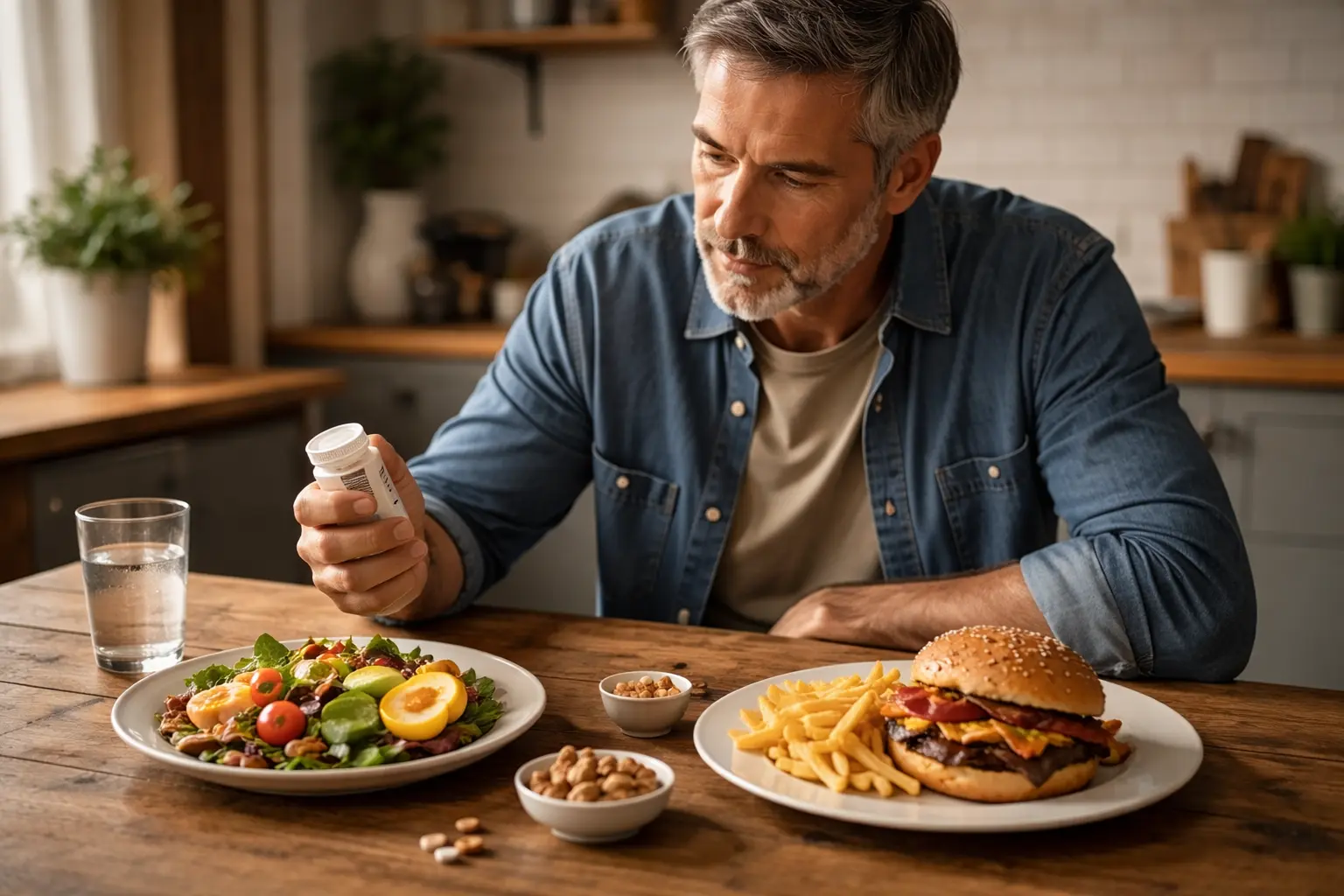
You’re tired, your energy is dragging, and somewhere in the back of your mind you’re wondering if your heart is really as healthy as you think it is, because nobody ever really explains what HDL versus LDL cholesterol actually means or why it matters so much for women like you.
HDL cholesterol: the good guy
High-density lipoprotein, or HDL cholesterol, functions as your body’s natural cleanup crew. Think of it as a molecular scavenger that circulates through your bloodstream actively seeking out excess cholesterol particles and transporting them back to your liver for processing and elimination. This process is particularly important because it prevents cholesterol from accumulating in your arterial walls, where it would otherwise harden into plaques that restrict blood flow. Women naturally tend to have higher HDL levels than men, which is one reason cardiovascular disease typically develops later in women’s lives. However, this protective advantage can diminish significantly after menopause when hormonal shifts alter cholesterol metabolism. A practical example: imagine your arteries as highways. HDL acts like a cleanup crew removing debris before it causes traffic jams. Without adequate HDL, that debris accumulates, narrows the lanes, and eventually creates dangerous blockages that can lead to heart attacks or strokes.
LDL cholesterol: the culprit
Low-density lipoprotein, commonly called bad cholesterol, behaves very differently in your body. LDL particles carry cholesterol from your liver throughout your system, but when levels become too high, these particles begin depositing cholesterol directly into your artery walls. Over time, this creates a buildup called plaque, which hardens and narrows the arterial passages, a process called atherosclerosis. For women, this risk escalates after menopause when estrogen levels drop, removing a hormone that previously helped keep LDL in check. Consider a real scenario: a 58-year-old woman notices her recent blood work shows elevated LDL at 145 mg/dL. She feels fine, has no symptoms, yet her arteries are silently accumulating cholesterol deposits. This is why LDL is dangerous, it works invisibly. The cholesterol doesn’t cause pain or obvious warning signs until significant blockage occurs, potentially triggering a heart attack or stroke with little warning.
Managing your cholesterol levels
Managing cholesterol effectively requires understanding that your body produces cholesterol naturally, so diet alone rarely solves the problem completely. However, strategic dietary choices can meaningfully reduce LDL while supporting HDL. A Mediterranean-style eating pattern emphasizes olive oil, fish, nuts, and abundant vegetables, all of which contain compounds that support healthy cholesterol profiles. Regular physical activity works on multiple levels: it directly raises HDL, helps maintain healthy weight, reduces inflammation, and improves how your body processes lipids. Many women find that combining 30 minutes of brisk walking most days with strength training twice weekly produces noticeable improvements within 8 to 12 weeks. Smoking cessation deserves special emphasis because smoking actively lowers HDL and damages artery linings, making cholesterol deposits more likely to stick. A common mistake women make is assuming that being thin automatically means healthy cholesterol levels, but genetics and hormonal factors play equally important roles regardless of weight.
- Eat a diet high in fiber and omega-3 fatty acids, including fatty fish like salmon twice weekly, ground flaxseed daily, and leafy greens at most meals.
- Engage in at least 150 minutes of moderate-intensity exercise per week, such as brisk walking, swimming, or cycling, plus two sessions of strength training.
- Quit smoking to improve your cholesterol profile, as smoking reduces HDL and damages arterial walls within minutes of exposure.
🔬 Science-backed benefits in 2 minuteschoose where to begin:
Understanding the numbers
Your cholesterol numbers tell a specific story about your cardiovascular risk, but interpreting them correctly matters tremendously. A standard lipid panel measures total cholesterol, HDL, LDL, and triglycerides, all measured in milligrams per deciliter of blood. For women, ideal total cholesterol sits below 200 mg/dL, HDL should exceed 60 mg/dL, and LDL should stay below 100 mg/dL. However, these are general targets, and your personal ideal numbers depend on your age, family history, and existing health conditions. A 45-year-old woman with no heart disease risk factors might aim for different targets than a 65-year-old woman with diabetes or a family history of early heart attacks. Your doctor calculates something called the cholesterol ratio by dividing total cholesterol by HDL, and a ratio below 5 is generally favorable. Many women find it helpful to track their numbers over time rather than focusing on a single test, since cholesterol naturally fluctuates with diet, stress, sleep, and hormonal cycles.
Risk factors and genetics
Your cholesterol levels result from a complex interaction between genetics, age, hormonal status, lifestyle choices, and underlying health conditions. If your mother or grandmother experienced early heart disease, your genetic predisposition to higher cholesterol is significantly elevated, regardless of how carefully you eat. Women experience a particularly dramatic shift in cholesterol metabolism around menopause, when declining estrogen levels cause LDL to rise and HDL to fall, narrowing the cardiovascular protection that younger women typically enjoy. This hormonal transition explains why heart disease becomes the leading cause of death for women in their 60s and beyond. Age itself matters too, as cholesterol tends to rise gradually through your 50s and 60s. Other factors like thyroid disease, kidney problems, and certain medications can also influence cholesterol levels. A practical example: two women with identical diets and exercise routines might have completely different cholesterol profiles due to genetic differences in how their bodies process and regulate cholesterol. Understanding your personal risk profile helps you and your doctor determine whether lifestyle changes alone will suffice or whether medication becomes necessary.
The role of medications
When lifestyle modifications alone don’t achieve target cholesterol levels, medications become valuable tools for reducing cardiovascular risk. Statins work by blocking an enzyme your liver needs to produce cholesterol, effectively lowering LDL by 20 to 50 percent depending on the specific medication and dose. For many women, particularly those over 60 or with existing heart disease, statins provide substantial protection against future cardiac events. Other medication classes include PCSK9 inhibitors for those who need more aggressive LDL lowering, fibrates that primarily raise HDL and lower triglycerides, and ezetimibe which blocks cholesterol absorption in your intestines. A realistic scenario involves a 62-year-old woman with a family history of heart disease whose LDL remains at 130 mg/dL despite six months of dedicated diet and exercise changes. Her doctor prescribes a moderate-dose statin, which lowers her LDL to 85 mg/dL within eight weeks. The medication doesn’t replace healthy habits, it works alongside them. Common concerns about statins include muscle pain and memory issues, though these side effects occur in only a small percentage of users and often resolve with dose adjustment or medication switching.
HDL and LDL cholesterol play fundamentally different roles in your cardiovascular health, with HDL actively removing excess cholesterol and LDL depositing it in your arteries. Women face unique cholesterol challenges, particularly after menopause when hormonal changes shift their lipid profiles unfavorably. Managing cholesterol effectively combines dietary strategies, regular physical activity, smoking cessation, and when necessary, medications prescribed by your healthcare provider. Understanding your personal numbers and risk factors empowers you to make informed decisions about your heart health.
How can I increase my HDL cholesterol levels naturally?
Boosting HDL requires consistent lifestyle effort across multiple areas. Regular aerobic exercise, particularly moderate-intensity activities like brisk walking or swimming done most days of the week, directly raises HDL levels. Consuming healthy fats from sources like olive oil, avocados, nuts, and fatty fish provides building blocks for HDL particles. Maintaining a healthy weight, limiting alcohol to moderate amounts, and completely avoiding smoking all support higher HDL. Many women notice meaningful HDL improvements within 8 to 12 weeks of sustained effort, though genetic factors ultimately set limits on how high your HDL can naturally rise.
What are the recommended cholesterol levels for women?
General targets for women include total cholesterol below 200 mg/dL, HDL above 60 mg/dL, and LDL below 100 mg/dL. However, your ideal personal targets depend on your age, family history, and existing health conditions. Women with diabetes, previous heart disease, or strong family histories of early cardiac events may need more aggressive LDL targets, sometimes below 70 mg/dL. Women without significant risk factors might have slightly different targets. Your healthcare provider can determine your specific goals based on your complete health picture rather than relying solely on general guidelines.
Others also read:
Disclaimer: This article is for informational purposes only and is not a substitute for professional medical advice. Always consult a healthcare professional for personal guidance.
This article has been prepared and reviewed by the GlobalHealthBeacon editorial team and is based on current medical research and published scientific literature available in 2026. It provides structured, evidence-based information to support informed health decisions.
