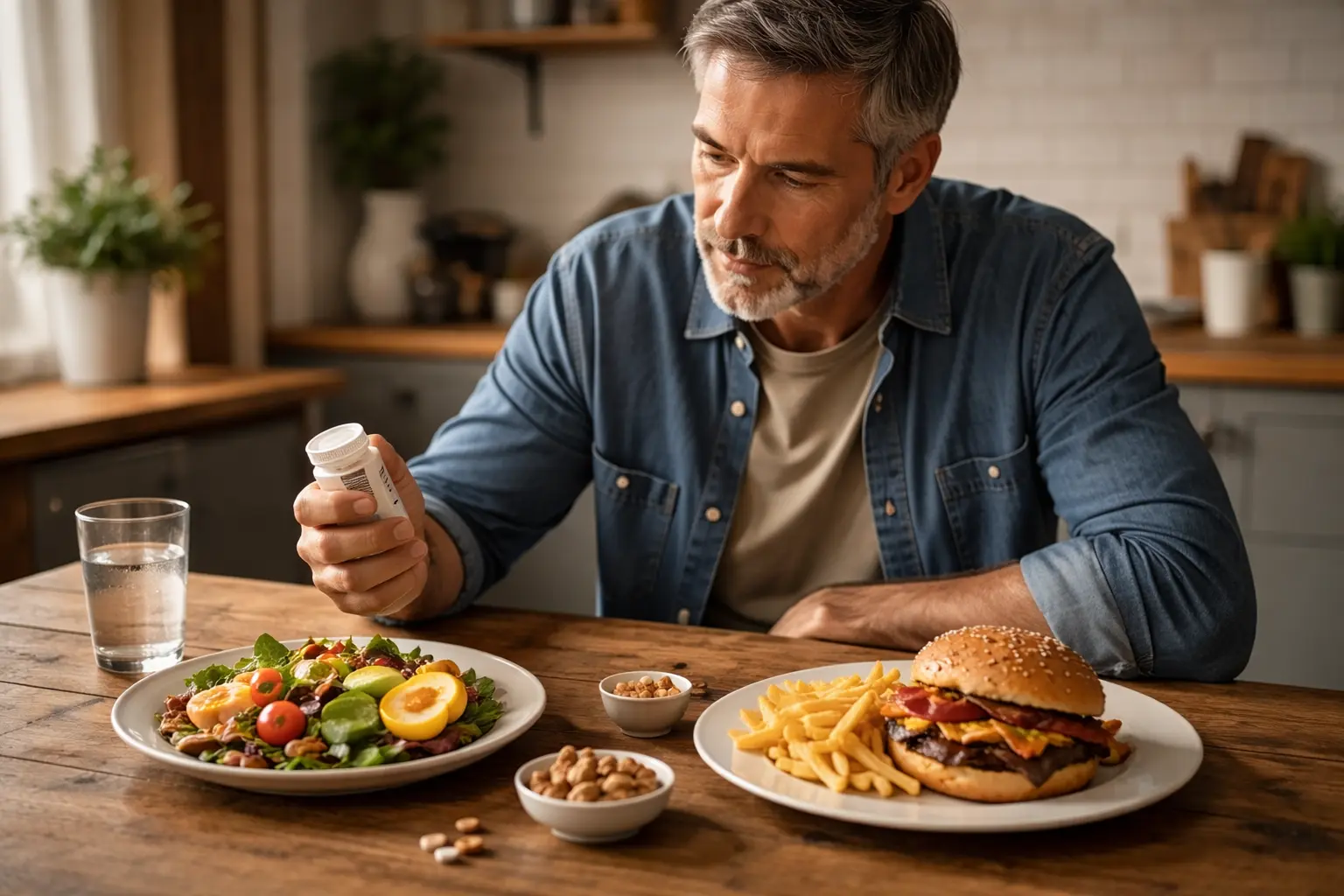
You’re staring at your lab results, confused and slightly panicked, because nobody ever explained what those HDL versus LDL cholesterol numbers actually mean or why your doctor keeps frowning at one but smiling at the other.
Understanding HDL cholesterol
HDL cholesterol, often called the ‘good’ cholesterol, is like having a cleanup crew working inside your blood vessels. Imagine plaque building up on the walls of your arteries over decades. HDL swoops in and removes that excess cholesterol, carrying it to your liver where it gets processed and eliminated. For seniors, this becomes increasingly vital because your arteries have had years to accumulate buildup. A 68-year-old named Margaret discovered this firsthand when her doctor explained that her HDL of 35 was dangerously low. By understanding that she needed to boost this protective cholesterol, she made changes that actually improved her heart health markers within six months. The key insight is that HDL doesn’t just float around passively. It actively works to prevent atherosclerosis and reduce your overall cardiovascular risk.
- HDL cholesterol protects against heart disease by removing excess cholesterol from the bloodstream.
- Regular exercise and a healthy diet rich in fruits, vegetables, and whole grains can help boost HDL levels.
- Quitting smoking and limiting alcohol intake can also contribute to raising HDL cholesterol levels.
Understanding LDL cholesterol
LDL cholesterol is the troublemaker, the one that builds up in your arteries like sludge in a pipe. When you have high LDL, it oxidizes and sticks to your artery walls, gradually narrowing the passageways that blood needs to flow through freely. For seniors, this process has often been happening silently for years. Picture a 72-year-old named Robert who felt perfectly fine until his cardiologist showed him imaging of his narrowed arteries. His LDL was 180, and he had no symptoms whatsoever. That’s the dangerous part about LDL. You don’t feel it happening. It’s a silent threat that requires vigilance and regular monitoring. Keeping LDL levels within a healthy range becomes absolutely critical as you age, because the consequences of letting it climb unchecked can be severe and life-altering.
💬 Ready to feel better in 2 minutes?choose where to begin:
The importance of balance
Think of your cholesterol profile like a seesaw that needs perfect balance. You want HDL high and LDL low, creating a ratio that protects your heart rather than endangers it. Many seniors focus only on lowering LDL and miss the equally important goal of raising HDL. Consider a 65-year-old named Patricia who had an LDL of 120, which seemed acceptable, but her HDL was only 32. Her doctor explained that this imbalance was still risky. By addressing both numbers simultaneously through lifestyle changes, she achieved an LDL of 110 and HDL of 52 within a year. The transformation wasn’t just in the numbers. She felt more energetic, slept better, and gained confidence knowing she was actively protecting her heart. This balance is what truly reduces your cardiovascular risk.
Making informed decisions
Understanding your cholesterol numbers empowers you to take real control of your health trajectory. It’s not about following generic advice. It’s about knowing exactly what your numbers mean and why they matter specifically for you. A 70-year-old named James started tracking his cholesterol quarterly and learned how his dietary choices directly impacted his results. When he reduced saturated fats and added more omega-3 rich foods, his LDL dropped noticeably. When he started walking 30 minutes daily, his HDL climbed. These weren’t abstract health concepts anymore. They were personal, measurable changes he could see reflected in his lab work. Regular conversations with your healthcare provider, combined with intentional lifestyle modifications, transform cholesterol management from a confusing burden into a clear action plan.
Balancing HDL and LDL cholesterol is essential for seniors to maintain heart health and reduce the risk of cardiovascular disease. Focusing on increasing HDL levels and decreasing LDL levels through lifestyle modifications can lead to improved overall well-being.
How can seniors increase their HDL cholesterol levels?
Seniors can boost their HDL cholesterol levels by engaging in regular physical activity, following a healthy diet rich in fruits, vegetables, and whole grains, quitting smoking, and moderating alcohol consumption.
What lifestyle changes can help seniors lower their LDL cholesterol levels?
Seniors can lower their LDL cholesterol levels by adopting a diet low in saturated and trans fats, engaging in regular exercise, maintaining a healthy weight, and avoiding smoking and excessive alcohol consumption.
Others also read:
Disclaimer: This article is for informational purposes only and is not a substitute for professional medical advice. Always consult a healthcare professional for personal guidance.
This article presents an experience-based perspective and has been reviewed by the GlobalHealthBeacon editorial team in 2026. It provides structured, evidence-based information to support informed health decisions.
