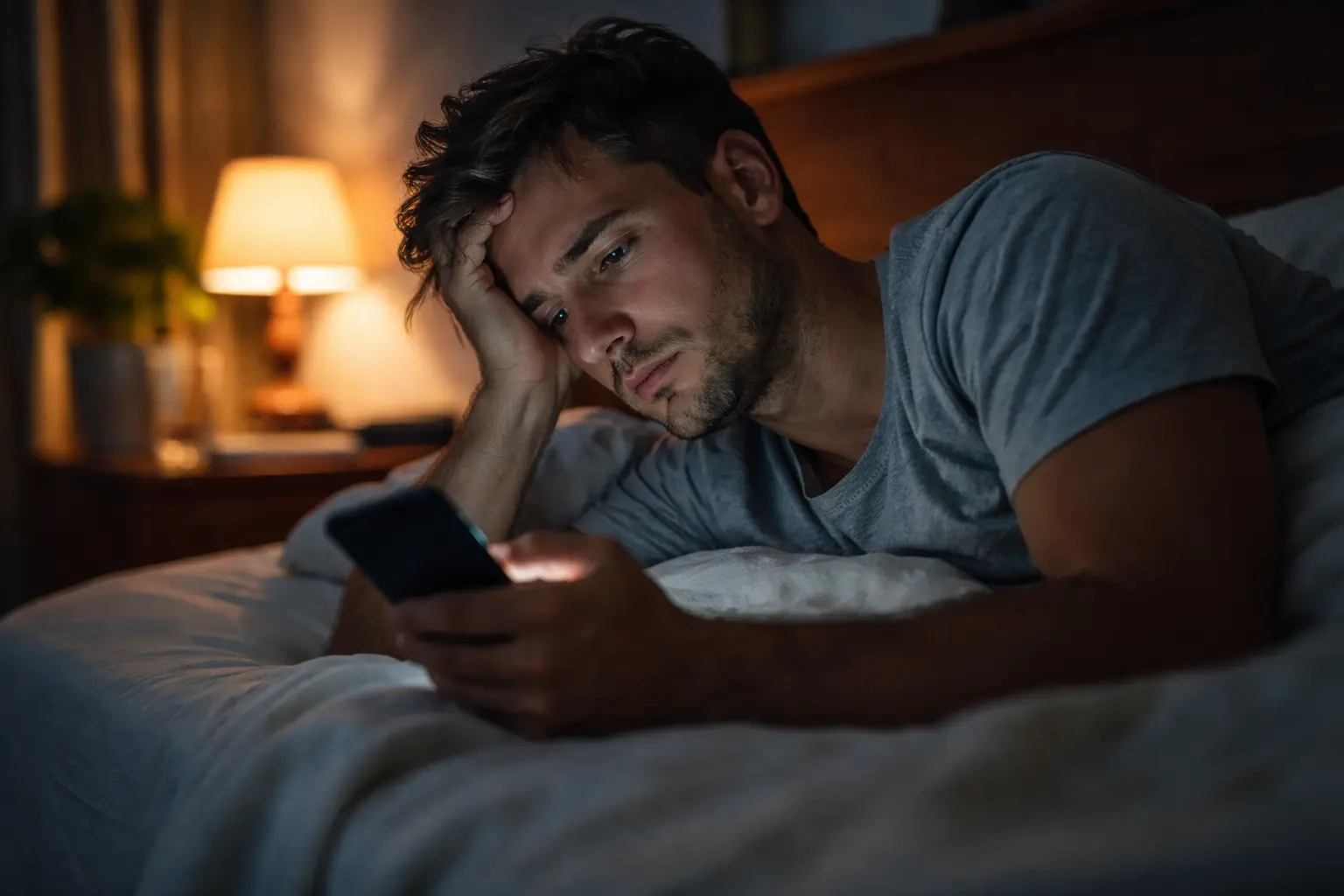
Your eyes are burning, your neck is throbbing, you’re wide awake at 3 a.m. doom-scrolling again, and you can’t shake the feeling that something’s seriously off with your health and the health implications of using screens are catching up to you faster than you realized.
Strained eyes and sleep disruption
Picture this: it’s 11 p.m., you’re three episodes deep into your favorite show, and suddenly your eyes feel like sandpaper. That burning sensation, the blurriness when you look away, the dull headache creeping in at your temples – that’s digital eye strain, and it’s become the unofficial anthem of young adult life. The problem isn’t just the strain itself. When you’re staring at screens late into the evening, the blue light is essentially telling your brain that it’s still midday, suppressing melatonin production and completely hijacking your sleep schedule. You lie in bed for an hour, mind racing, wondering why you can’t fall asleep even though you’re exhausted. The worst part? You know exactly what’s causing it, but breaking the habit feels nearly impossible when your phone is right there on your nightstand.
- Regularly rest your eyes by following the 20-20-20 rule: every 20 minutes, look at something 20 feet away for at least 20 seconds.
- Limit screen time before bedtime to reduce the impact of blue light on your sleep patterns.
- Consider using blue light-blocking glasses to minimize eye strain and sleep disturbances.
Posture problems and neck strain
You’re hunched over your laptop during work, then you’re slouching on the couch scrolling through your phone, then you’re craning your neck down at your tablet in bed. Sound familiar? This constant forward-head posture puts enormous pressure on your neck and shoulders, creating muscle tension that builds up over weeks and months. At first, it’s just a little stiffness when you wake up. Then it becomes a persistent ache that shoots down your shoulders. Some young adults report chronic pain that radiates into their arms, making even simple tasks like typing or lifting something light feel uncomfortable. The insidious part is that poor posture while using devices compounds over time, potentially leading to long-term structural issues if left unaddressed. Your body is literally reshaping itself around your screen habits.
💬 Ready to feel better in 2 minutes?choose where to begin:
Impact on mental health
Social media feeds are engineered to show you the highlight reels of everyone else’s lives, and after scrolling for hours, you start comparing your behind-the-scenes reality to their carefully curated moments. Suddenly, you feel less accomplished, less attractive, less interesting. Excessive screen time feeds into anxiety loops where you’re constantly checking notifications, fearing you’re missing out, or feeling the pressure to maintain your own perfect image online. The loneliness is real too. You’re surrounded by hundreds of digital connections yet feel profoundly isolated because those interactions lack genuine human connection. Studies have linked heavy screen usage to increased depression and anxiety in young adults, and the mental health implications of using screens are becoming impossible to ignore. The constant stimulation keeps your nervous system in overdrive, making it harder to feel calm or present in your actual life.
Reduced physical activity and social interaction
Hours spent scrolling, gaming, or working on screens are hours not spent moving your body or connecting face-to-face with people who matter. Your fitness suffers, your cardiovascular health takes a hit, and your mental resilience weakens because you’re missing out on the natural mood boost that comes from physical activity and genuine social connection. Young adults who spend most of their day on screens often find themselves in a sedentary spiral: less movement means less energy, which makes you more likely to reach for your phone again, which means even less activity. The social cost is equally significant. You might have hundreds of online friends but struggle to maintain deep, meaningful relationships because you’re not investing time in face-to-face interactions. This combination of physical inactivity and social isolation creates a perfect storm for declining overall health and well-being.
Screen time impacts young adults in various ways, from eye strain and disrupted sleep to posture problems, mental health issues, and reduced physical activity. It’s essential to be mindful of our screen usage and prioritize our well-being.
How can I reduce the negative effects of screen time?
You can reduce the impact of screen time by taking regular breaks, adjusting display settings to filter blue light, and practicing good posture while using devices.
What are some alternatives to excessive screen time?
Alternatives to excessive screen time include engaging in physical activities, socializing with friends in person, reading books, practicing mindfulness, and pursuing hobbies that don’t involve screens.
Others also read:
Disclaimer: This article is for informational purposes only and is not a substitute for professional medical advice. Always consult a healthcare professional for personal guidance.
This article presents an experience-based perspective and has been reviewed by the GlobalHealthBeacon editorial team in 2026. It provides structured, evidence-based information to support informed health decisions.
← Back to the main health implications of using screens page
