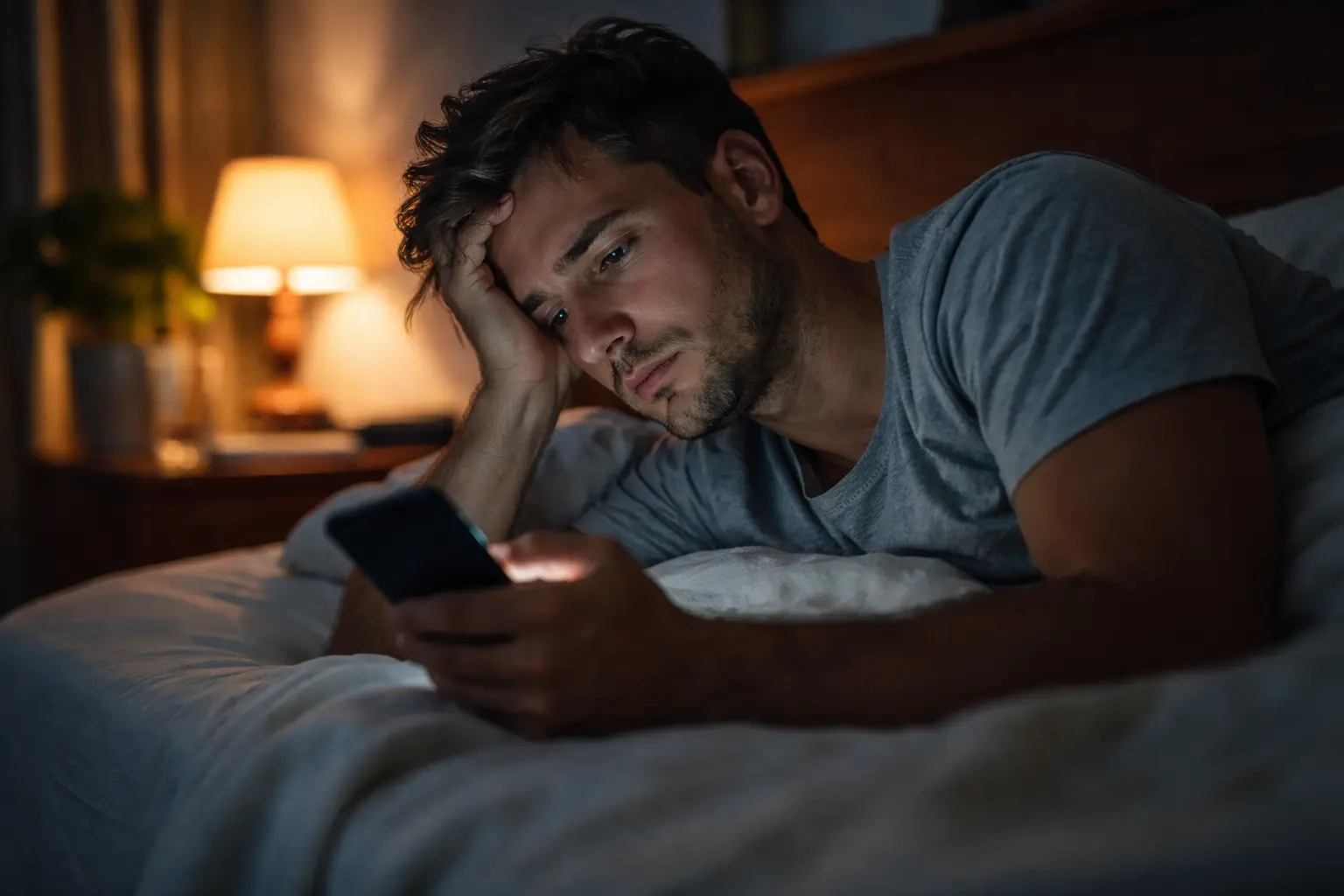
Your eyes burn, your neck aches, you can’t sleep, and you’re scrolling at midnight again—the health implications of using screens are catching up with you, and it’s time to understand what’s actually happening inside your body.
Blue light exposure
The blue light emitted by screens operates on a wavelength between 380 and 500 nanometers, which directly influences your circadian rhythm, the internal clock governing your sleep-wake cycle. When you scroll through your phone or work on your laptop in the evening, this blue light signals your brain that it’s still daytime, suppressing melatonin production. Imagine it’s 10 PM and you’re reading emails on your tablet. Your brain receives a signal that mimics midday sunlight, making it believe it’s only 2 PM. This confusion can delay sleep onset by 30 minutes to over an hour. Women, who often juggle multiple screens throughout their day, may experience this disruption more acutely. Research shows that consistent blue light exposure before bedtime doesn’t just make falling asleep harder; it can fragment sleep quality, leaving you feeling unrefreshed even after eight hours. The cumulative effect over weeks and months can contribute to chronic sleep deprivation, affecting mood regulation, immune function, and metabolic health.
Eye strain and digital eye fatigue
Digital eye fatigue, clinically termed asthenopia, develops when your eyes work harder than usual to focus on screens. Unlike reading printed text, screens emit light and require constant refocusing as pixels refresh. When concentrating on a screen, your blink rate drops by up to 66 percent, reducing tear distribution across your eye surface. Picture yourself in a work meeting, staring at your laptop for three hours straight without a break. By hour two, your eyes feel gritty and tired. By hour three, your vision blurs slightly when you glance away. This is digital eye fatigue in action. Women report higher rates of dry eye syndrome partly because hormonal fluctuations during menstrual cycles and menopause affect tear production. Common symptoms include dryness, blurred vision, headaches, and difficulty refocusing. Extended screen time compounds these issues. The problem isn’t the screens themselves but the sustained, uninterrupted focus they demand. Without deliberate breaks and proper screen positioning, eye strain accumulates, potentially affecting your ability to work comfortably and your overall visual comfort throughout the day.
Impact on mental health
The relationship between excessive screen use and mental health operates through multiple pathways. Social media algorithms are designed to maximize engagement, often triggering comparison, inadequacy, and anxiety. Constant notifications create a state of perpetual partial attention, fragmenting your ability to focus deeply. Research indicates that women who spend more than five hours daily on social media report significantly higher rates of anxiety and depression symptoms compared to those limiting use to two hours. Consider a typical scenario: you wake up, check your phone, and immediately see curated highlight reels of friends’ lives. Throughout the day, notifications interrupt your work, each one triggering a small dopamine hit followed by a crash. By evening, you feel mentally exhausted and emotionally drained. The blue light exposure compounds this by disrupting sleep, which further destabilizes mood regulation. Additionally, excessive screen time often displaces face-to-face interaction, reducing the genuine human connection that buffers against depression and anxiety. Setting boundaries, such as phone-free meals or designated offline hours, helps restore mental equilibrium. Taking regular breaks to engage in non-screen activities like walking, reading physical books, or conversation allows your nervous system to downregulate and recover.
- Limit screen time to reduce exposure by setting daily limits through phone settings or apps that track and restrict usage.
- Practice the 20-20-20 rule: every 20 minutes, look at something 20 feet away for 20 seconds to reduce eye strain and refocus your vision.
- Incorporate regular physical activity to counteract sedentary screen time and boost mood-regulating neurotransmitters like serotonin and endorphins.
🔬 Science-backed benefits in 2 minuteschoose where to begin:
Posture and musculoskeletal issues
Prolonged screen use creates a postural pattern that orthopedic specialists call ‘tech neck’ or ‘forward head posture.’ When you lean toward your screen, your head moves forward, increasing the load on your cervical spine by up to 60 pounds depending on the angle. Over weeks and months, this sustained misalignment strains muscles, ligaments, and discs. Imagine sitting at your desk for eight hours, your shoulders rounded forward, your chin jutting slightly ahead of your shoulders. By day three, you notice neck stiffness. By week two, you have persistent shoulder tension. By month two, you’re experiencing headaches that radiate from your neck. Women often experience this more severely because they typically have less upper body muscle mass to support the additional load. The trapezius, levator scapulae, and suboccipital muscles become chronically tight and fatigued. This tension can trigger tension headaches and even contribute to migraines. Poor posture also compresses your diaphragm, affecting breathing and oxygen intake. Ergonomic adjustments like positioning your screen at eye level, using a supportive chair, and maintaining neutral spine alignment can prevent these issues. Regular stretching, particularly neck rolls and shoulder shrugs, helps counteract muscle tightness. Strengthening exercises targeting your upper back and core provide better support for sustained screen work.
Digital addiction
Digital addiction develops through the same neurological pathways as other behavioral addictions. Each notification, like, or message triggers dopamine release in your brain’s reward center, creating a feedback loop that reinforces compulsive checking behavior. Over time, your brain adapts, requiring more frequent stimulation to achieve the same dopamine hit. You find yourself reaching for your phone dozens of times per hour, often without conscious awareness. Many women describe a pattern where they intend to check one message and suddenly 45 minutes have passed. This constant connectivity fragments attention, reduces productivity, and creates anxiety when separated from devices. The fear of missing out (FOMO) intensifies the compulsion. Additionally, the curated nature of social media creates unrealistic standards and comparison traps, affecting self-esteem and body image. Setting boundaries like designated phone-free times, removing apps from your home screen, or using grayscale mode reduces the appeal of mindless scrolling. Engaging in offline activities like hobbies, exercise, or face-to-face socializing provides alternative sources of dopamine and satisfaction. Understanding that digital platforms are engineered to capture your attention helps you approach them more consciously rather than reactively.
Sleep disruption
Sleep disruption from screens operates through multiple mechanisms beyond blue light alone. The stimulating content you consume, the dopamine hits from notifications, and the cognitive activation of work-related emails all keep your nervous system in an alert state when it should be winding down. Your circadian rhythm, regulated by light exposure and consistent sleep-wake timing, becomes desynchronized when you use screens late into the evening. Consider this common scenario: you finish work at 6 PM, have dinner, and by 9 PM you’re in bed with your phone, scrolling social media or answering messages. Your brain remains in a state of engagement and mild stress. When you finally put the phone down at 11 PM, your mind is still active, racing through thoughts and concerns. You lie awake for 30 to 60 minutes, frustrated and increasingly anxious about not sleeping. This pattern repeats nightly, creating chronic sleep debt. Over time, poor sleep affects everything: your immune function weakens, your metabolism slows, your mood destabilizes, and your cognitive performance declines. Creating a screen-free bedtime routine starting one to two hours before sleep allows your nervous system to transition into parasympathetic dominance, the state necessary for quality sleep. This might include reading physical books, gentle stretching, journaling, or meditation. Keeping screens out of the bedroom entirely removes the temptation and environmental cue that triggers late-night use.
Blue light exposure, eye strain, mental health implications, musculoskeletal issues, digital addiction, and sleep disruption are some of the prominent health implications associated with screen use for women. Understanding the biological mechanisms behind each helps you make informed choices about your screen habits and implement targeted strategies to protect your health.
How can I reduce the impact of screen time on my health?
You can reduce the impact of screen time by limiting exposure through app timers, following the 20-20-20 rule for eye breaks, incorporating physical activity to counteract sedentary time, maintaining ergonomic posture with your screen at eye level, setting boundaries to combat digital addiction through phone-free times, and creating a screen-free bedtime routine at least one to two hours before sleep to support healthy circadian rhythms.
What are some signs that indicate screen-related health issues?
Signs of screen-related health issues include eye strain with dryness and blurred vision, neck and shoulder pain from forward posture, sleep disturbances or difficulty falling asleep, daytime fatigue despite adequate sleep duration, tension headaches radiating from the neck, changes in mood or increased anxiety and depression symptoms, and compulsive phone checking despite intentions to limit use.
Others also read:
Disclaimer: This article is for informational purposes only and is not a substitute for professional medical advice. Always consult a healthcare professional for personal guidance.
This article has been prepared and reviewed by the GlobalHealthBeacon editorial team and is based on current medical research and published scientific literature available in 2026. It provides structured, evidence-based information to support informed health decisions.
← Back to the Main page on: health implications of using screens
